







An aerial view of Bondi Beach in Sydney, where Australian authorities are investigating a deadly December 14 attack classified as terrorism. Photo credit: Nick Ang / Own work (CC BY-SA 4.0)
SYDNEY, Australia — Australian authorities investigating the mass shooting at a Jewish community gathering at Sydney’s Bondi Beach said evidence gathered so far indicates the two suspects were motivated by Islamic State ideology and had traveled to the Philippines weeks before the attack, according to official statements and immigration records confirmed by Philippine authorities.
The December 14 attack killed 15 people and wounded dozens, making it one of Australia’s deadliest mass shootings in decades. New South Wales Police have classified the incident as terrorism based on the nature of the target and evidence recovered during the investigation.
One suspect, a 50-year-old man, was shot and killed by police at the scene. His 24-year-old son remains hospitalized under police guard. Authorities have not announced formal charges as of publication.
Investigators cite ideological indicators recovered at the scene
Australian counterterrorism officials said investigators recovered two homemade flags associated with the Islamic State militant group from a vehicle linked to the suspects, along with improvised explosive devices that were not detonated. Police said these findings informed their assessment that the attack was ideologically motivated.
Officials emphasized that the investigation remains ongoing and that conclusions could evolve as forensic analysis and intelligence reviews continue.
Australian media, citing law enforcement and security sources, reported that the younger suspect had previously come to the attention of Australia’s domestic intelligence agency in 2019 in connection with extremist associations, though he was not assessed at the time as posing an imminent threat.
Philippine immigration records confirm pre-attack travel to Mindanao
Philippine Bureau of Immigration officials confirmed that the two men entered the Philippines on November 1, arriving from Sydney and transiting through Manila before traveling to Davao City on the southern island of Mindanao. Immigration records show they departed the country on November 28, returning to Australia.
According to Philippine authorities, the father traveled using an Indian passport, while the son traveled on an Australian passport. Officials said both entered and exited the country through regular immigration channels.
Purpose of the Philippines trip remains under review
Security officials in both Australia and the Philippines said they are still determining the purpose of the suspects’ visit to Mindanao. Authorities have not publicly confirmed whether the men met with extremist groups, underwent training, or traveled beyond Davao City during their stay.
Philippine military and law enforcement agencies said they are coordinating with immigration officials and foreign counterparts as part of standard information-sharing procedures related to transnational terrorism investigations.
Regional extremist history provides context, not attribution
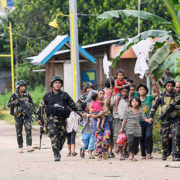
Mindanao has experienced periodic militant activity over the past decade, including the 2017 siege of Marawi by Islamic State-aligned groups. Philippine forces regained control of the city after months of fighting.
Officials cautioned that the suspects’ presence in the region does not, by itself, establish contact with militant organizations, and that historical context should not be conflated with specific allegations absent evidence.