



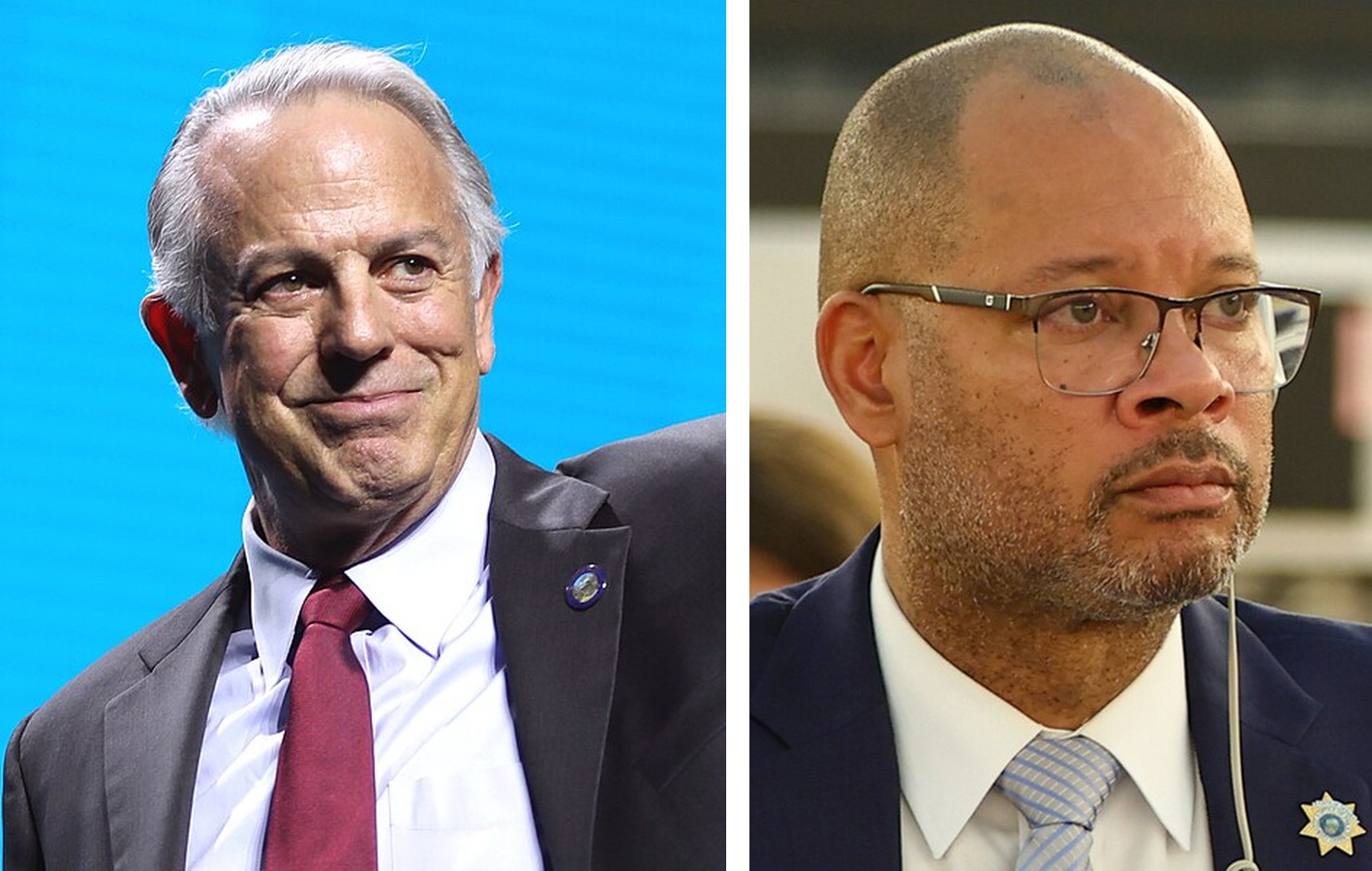
Nevada Gov. Joe Lombardo, left, will face Democratic Attorney General Aaron Ford in the November governor’s race.-Photos via Wikimedia Commons
Fil-Am Assemblymember Erica Mosca advances in District 14, while Maria Teresa Hank falls short in District 9 Democratic primary
LAS VEGAS — Nevada’s June 9 primary elections set the state’s November ballot in motion, with Gov. Joe Lombardo and Attorney General Aaron Ford advancing toward a closely watched race for governor and several congressional contests taking shape in a state expected to remain politically competitive through the fall.
The results remained unofficial pending county canvasses and final certification. Nevada election rules allow additional processing after Election Day, including eligible mail ballots and provisional ballots, leaving some totals subject to change before the results are finalized.
Lombardo, a Republican seeking a second term, won his party’s nomination, while Ford secured the Democratic nomination. Their November contest will give Nevada voters a choice between the incumbent governor and the state’s Democratic attorney general, with affordability, housing, energy costs and public safety expected to remain central issues.
Further down the statewide ballot, Democratic Senate Majority Leader Nicole Cannizzaro advanced in the attorney general’s race and will face Republican Adriana Guzmán Fralick. In the lieutenant governor’s contest, unofficial results showed Democratic Assembly Majority Leader Sandra Jauregui advancing toward a matchup with incumbent Republican Lt. Gov. Stavros Anthony.
The congressional map also came into sharper focus. Democratic Rep. Dina Titus advanced in the 1st Congressional District and is set to face Republican state Sen. Carrie Buck. In the 2nd District, an open northern Nevada seat created by Republican Rep. Mark Amodei’s retirement will feature former Democratic Assembly Majority Leader Teresa Benitez-Thompson against Republican David Flippo, a retired Air Force lieutenant colonel endorsed by President Donald Trump.
In the 3rd Congressional District, Democratic Rep. Susie Lee advanced toward a general election contest with Republican Marty O’Donnell, a video game composer known for work associated with the “Halo” franchise. O’Donnell won a Republican primary field that included Tera Anderson, Jeff Gunter and Aury Nagy. In the 4th District, unofficial results showed Republican Cody Whipple winning the GOP primary to challenge Democratic Rep. Steven Horsford.
For Nevada’s Filipino American community, one of the clearest outcomes came in Assembly District 14, where Assemblymember Erica Mosca, a Democrat and Filipina American lawmaker, advanced in her bid for another term representing part of Clark County.
The Nevada Legislature lists Mosca as the Assemblymember for District 14 and Assistant Majority Floor Leader. First elected in 2022, Mosca is widely identified as the first Filipina to serve in the Nevada Legislature. Her public biography describes her as a former teacher, nonprofit founder, small-business owner and first-generation college graduate.
Another race watched by Filipino American voters was Assembly District 9, where Maria Teresa Hank, a Filipina/Hawaiian labor candidate and flight attendant, ran in the Democratic primary for the seat being vacated by Assembly Speaker Steve Yeager. Hank’s campaign biography identifies her as a member of Transport Workers Union Local 556 for more than three decades, a flight attendant and a University of Nevada, Las Vegas graduate.
Hank did not advance. Ryan Hampton, an addiction recovery advocate and founder of Mobilize Recovery, defeated Hank in the Democratic primary. Hampton is set to face Republican Erica Neely, who won the GOP primary in the same district.
The outcome left Mosca as the Filipino American legislative candidate advancing from the two closely watched Clark County Assembly races involving Fil-Am candidates.