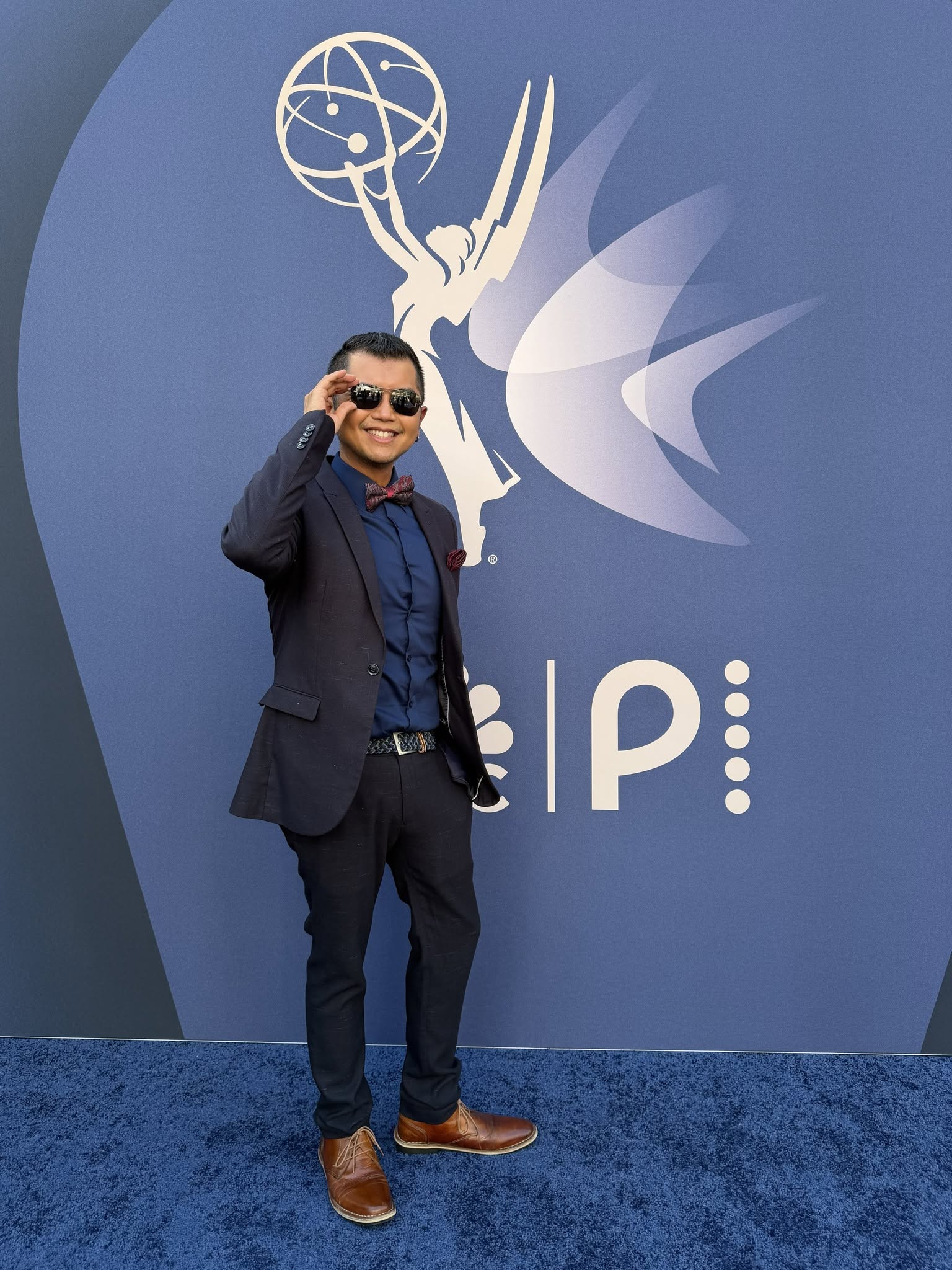







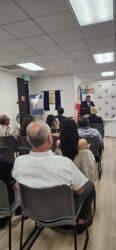
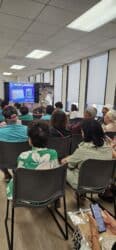
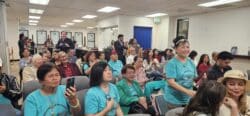
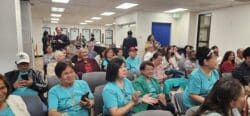
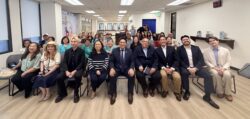
A book launch on The Last Conversations, written by Hospice Chaplain Rev. Dante Eleazar Lorenzana Simon and Elzar Dodjie Lorenzana Simon and edited by Dr. Elisa Simon and Elzar Simon, was held at the Philippine Consulate General’s Community Room in Los Angeles on March 19, 2026. Nearly a hundred folks attended.
What stayed with me was not just the gathering, but the reminder that the last conversations we have, or fail to have, shape how we understand life, love, and loss.
Consul General Adelio Angelito Cruz gave effective introductory remarks, sharing two stories that resonated deeply with me and the attendees.
He recalled that at the tail end of COVID-19, his mom died. For her last eight months, he cooked her three meals a day and binge-watched Netflix with her. He held her in his arms as she faded away to go home to her Creator.
He also spoke of caring for his grandfather. Though he had seven siblings who migrated to the U.S., he became his grandpa’s favorite cook and took on night duty in his final days. Holding him tightly, his grandfather looked at him and said, “Sama ka na” (Come with me), drawing laughter from the audience.
Pause, reflect, and listen while we can, as we face life’s realities and learn from those who have gone ahead, he said.
Generation upon generations, from the past to the future, this book is a gem of reflections of triumphs, failures, struggles, and wisdom not easily found if one is superficial in connecting and relating with folks.
The Consul General asserts that these voices will continue to inspire, will prod us to think and value our daily conversations, to keep asking, to keep sharing our humanity.



His stories echoed something I had already lived.
I witnessed the halting breaths and lucid moments of my mother. She offered no last-minute advice. She only wanted to listen to Josh Groban’s sacred music. I held her hand and reassured her she had been a great mother to me and my sisters, and a loving grandmother. She smiled. Hours later, she passed on St. Patrick’s Day, 2015. Sixty days later, my eldest sister passed away.
Death became a familiar companion. In 2025, I lost selfless friends, including Bob Nakamura, Val Creus, Rina Bentajado, and Florante Ibanez.
I spoke with one of them days before their passing. They said, “I sought several healing therapies, and look at where I am now.”
I replied that they did it because they had a strong will to live. They sought those therapies so others may benefit, learning what works and what does not.
They asked, “What lies ahead for me?”
I said that they are God’s beloved and will experience grace upon grace.
I do not know where those words came from. I had prayed to the Holy Spirit before visiting. The wake, funeral, and reception drew 2,000 people.
These moments are not confined to memory. They continue around us.
This year, on St. Joseph’s Day, my Facebook friend Joel Pablo Salud passed away. A prolific writer, a great editor, a well-acclaimed author, a university mentor to journalism students, a Christ-lover who liked to impart the principle that “law is not equal to grace, as grace is limitless,” a journalist who used his words with raging fire to impart his perspectives on freedoms, human rights, and health care for his daughter, and one who deeply loved and shared his love story with his wife, Che Sarigumba, and his 11-year-old daughter, Likha.
Days earlier, I had messaged him, sharing my research on T1D (type 1 diabetes), and joined a group of 7,000 Facebook friends he mobilized to pray for his daughter, who was nearly comatose when they brought her to the hospital.
After three days, she responded to insulin. When I read his post, I shared that it was a miracle. He wrote his final essay proclaiming that miracle and raising awareness of the disease. He and his wife even met with other parents of children with T1D. Days later, he died of a heart attack.
To live in pain and still give so much love to family and others, up to the very end, is something I have seen in him and in other selfless friends.
I was attending this book launch on the very day of Joel Pablo Salud’s return home to God. His final words on life, love, and his daughter’s healing remain with me.
This is what The Last Conversations speaks to.
Rev. Dante shared that many of his hospice patients cannot speak due to medication. When they do, their words are like gold. They are brief, but filled with meaning. As the sole Filipino chaplain at Suncrest Hospice in Union City, he also faced colon cancer. These experiences made him more deliberate in loving his wife, his family, and his colleagues, more grateful, and more rooted in faith.
The book is thoughtfully written and emotionally honest, with language that carries weight and invites reflection.
I read several chapters and found myself returning to them. They are not distant reflections, but truths that mirror what we have lived, what we have witnessed, and what we often fail to say in time.
Here are some excerpts from the book, The Last Conversations by Rev. Dante Eleazar Simon and Elzar Dodjie Simon
“Faces of patients came back to me – not as tragic figures, but as teachers.
“My grace is sufficient for you.” In my weakness, that promise ceased to be a comforting verse and became oxygen.
Fragility is not a curse
It is an invitation
An invitation to love deeply
To forgive freely
To speak kindly
To give thanks daily
Each day is a day of praise
Each day is a gift from God
Each day, well lived, is enough
Ours is a ministry of presence more than answers, of listening more than speaking. We hold stories, fears, doubts, and prayers that others may not know how to voice. We sit in silence when silence is the truest language. We honor the faith that sustains, the questions that haunt, and the humanity that binds us all.
We pray because prayer acknowledges that the human experience is more than flesh and breath. Prayer invites peace where words fail, hope where logic falters, and comfort where pain lingers. Prayer is not only petition; it is connection to God, memory, to longing, to the depth of what it means to be fully human.
For in the end, every life, long or short, quiet or resounding—echoes beyond its final heartbeat through the love it shared, the forgiveness it offered and the grace it received.
Death often draws out a wide spectrum of emotions. It exposes old wounds, stirs buried conflicts, and reveals the fragile ties that bind families together.
In this family’s story, there was the mother’s deep remorse over lost years [from addiction and inability to raise her children, separated as siblings in foster homes placement], the son’s long absence and bittersweet return, and the daughter’s hardened distance.
Each, in a way, was a prodigal: the mother lost in addiction, the son lost in time and separation, and the daughter lost in unforgiveness and disengagement.”
Elzar Dodjie Simon co-wrote the book while managing a demanding life. He runs a restaurant, oversees global IT infrastructure at a major university, organizes fundraisers for mental health programs at the University of the Philippines, composes music, and publishes work on Original Pilipino Music. He is even working on a musical in his spare time, supported by his wife, Dr. Elisa Simon, and their family, who all maintain full-time careers.
For me, this is not about being a braggart, a show off, or a self seeker for attention to one’s accomplishments or successes, nor about being a pathological narcissist.
Rather, it is about being fully present. It is about sensing the underlying need of “the other” to convey their last words, and recognizing the quiet urgency in others who wish to be heard.I endeavor to love deeply, daily. This book affirms our shared humanity and urges us to act on it while we still have time.
In the end, every life, whether quiet or resounding, echoes beyond its final heartbeat through the love it shared, the forgiveness it offered, and the grace it received.
This upcoming Good Friday, Jesus Christ died for us all that we may live in eternity. May we live with such depth of love for God and for one another while we still have time.
* * *
The opinions, beliefs and viewpoints expressed by the author do not necessarily reflect the opinions, beliefs and viewpoints of the Asian Journal, its management, editorial board and staff.
* * *
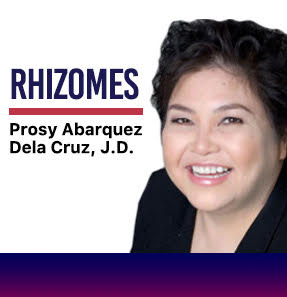
Prosy Abarquez-Delacruz, J.D. writes a weekly column for Asian Journal, called “Rhizomes.” She has been writing for AJ Press for 18 years. She also contributes to Balikbayan Magazine. Her training and experiences are in science, food technology, law and community volunteerism for 4decades.She holds a B.S. degree from the University of the Philippines, a law degree from Whittier College School of Law in California and a certificate on21st Century Leadership from Harvard’s Kennedy School of Government. She has been a participating NVM Writing Workshops taught by Prof. Peter Bacho for 4 years and Prof. Russell Leong. She has travelled to France, Holland, Belgium, Spain, Portugal, Japan, Costa Rica, Mexico and over 22national parks in the U.S., in her pursuit of love for nature and the arts.
Prosy Abarquez-Delacruz, J.D. writes a weekly column for Asian Journal, called “Rhizomes.” She has been writing for AJ Press for 18 years. She also contributes to Balikbayan Magazine. Her training and experiences are in science, food technology, law and community volunteerism for 4 decades. She holds a B.S. degree from the University of the Philippines, a law degree from Whittier College School of Law in California and a certificate on 21st Century Leadership from Harvard’s Kennedy School of Government. She has been a participant in NVM Writing Workshops taught by Prof. Peter Bacho for 4 years and Prof. Russell Leong. She has travelled to France, Holland, Belgium, Japan, Costa Rica, Mexico and over 22 national parks in the US, in her pursuit of love for nature and the arts.