
Fifteen years ago, we watched David Henry Hwang’s heavily revised “Flower Drum Song” at the Mark Taper Forum starring Lea Salonga as Mei-Li.
The classic Rodgers and Hammerstein musical about the Asian experience in America is now coming back to Los Angeles, this time at the Japanese American Cultural & Community Center’s iconic Aratani Theatre (April 16-May 31) with opening night scheduled on April 23.
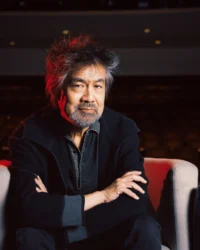
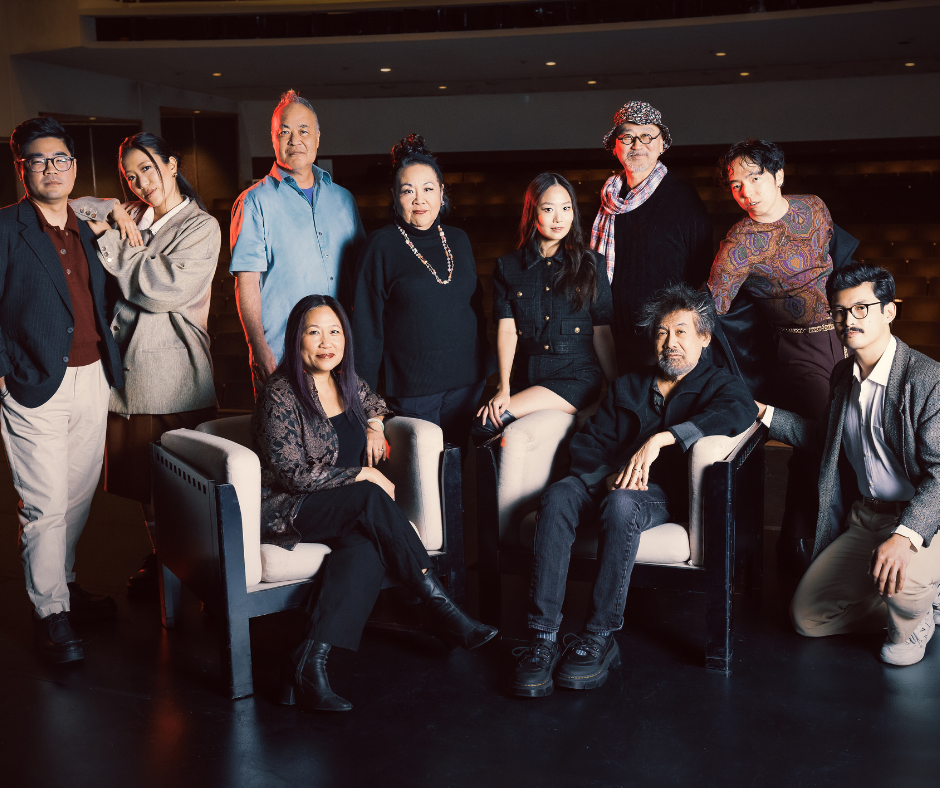
As the grand finale of East West Players (EWP)’s 60th Anniversary Diamond Legacy season, artistic director Lily Tung Crystal will helm the highly anticipated world premiere of the Tony-winning David Henry Hwang’s refreshed 2026 book for Rodgers and Hammerstein’s “Flower Drum Song.”
The principal cast includes EWP veterans Grace Yoo (“Hadestown”) as Mei-Li, Emily Kuroda (CW’s “Gilmore Girls”) as Madame Liang, Marc Oka (“The King and I,” “Flower Drum Song”) as Wang, among others.
Set against the backdrop of 1960s San Francisco Chinatown, Hwang’s 2026 revision of Rodgers and Hammerstein’s “Flower Drum Song” explores themes of immigration, assimilation, tradition, and community with renewed urgency and heart.
The story follows Mei-Li, a young Chinese opera performer fleeing communism, as she arrives in America and is drawn into the vibrant world of the Grant Avenue nightclubs.
In our exclusive interview with cast members Yoo, Kuroda and Oka, they talked about their experience in Hwang’s latest revision of the popular Rodgers and Hammerstein’s story.
Grace Yoo (Mei-Li)
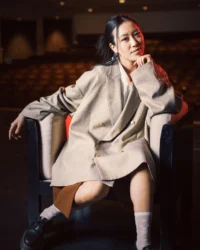
What inspired you to join the group and be part of this production?
East-West Players. It really feels like home to me. This will be my fifth production now with this theater company over a span of 12 years. This was really my first professional job, like out of college as well. This career is not very linear, but there are a lot of full-circle moments. I feel like this is truly a full-circle moment for me to return to this production.
David Henry Hwang has also been revising the book for his 2002 revival, the Broadway production. I was fortunate enough to work with David two years ago on “Soft Power” at Signature Theater in DC. So, to be able to work with David Henry Hwang again is quite amazing.
We will be at the Aratani Theater. The last time I was there was for “Allegiance” in 2018. It was the West Coast regional premiere also with East West Players. It’s just very important for me to be back here, specifically with East West Players, and also telling this story during this time.
How are you preparing for your role as Mei-Li?
We just started rehearsals. We did a workshop around late January to do some book revisions back then as well. We have a fantastic dialect coach who helps me speak some Mandarin and get all the tones correct. So, we have worked with our dialect coach Patrick. Our director Lily Tung Crystal, also the artistic director of East West Players, had mentioned that specifically with our show and our production of “Flower Drum Song.”
She really wants to honor our communities by really honoring authenticity and specificity. So that is also how I want to approach the work. The story of Mei-Li is that she immigrated from China. She flees China during the 60s.
I’m a daughter of immigrants as well. So, I feel very much connected also to the story of how everybody got here to this country. I’m trying to also pull from that as well as that. It is all part of our stories and journeys of just how we came here. Just learning to take up space and hold on to our identities.
Those themes of immigration assimilation are still very relevant these days. Do you think the younger audience will watch this show for these reasons as well?
I hope so. I also believe we have a student night on April 30th, and accessibility is a big part of EWP’s mission as well outreach and education. So, I believe we also have a pay-what-you-can performance that a lot of students or young people can come to.
It is very important to understand, especially for people in the AAPI community to understand whose shoulders we stand on. I would really encourage all young people to come.
I know more people know it from the movie. That was like in the 50s or 60s, around the first time after the show opened on Broadway. So that was the first time it was an all-Asian cast in a big Hollywood film. Then 30 years later, came “Joy Luck Club” and then, 30 years later, was “Crazy Rich Asians.” So, I’m hoping that it doesn’t take another 30 years before we see an all-Asian cast that’s a big Hollywood blockbuster movie, because that’s a whole generation that has gone by between each of those iconic films where we see ourselves. So, hopefully, that will happen more and more. For young people to come and see our production will also be a way for them to see themselves represented on stage in a musical form.
I actually saw this more than 20 years ago at the Mark Taper Forum with Lea Salonga as Mei-Li. Have you ever worked with Lea before?
I personally have not. But obviously growing up and in the early start of my career, she was such an icon and still is, and a big role model, someone I look up to.
I have met her several times. We have a lot of different mutual artist friends now, which is incredible. She also won a Tony Award in 1991, making history. And I don’t know that there has been another actress of Asian descent in that category of best actress or actor in a musical.
She holds so much significance amongst young artists and aspiring artists. I have also listened to her soundtrack over and over, learning the songs for “Allegiance” and for this production.
What are you looking forward to in this production?
It may be my fifth production at EWP, but it really is my first time being a leading lady. So that’s really exciting for me. It feels very much like I’m at home, but it also feels like a new space as well to carry a show, and I feel a lot of responsibility, but the show is very meaningful, revisiting it now and just having David also touch the book and judge it now to make it even more relevant to what we as a society need to hear today.
We also have several members who were part of the revival of “Flower Drum Song” in 2002. Lainie Sakakura is our choreographer; she was in the ensemble. Marc Oka, who’s playing Wang, was also a dance captain in the Broadway revival, but now is in the cast. Sally Hong as well.
We have just all these different threads connecting throughout the years, and different versions of this production connecting us all. So, I really feel that it is a very special time, moment and piece that we get to do.
You also performed in “Hadestown”, and you worked with Jon Jon Briones and Isa Briones, the father-daughter actors. Tell me about your experience working with them.
Jon Jon and Issa are really wonderful people beyond being actors and storytellers, but they’re just really kind. Representation has always meant a lot to them as well. They are people who want to hold the door and keep the door open to keep ushering the next generation of artists.
For Jon Jon and Isa, it’s like a literal generation just paving that way. I have a lot of admiration for both of them individually as well and for the whole family. They have been huge supporters of EWP and they have both been part of a wonderful production here at the theater company.
So, to meet them on the “Hadestown” stage, that was really fun to get to do as LA transplants meeting in New York. It was also really exciting to share the stage for Isa’s Broadway debut. She’s back on Broadway as Connie Francis in “Just in Time.” So that’s also really exciting. I hope I can work with them again in the future. That is a very talented and exceptional family.
During these very challenging times, what do you hope for Asian talents?
During these challenging times, one of Mei-Li’s lines in the show really talks about how we have to still hold on to hope. Hope is a really hard thing for a lot of people to see right now across every generation. But if we don’t have it, that really makes it hard for me anyway to get out of bed. If I don’t carry with me the sense of hope that we really can work and change towards creating a better future, and continue to pioneer and pave the way, and take up space.
This story is about immigration. It’s about identity. It’s about the challenges of assimilation. The hope is that we would not have to be anyone else.
The hope is that we don’t have to assimilate anymore and that we can just be true to who we are as individuals, as communities.
The opening number of this show talks about how 100 million miracles happen every day. I remember sharing at the workshop that sometimes when we read the news every day, it feels like 100 million nightmares are happening every day. So, we need to hold on to that hope.
Marc Oka (Wang)
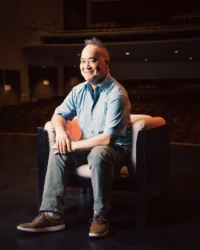
What made you say yes to this project?
I was fortunately in production in 2002. So, I worked with David. Within that production, I was the assistant choreographer, dance captain and one of the ensemble dancers in that production. It was such a wonderful experience for me because we were taking a piece of Rodgers and Hammerstein piece and rethinking it from an Asian point of view.
It was very exciting because Rodgers and Hammerstein never do this. Never let people change things. So, getting the opportunity and having David involved to do that was very exciting.
Now, come 22 years later, and now that I’m a man of a certain age, I’m still performing. I’m still acting. I’m not dancing as much because I’m 63 years old. I do as much as I can. But with East West Players, which is family to me, I was asked to audition, and I was saying to myself and my husband, I would love to do this role.
So, I said, oh, what the heck, let me just throw my hat in the ring. And I wasn’t really expecting to get it.
How does it feel to be one of the leads now, from a dancer-choreographer to one of the leads?
I’m so grateful. When I came into the business in 1986, 40 years ago, there were a lot of Asian performers at that time, but also it was during the beginning of AIDS. So, you know, when I got to New York and I started doing shows, I was still young as a dancer, a lot of the next generation of performers of mine were dying. So, I really never had any kind of role models of the next generation as to what would possibly be open for me. So, I just hung around.
I studied some more. I just grew into this new place in my performing life that I never knew existed. I’m so grateful. Now in the third act of my life, I’m just feeling so much joy. And since I’ve stuck around, so many more opportunities have opened up for me, and I’ve learned that all of those concerns that I had when I was younger in this business were we’re just nothing to worry about.
I have watched more than 20 years ago, the “Flower Drum Song” at the Mark Taper Forum starring Lea Salonga. Have you worked with Lea before?
Yes, I worked with her before in “Miss Saigon.” I was in the original company of “Miss Saigon” in 1991, and I worked with Lea then. She was very young then and to come back and work with her in 2002, it was just so wonderful. She had grown up so much. She’s such a lovely person and so down-to-earth. I text her now and then.
So, you’re also friends with Jennifer Paz? Have you worked with her before?
I did. One of my jobs during “Miss Saigon” was the dance captain. So, when people leave and we got new performers, I was the one who would teach them the show. And Jennifer was one of them.
You know, Joan (Almedilla) was one of them as well. Leila Florentino was one of them as well, and so did all the Kims that came through Broadway.
So, you’ve been in the industry for a while. Do you think Asian representation is getting better during these times?
Absolutely. No question.
But I’m realizing that the new generation needs to be reminded or educated about why this is important.
Why do you think young audiences should watch “Flower Drum Song”?
They will learn about Asian culture and specifically Chinese culture, about the Beijing Opera. They will learn about immigrant experiences.
Emily Kuroda (Madam Liang)
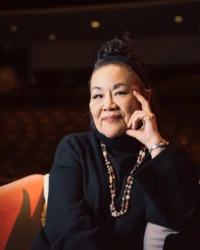
What inspired you to accept this part, and why is it so important for you to be part of this production?
I did the production originally probably around 1979, but I played the young person, so it’s nice to revisit the play as an old person. It has changed so much. David Henry Hwang has made a lot of improvements and updated the play. He kept the music, and I love the music in the show. So, it’s a challenge and it’s a great team. And I’m just having the time of my life.
You’re already an icon on stage, TV and film. What keeps you going? What’s the secret of your stamina?
I love what I do. I am so lucky to be able to act in all the different media. I love every single second of it. That keeps me going. Even when I’m tired, my love of art is just energizing.
How do you prepare for your role as Madame Liang and how would you describe her?
She’s been married four times, but that’s just because she’s a tough cookie, because it was set in the 60s, she’s a woman, and a woman of color. So, the cards were against her. So, she had to be three times smarter, work three times harder than anybody else because she’s a woman and then she’s Asian on top of that.
So, she had to work five times harder than everybody else. And she did it. And she’s a success. She knows how to play the game, and she does it very well. But deep down inside, she’s a traditional person. She grew up with Chinese values of home, of filial piety, of honoring your ancestors. And underneath all that toughness is that tenderness and appreciation for the community.
How is it working with the new cast members in the LA production? Did you give any tips to Grace Yoo?
Oh, no, she’s terrific. She can give me tips. She’s just adorable. I just love watching her. Our cast is so wonderful.
You have worked with several directors in your life. One of them is Filipino director Jon Lawrence Rivera in Luis Alfaro’s “Straight as a Line.” Can you please let me know how that collaboration was with him?
Oh, that was pure heaven. Tell him I said so. I’ll tell him what I said so. I’ve worked with Jon on and off since. I think for me, it was a turning point in my career, because I was with Jon and we were in this little 30-seat theater and we had to change clothes, in the bathroom. And that play went on to garner all these awards and notoriety. It went to New York. It went everywhere. It changed my life, my career.
Why is it so important for you to go back to the theater?
When you make movies, you take more time, but in the theater, you get to create this character with your friends. And it’s mercurial. It changes every night because everybody changes, and the audience is a big part of the performance. So, every night is different. It’s exciting. We don’t know what to expect. We make mistakes. It’s fine. It’s live theater. It’s the most exciting form of entertainment that I know for me.