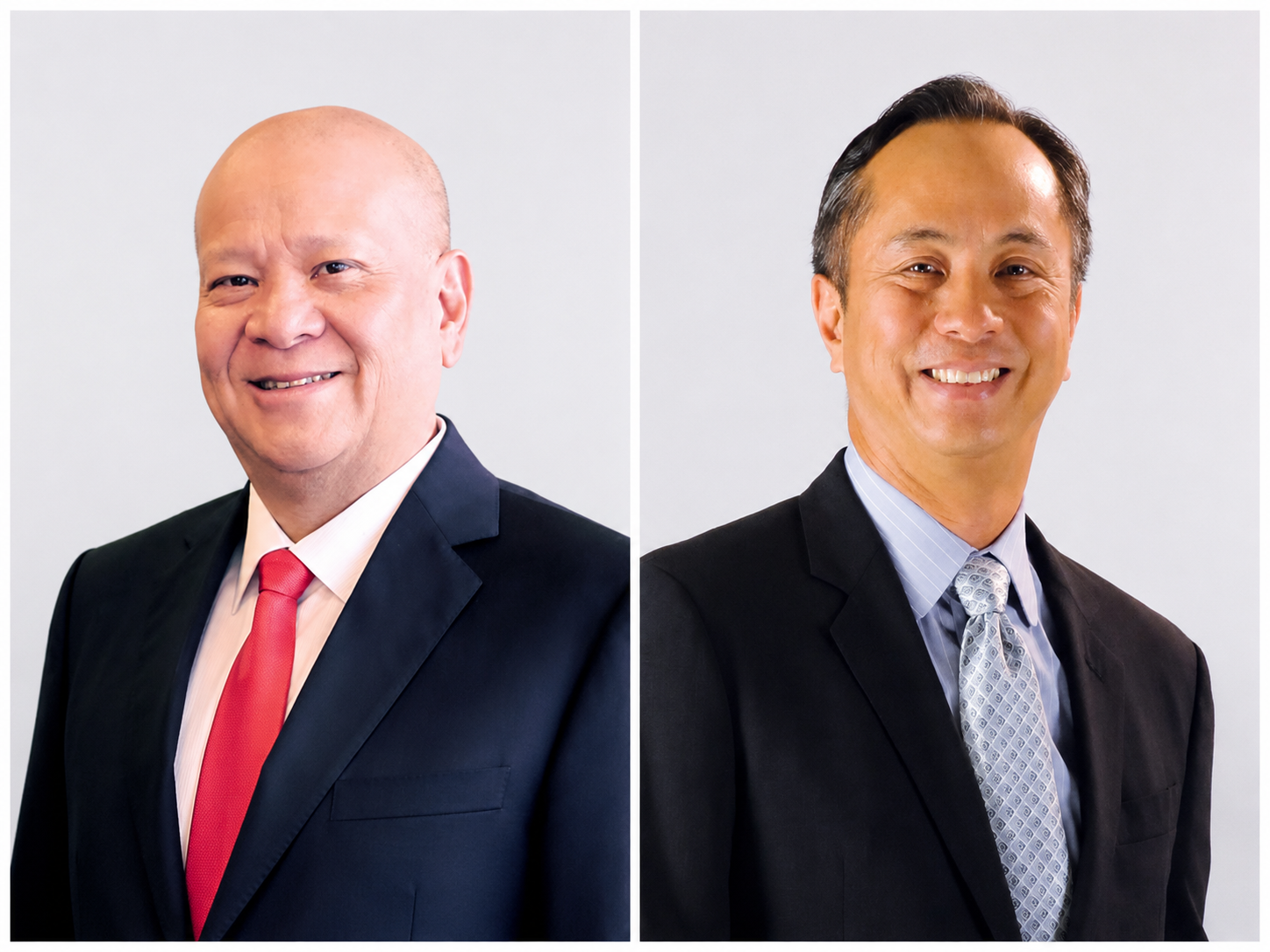







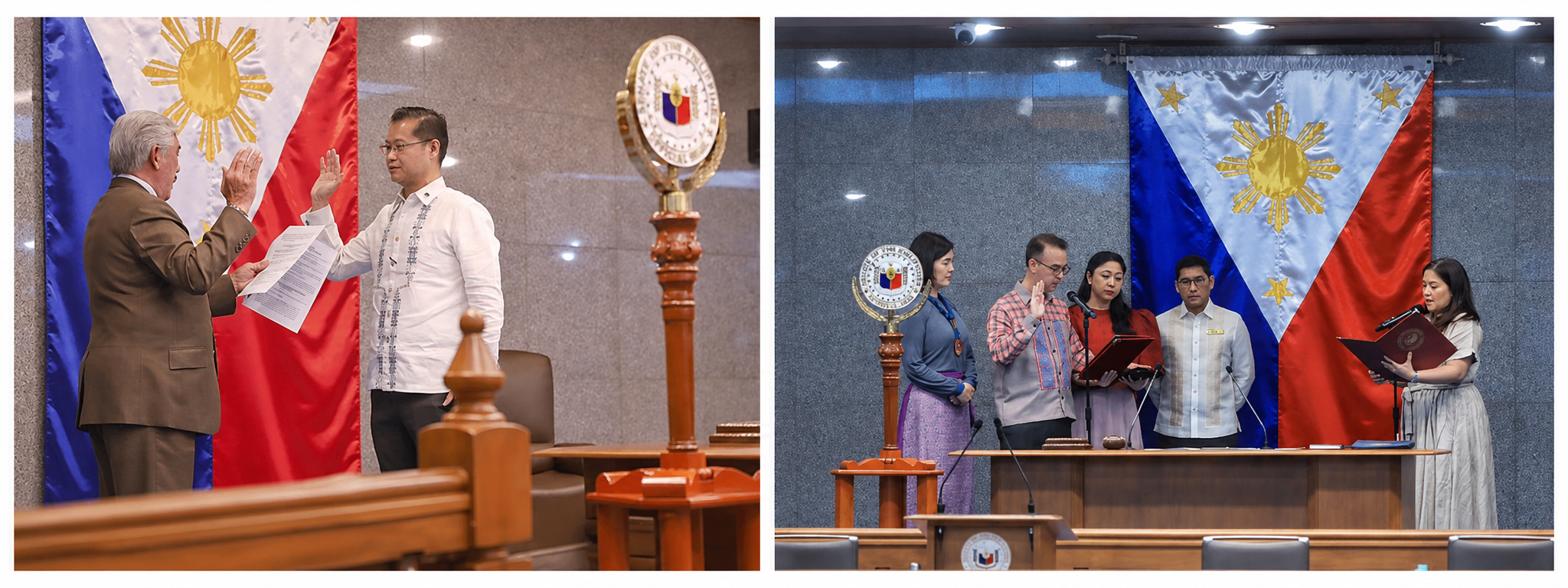
Photos from the Philippine Senate show Sen. Alan Peter Cayetano, right, being sworn in as Senate president on May 11, 2026, and Sen. Sherwin “Win” Gatchalian, left, being sworn in as Senate president pro tempore on June 3, 2026. Gatchalian has since been recognized by Malacañang as acting Senate president following the disputed June 3 reorganization, while Cayetano continues to contest the move and maintain that he remains Senate president.
Gatchalian recognized as acting Senate president while Cayetano contests June 3 reorganization; House lawmakers signal readiness to return if called
MANILA — A leadership fight in the Philippine Senate is testing the ability of Congress to function as President Ferdinand Marcos Jr. weighs whether to call lawmakers into a special session to act on pending legislation and appointments during the scheduled break.
Malacañang has said Marcos is inclined to call a special session if the Senate leadership recognized by the Palace submits a formal request with valid grounds. No proclamation had been issued as of Friday, June 5. Under Article VI, Section 15 of the Constitution, the President may call a special session of Congress at any time.
The possibility gained support in the House, where several lawmakers said they were prepared to return if the President calls Congress back during the June 6 to July 26 adjournment period. Their position does not amount to a formal House request, but it reflects growing concern that the Senate standoff could affect the broader legislative calendar.
The dispute began after two days in which Sen. Alan Peter Cayetano and his allies did not appear for plenary sessions, preventing the Senate from conducting business and prompting minority senators to call for his resignation. Cayetano had said his bloc’s absence was intended to protect ongoing Senate investigations from interruption or political interference.
The impasse ended on June 3, when Sen. Francis “Chiz” Escudero appeared on the floor, allowing 12 senators opposed to Cayetano to declare a quorum and reorganize the chamber. The senators present elected Sen. Sherwin “Win” Gatchalian Senate president pro tempore and designated him to exercise the powers of Senate president.
Malacañang later recognized Gatchalian as acting Senate president, saying it respected the decision of the new Senate majority. Cayetano rejected the proceedings and maintained that he remains Senate president, arguing that the session and leadership change were invalid.
The result is a Senate able to act, but under procedural uncertainty. Gatchalian’s side is exercising recognized leadership functions involving schedules, committee organization and internal operations. Cayetano’s bloc continues to challenge the validity of that authority and asserts that the prior leadership remains in force.
That uncertainty became visible on June 4, when senators aligned with Cayetano proceeded with a Blue Ribbon Committee-style hearing on alleged irregularities in public works and flood-control projects despite objections from the new Senate majority. Gatchalian and newly designated Blue Ribbon Committee chair Sen. Erwin Tulfo said no official hearing had been scheduled, while the Cayetano bloc maintained that the reorganization was invalid and pushed ahead with its inquiry.
The distinction is central to understanding how the Senate is functioning. The Cayetano bloc has continued to assert authority, but its June 4 activity was a contested committee proceeding, not a regular plenary session of the chamber. The Gatchalian-aligned bloc, by contrast, has acted through the Senate leadership structure recognized by Malacañang, while Cayetano’s side says that structure was unlawfully installed.
The legal dispute centers on quorum. The Integrated Bar of the Philippines and several legal experts have cited the Avelino doctrine, the 1949 Supreme Court ruling often invoked in Senate quorum disputes, in support of the June 3 session’s validity. They said the chamber should focus on its constitutional responsibilities, including impeachment proceedings involving Vice President Sara Duterte, rather than allow the leadership row to delay Senate action.
Former Senate President Franklin Drilon has said Supreme Court intervention may be needed if the leadership row is formally challenged. His view points to the central issue now hanging over the chamber: whether the June 3 reorganization stands unless a court rules otherwise, or whether Cayetano’s challenge can prevent Gatchalian’s leadership from being treated as settled.
The stakes extend beyond Senate titles. The chamber is expected to handle proceedings connected to Duterte’s impeachment case. Duterte has denied the allegations against her. Control of the Senate presidency affects who presides, who controls the calendar, how rules are interpreted and how committees are organized.
A special session, if called, would allow Congress to act on delayed legislation and appointments during the break, but it would not by itself settle the Senate leadership dispute. That question remains for the Senate to resolve internally or, if formally challenged, for the Supreme Court to decide.
Until then, the chamber will continue to operate under contested authority: Gatchalian’s side exercising the recognized leadership functions, and Cayetano’s side challenging the validity of that authority.