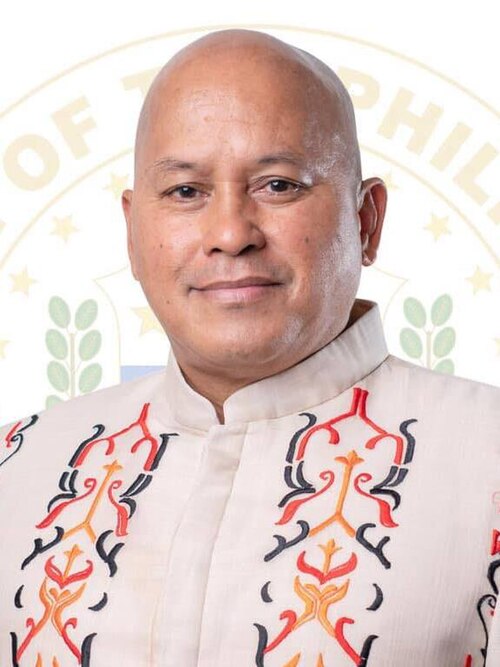








ON-SITE ASSESSMENT IN CEBU. President Ferdinand R. Marcos Jr. met with Cebu Governor Pamela Baricuatro on Friday, November 7, 2025, to inspect communities hit hard by Typhoon Tino (Kalmaegi) and to oversee ongoing relief and rebuilding efforts. The President visited evacuation centers and areas most affected by flooding and landslides, reaffirming the national government’s commitment to speed up recovery across the province. (Photo from Cebu Province Facebook)
Typhoon Tino leaves 224 dead, 135 missing, and more than 560,000 displaced across the Visayas and Mindanao
MANILA — President Ferdinand Marcos Jr. on Friday, November 8, vowed a full-scale recovery effort as the death toll from Typhoon Tino (international name Kalmaegi) climbed to 224, with 135 people still missing, according to the National Disaster Risk Reduction and Management Council (NDRRMC).
Marcos, who described himself as “very, very sorry” for the loss of life, said the government would “spare no effort” in helping families recover from what has become the country’s deadliest storm this year. “We will stay with the communities until power, food, and housing are restored,” he said after a situation briefing in Malacañang.
Widespread devastation across ten regions
The national state of calamity, declared on November 6, remains in effect in at least ten regions covering the Visayas and Mindanao. The proclamation allows the release of calamity funds, price freezes on basic goods, streamlined emergency procurement, and access to low-interest rehabilitation loans under Republic Act 10121 and the Price Act.
Typhoon Tino made landfall over southern Cebu on Monday, November 3, with sustained winds of 150 kilometers per hour and gusts up to 205 kilometers per hour, producing torrential rains and storm surges up to three meters high. PAGASA said the system intensified rapidly before weakening as it moved westward and exited the Philippine Area of Responsibility late Thursday.
As of November 9, the NDRRMC said more than 1.2 million people were affected nationwide, with 560,000 displacedand nearly 450,000 still in evacuation centers. Rescue teams continue to retrieve bodies and assist survivors in Cebu, Negros Oriental, and Misamis Occidental, where floods and landslides buried entire barangays.
Government response and rebuilding efforts
The Office of Civil Defense placed all regional offices on red alert to coordinate logistics and relief. The Department of Social Welfare and Development (DSWD) has released ₱760 million in food and cash assistance, while the Department of Public Works and Highways (DPWH) is clearing blocked roads and restoring access to isolated towns. Power and water service have returned to several parts of Cebu and Leyte, though restoration continues in heavily damaged zones.
Humanitarian groups such as CARE Philippines, UNICEF, and the Philippine Red Cross are distributing food packs, medical supplies, and temporary shelters. A Philippine Air Force helicopter carrying relief goods crashed in Agusan del Sur, killing six crew members and highlighting the risks faced by rescuers operating in rugged terrain.
Marcos ordered an audit of all flood-control and drainage projects after reports that unfinished works worsened inundation in some cities. “Public funds must translate into protection, not excuses,” he said, urging stronger oversight and transparency in reconstruction.
Economic losses and the next weather system
The NDRRMC estimated total damage to agriculture, infrastructure, and housing at ₱18.3 billion, with more than 73,000 homes damaged or destroyed, mostly in Central Visayas. Economists warned that the combined impact of the Cebu earthquake and Typhoon Tino could trim national growth by about 0.3 percent in the final quarter of 2025.
While Tino has exited the country, PAGASA said another system, Typhoon Fung-Wong (local name Uwan), is strengthening over the western Pacific and may bring additional rains to northern Luzon next week. No typhoon-level wind signals are currently in effect anywhere in the country, although forecasters advised vigilance as soils remain saturated and floodwaters have yet to fully recede.
Diaspora aid and global solidarity
Filipino communities abroad in the United States, Canada, and Europe have launched donation drives, while the Department of Foreign Affairs and Philippine consulates opened hotlines for families seeking updates on relatives.
International partners including the United States Agency for International Development (USAID) and the Japan International Cooperation Agency (JICA) have pledged logistics and emergency relief support.
Despite widespread damage, stories of solidarity and courage continue to surface. Fishermen risked their lives to rescue stranded neighbors, youth volunteers organized food drives, and overseas Filipinos raised funds to help rebuild classrooms and homes.
“Typhoon Tino tested our preparedness,” said Defense Secretary Gilberto Teodoro, who chairs the NDRRMC. “But the Filipino spirit remains stronger than any storm.”