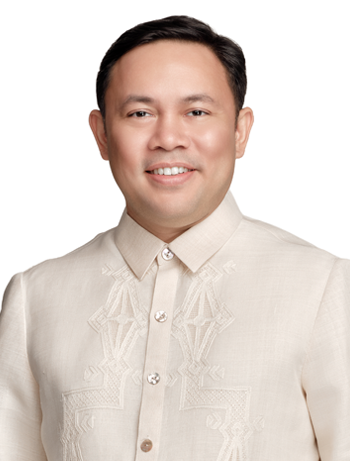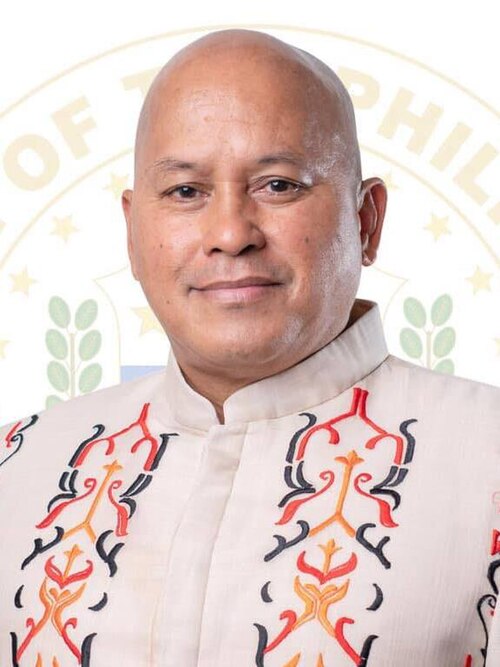







Enrile in 2017 (via Wikimedia Commons)
Enrile was a central figure in both martial law and the EDSA transition.
MANILA – Juan Ponce Enrile, whose political life spanned the post-war republic, the Marcos dictatorship, the restoration of democracy, and the rise of a second Marcos presidency, died on Thursday, November 13, 2025. He was 101.
His daughter, Administrator and CEO of CEZA (Cagayan Economic Zone Authority) Katrina Ponce Enrile, said her father peacefully returned to his Creator at 4:21 p.m., passing away at home with his family at his bedside. In the days leading to his death, Enrile had been confined in an intensive care unit for pneumonia. President Ferdinand Marcos Jr. expressed condolences and said Enrile was among the most enduring figures in the country’s public life.
Born Juan Valentin Furagganan Ponce Enrile Sr. on February 14, 1924 in Gonzaga, Cagayan, he rose from provincial childhood to become a central figure in Philippine politics. Over a six-decade career, he held key positions that included finance undersecretary, customs commissioner, acting Insurance Commissioner head, Secretary of Justice, and Secretary of National Defense under President Ferdinand Marcos Sr. He was a key military figure in the 1986 EDSA People Power Revolution, a four-term senator, Senate President from 2008 to 2013, and presiding officer of the 2012 impeachment trial of Chief Justice Renato Corona. His final role in government was as Chief Presidential Legal Counsel to President Marcos Jr. from 2022 to 2025.
His public life featured dramatic turns. He helped implement martial law, later became a prominent defector during the 1986 EDSA uprising, then emerged as a Senate power broker. He was charged with plunder and graft in connection with the PDAF controversy, although the Sandiganbayan eventually acquitted him after ruling that the prosecution failed to establish guilt beyond reasonable doubt.
From Cagayan roots to national prominence
Enrile was born out of wedlock and spent his early childhood in Cagayan before reuniting with his father, lawyer and politician Alfonso Ponce Enrile, in Manila. He excelled in school, graduating cum laude from Ateneo de Manila University and the University of the Philippines College of Law. He placed eleventh in the 1953 Bar Examinations and later earned a Master of Laws from Harvard University.
Before entering government service, he taught law and practiced in a firm he helped establish. His early legal career served as his entry point into national politics.
Marcos ally and defense minister during martial law
After holding several economic and regulatory posts in the 1960s, Enrile was appointed Secretary of National Defense in 1970. He became a principal public defender of martial law when it was declared in 1972. A reported ambush on his car shortly before the proclamation was cited by Marcos as part of the justification for martial law. The episode has been disputed by historians, but Enrile insisted in later interviews and in his memoirs that the ambush was real.
Human rights groups and official historical studies have documented that the martial law period was marked by widespread violations, including arrests without warrants, torture, and extrajudicial killings. Enrile denied involvement in abuses, although he acknowledged the difficult conditions under which the armed forces operated.
Break with Marcos and role in the 1986 People Power uprising
By February 1986, tensions between Enrile and the Marcos administration had intensified. Enrile, together with Armed Forces Vice Chief of Staff Fidel V. Ramos, publicly withdrew support from Marcos, an act that sparked the four-day EDSA People Power Revolution. Millions of Filipinos gathered in peaceful protest, leading to the end of the Marcos regime and the installation of Corazon Aquino as president.
Enrile briefly served as Defense Secretary under President Corazon Aquino but was removed in late 1986 after being linked to coup plots. He was detained on rebellion and related allegations but was released before the 1987 elections. The Supreme Court eventually dismissed the charges in 1990.

A visual chronicle of Juan Ponce Enrile’s public life, featuring his centenarian commemorative stamps, a police inspection of his bullet-riddled car after the reported 1972 ambush, his official portrait as Defense Secretary, and a scene from President Ferdinand Marcos Sr.’s 1983 state visit to Washington where Enrile stood among the senior officials in the Philippine delegation. (Public domain images via Wikimedia Commons)
A long and complex Senate career
After his release, Enrile returned to electoral politics. He won a Senate seat in 1987, then returned through elections in 1995, 2004, and 2010. He became known for his command of legislative rules and his skill in navigating institutional conflicts. In 2008, he was elected Senate President and presided over a period marked by major policy debates and high-profile inquiries, including the 2012 impeachment trial of Chief Justice Renato Corona.
He stepped down from the Senate presidency in 2013 and completed his final Senate term in 2016.
Legal troubles and eventual acquittal
In 2014, Enrile was charged with plunder and graft for allegedly diverting approximately 172 million pesos in Priority Development Assistance Fund allocations to nongovernmental organizations linked to Janet Lim Napoles. He surrendered voluntarily and was held under hospital arrest. In 2015, the Supreme Court granted him bail on humanitarian grounds because of his age and health.
On October 4, 2024, the Sandiganbayan acquitted Enrile of plunder. On October 24, 2025, the court also acquitted him of the remaining graft charges. In both rulings, the court stated that the prosecution failed to meet the standard of proof required for conviction.
Family life and business interests
Enrile married Cristina Castañer Enrile in 1957. They had two children, Juan “Jack” Ponce Enrile Jr. and Katrina Ponce Enrile, both of whom later pursued careers in business and public service. He was a grandfather to several grandchildren who, according to the family, remained close to him in his later years. Enrile often said that his wife and children were central to his life and credited Cristina for providing stability throughout his decades in public office.
Outside public service, Enrile built extensive business interests. He founded Enrile and Company and served as chair of the JAKA Group, a family-owned conglomerate involved in food processing, manufacturing, forestry, trading, and security services. The group included JAKA Investments, JAKA Food Processing, and Alog and Company. Many of these businesses were later managed by his children.
Enrile also maintained agricultural interests in rice and corn production in northern Luzon, which he described as his first livelihood before entering government. Public corporate filings list him as a shareholder in several private firms, although operations were gradually turned over to the next generation in his later years.
Legacy of influence and controversy
Enrile leaves a legacy that continues to shape national discourse. Supporters remember him as a lawyer of exceptional skill and a strategist who played a role in stabilizing institutions during moments of crisis. Critics regard him as a principal architect of the martial law system that curtailed civil liberties and resulted in widespread abuses. His later return to public office under President Marcos Jr. and his varied positions over the years made him one of the most polarizing figures in modern Philippine history.
Enrile publicly declared that he had “no regrets, no mistakes” about his choices, and he often said he would stand by whatever he had done because he believed it was for the country.
The Enrile family said details of public viewing and interment would be released soon.