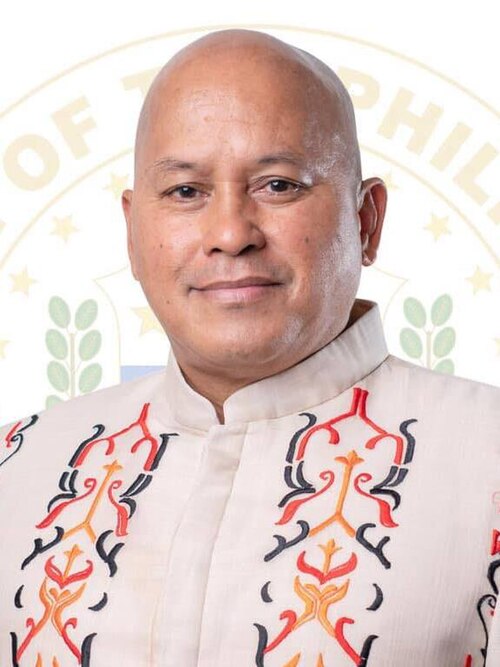







Former senator Ramon “Bong” Revilla Jr. is seen in a Senate hearing in this file photo. The ICI has recommended plunder and corruption charges against him in its flood control investigation. (Photo from @bongrevillajrph / Instagram)
MANILA – The Independent Commission for Infrastructure on December 3 formally recommended to the Office of the Ombudsman the filing of plunder, graft and related corruption charges against former senator Ramon “Bong” Revilla Jr. and several other individuals in connection with alleged irregularities in flood control projects reviewed by the government’s investigative panel.
Retired Supreme Court justice Andres Reyes Jr., who chairs the ICI, said the referral followed months of sworn testimonies, field inspections, engineering audits and cross checks of procurement records for flood mitigation projects in multiple regions. Reyes said the ICI’s mandate is limited to fact finding and that the Ombudsman will make an independent determination on whether probable cause exists.
Audit findings raise questions about how public infrastructure funds were used.
According to the ICI, its review of clustered flood control projects found documentary inconsistencies, procurement gaps and engineering concerns that warranted referral to the Ombudsman. Although the full investigative records were not made public, Reyes said the commission examined contract documents, supplier submissions, project timelines and sworn statements from current and former officials.
The ICI says its referral includes evidence sets tied to suspected anomalies in flood projects.
The commission’s referral lists Revilla along with private contractors and individuals named during ICI proceedings. Based on the commission’s public briefing, those recommended for charges include:
- Ramon “Bong” Revilla Jr.
- Manny Bulusan
- Carleen Yap Villa
- Gerard Opulencia
- Ruel Umali
- Gene Ryan Altea
- J.Y. Dela Rosa
- A Mrs. Patron, whose full identity was not disclosed during the announcement
- Carlo Aguilar
- Maynard Ngu
Reyes said the referral covers alleged violations ranging from direct or indirect bribery to potential misuse of public funds. He did not provide details on the specific transactions involved, noting that these will be evaluated by the Ombudsman during its review.
Several lawmakers and former officials are now the subjects of an expanded case buildup.
A second list submitted by the ICI urges the Ombudsman to conduct further investigative review on several high profile officials. Reyes said sworn statements and project linkages presented before the commission require deeper evaluation but are not yet grounds for a direct charge recommendation.
The officials recommended for case buildup include:
- Senator Francis “Chiz” Escudero
- Makati Mayor Nancy Binay
- Senator Mark Villar, former secretary of the Department of Public Works and Highways
- Former senator Grace Poe
The ICI also forwarded additional materials that may be relevant to potential future actions involving former DPWH secretary Manuel Bonoan, former undersecretaries Catalina Cabral and Roberto Bernardo, former representative Zaldy Co, Commission on Audit commissioner Henry Lipana and several former DPWH engineers. These documents were transmitted as supporting evidence rather than primary charge recommendations.
The final outcome will depend on the Ombudsman’s independent assessment of the referral.
Revilla has publicly denied receiving any commissions from flood control projects and has questioned the commission’s process, saying he was not invited to appear before the ICI prior to the referral. He said he intends to respond formally once the Ombudsman initiates its review.
Officials named for case buildup, including Villar, Poe and Binay, have also denied wrongdoing. They said the allegations raised in testimonies or reports remain unproven and noted that no formal cases have been filed against them.
The Ombudsman has not provided a timeline for evaluating the ICI’s submissions. All individuals named in the referral remain presumed innocent while the Ombudsman reviews the evidence and determines whether criminal or administrative cases should proceed.