







Food creator Vince Vasquez of The Taste Bud and Filipino-American chef-restaurateur Leah Cohen sample Ilocos empanadas in the San Francisco Bay Area, spotlighting the northern Philippine specialty as it gains attention across U.S. food circles. (Photo from The Taste Bud Instagram account)
A northern Philippine street food finds new life in the U.S. as home-based cooks build a coast-to-coast cottage-food enterprise around the regional specialty.
A brightly colored street snack from northern Philippines is gaining commercial momentum across the United States, driven largely not by restaurant chains but by home-based food entrepreneurs.
Ilocos empanada, long associated with Batac City and Vigan, is now being produced by dozens of small-scale sellers from California to New York. Many operate under cottage food laws, selling through pre-orders, community markets and social media announcements.
While some Filipino restaurants, and at least one food truck, have begun offering the dish, much of its recent visibility comes from independent home kitchens responding to rising demand.
A regional identity rooted in Ilocos
Empanadas were introduced to the Philippines during the Spanish colonial period, but in Ilocos the dish evolved in a distinct direction.
In Ilocos Norte and Ilocos Sur, rice flour replaced wheat as the base of the wrapper. The shell is tinted orange with annatto and deep-fried until crisp.
Traditional fillings include shredded unripe green papaya, mung bean sprouts, Ilocano longganisa and a whole egg cracked directly into the center before sealing. The empanada is typically served with sukang Iloko, a cane vinegar seasoned with garlic and chilies.
In Batac, the Batac Riverside Empanadaan functions as a centralized hub of empanada vendors, reinforcing the city’s longstanding branding as a culinary origin point. Festivals and tourism campaigns have further elevated the dish as a civic identifier.
Subtle distinctions between Batac and Vigan styles remain part of regional culinary discussion.
Why it is trending now
Market observers point to several converging factors behind the empanada’s expanding presence in the United States.
Visual impact. The vivid orange shell stands out in digital formats and short-form video.
Texture appeal. The rice-based crust produces a crisp bite that translates effectively on camera.
Low barrier to entry. Compared with opening a full restaurant, producing empanadas from a licensed home kitchen requires relatively modest startup capital.
Growing interest in regional cuisine. Filipino-American consumers increasingly seek dishes tied to specific provinces rather than generalized Filipino offerings.
The home-based model has been particularly influential. Sellers often announce limited “drops” online, with orders frequently selling out within hours. Fulfillment typically occurs through scheduled pick-ups, weekend markets, or community and church events.
Food analysts note that similar grassroots growth patterns have helped other culturally specific dishes gain broader recognition.

A growing micro-enterprise network
In Ilocos, empanada vending supports tourism and local small businesses. In the United States, the growth pattern has taken shape primarily through:
• Licensed cottage-food operations
• Social media-based pre-order systems
• Frozen empanadas sold for home frying
• Cultural festival and community event booths
• Select restaurant and food truck menu placements
Because the wrapper is rice-based and each empanada is assembled individually, scaling production requires careful moisture control and consistent oil temperature. Vendors say ensuring the egg cooks properly without compromising shell integrity remains a technical challenge.
The labor-intensive preparation has limited large-scale industrial production, preserving the dish’s handcrafted character even as demand grows.
Culinary structure and appeal
Ilocos empanada’s appeal lies in contrast.
The crisp rice shell fractures on first bite. The green papaya adds mild sweetness, while garlic-forward longganisa provides savory depth. The egg binds the filling into a cohesive center, and cane vinegar resets the palate with acidity.
The combination of crunch, richness and tang distinguishes the empanada from other fried pastries and contributes to repeat demand across generations.
A recipe grounded in tradition
For households seeking a Batac-style version:
Dough
2 cups rice flour
1–2 tablespoons annatto powder or annatto-infused oil
1 teaspoon salt
1 tablespoon neutral oil
1¼ cups hot water
Combine dry ingredients. Gradually add hot water and knead until the dough becomes smooth and pliable.
Filling
2 cups shredded green papaya
1 cup mung bean sprouts
Cooked Ilocano longganisa, crumbled
1 egg per empanada
Garlic and onion
Lightly sauté the aromatics and keep the filling relatively dry before assembling.
Flatten the dough thinly, add the filling, crack the egg inside, fold and seal tightly. Deep-fry at about 350°F until crisp. Serve with cane vinegar seasoned with garlic and chili.
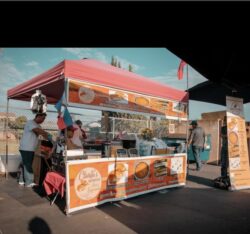
From street stall to home-based enterprise
The renewed popularity of Ilocos empanada reflects a broader evolution in Filipino-American food markets. Regional specificity is gaining prominence, and province-based dishes are expanding through decentralized production rather than corporate rollout.
From Batac’s roadside stalls to licensed home kitchens in Los Angeles, New Jersey and New York, the empanada’s expansion illustrates how traditional foods can adapt to modern small-business ecosystems.