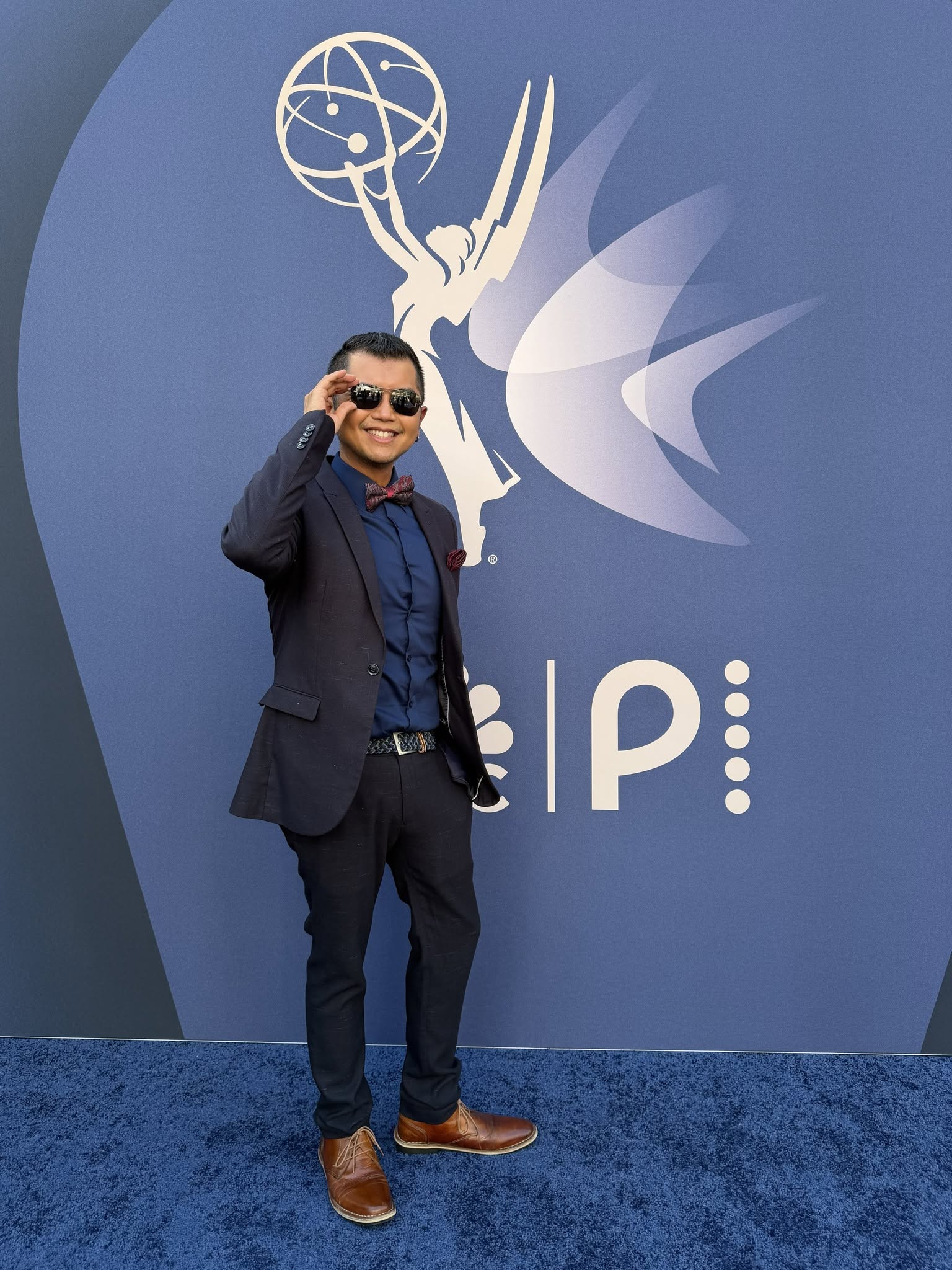




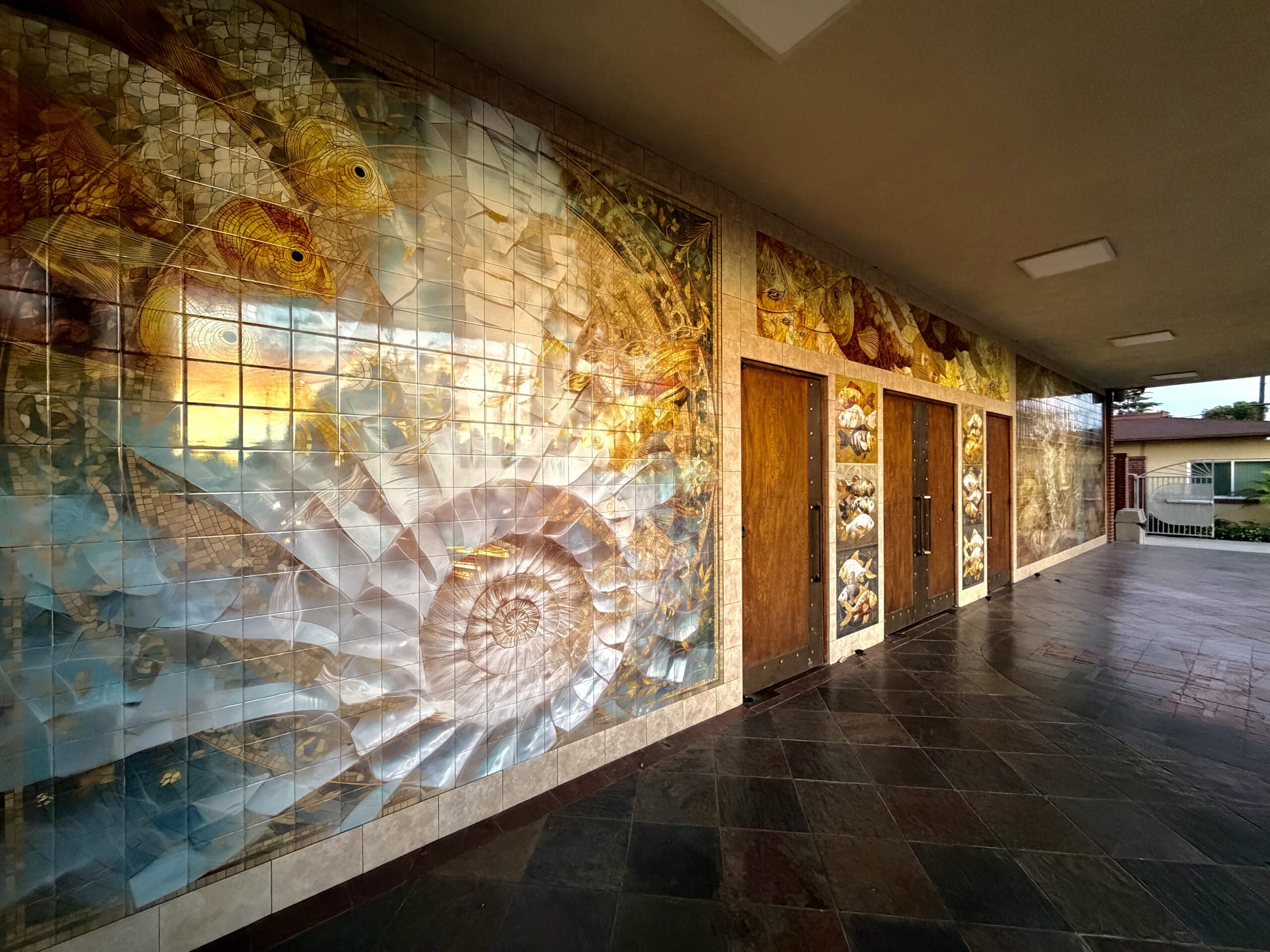
“Fishers of Men”, done by Jose Garcia Moreno (photo of Fr. John Ernesto Cordero)
Filipino Catholics find a growing voice in the American Church
An interdiocesan consultation brings together clergy and lay Catholics to reflect on Filipino leadership, ministry and an increasingly multicultural Church
By Prosy Abarquez-Delacruz, J.D.
“We cannot claim universality [of the Catholic Church] while suppressing particularity. We cannot preach community while overlooking individual communities [ethnicities]. And we cannot celebrate diversity while treating Filipino faith as mere decoration rather than as a genuine theological contribution.”
— Fr. Michael Montoya, 2026
I have not been this excited in a long time to share the nuggets of wisdom I gained from attending a consultation on Filipino Catholics: Gifts to the Church and the World.
At first, I thought the title sounded pretentious. Then I dug deeper into the positive contributions of Filipino American priests.
I recalled how my publishers, Cora Oriel and Roger Oriel, once assigned me to interview Filipino priests in Southern California. They were prescient.
The National Association of Filipino Priests, formed in 2009, has since held five national congresses, where member priests have found support, growth and unity. At the time of its formation, more than 900 priests attended the first Congress.
I wrote feature stories on 51 priests and two bishops, published in Asian Journal Press and Balikbayan Magazine. I interviewed priests of Irish, German, Japanese, Mexican, Chinese and Filipino descent.
Embedded in their stories were their struggles and the ways they transcended them, guided by the grace of the Holy Spirit, sustained by strong ties to their pastoral communities and supported by their biological families.
Some built churches and community halls; curated exhibits of statues of the Blessed Virgin Mary, including 50 collected from donors from different countries; built meditation gardens incorporating statues of saints; renovated century-old churches; and formed dynamic ministries to meet pastoral needs.
Others developed relationships with other faiths that grew into interfaith coalitions addressing community needs for unity and harmony.
In some parishes, every nook and cranny of the church was transformed through the engagement of parishioners, from the young to the old. Some priests helped establish children’s church choirs whose members later became academic scholars; built memorial shrines for ancestors with the Pietà and LED-lit candles; and led Marian and Holy Land pilgrimages.
Some pursued advanced degrees, completed doctorates and authored books. Two composed songs, and one wrote musicals to popularize the lives of saints.
Seared in my memory is the story of a priest who traveled to reach his mountain parishes, walking mountainous trails and passing through three security checkpoints: one guarded by the government military, another by the opposition and a third by a community sentry in his home province in the Philippines.
Can you imagine the interpersonal skills required to transcend fear while passing through three different security checkpoints?
Another priest rode a motorbike for hours over an unpaved road to reach a place of worship near the hinterlands, arriving covered in dust, sweat and dirt.
A historic interdiocesan gathering
On August 8, 2026, 88 attendees gathered from the dioceses of Los Angeles, San Bernardino, Orange, Las Vegas and San Diego, along with students from Hawaii, for a historic interdiocesan consultation.
What impressed me was how smoothly the six-hour seminar unfolded: concise 30-minute presentations by three priests, three group discussions and a report-back from participants.
With the use of Menti.com, our synthesis was displayed concurrently as the day progressed.
It reminded me of a strategic planning meeting I attended in 2002-2003 with 60 members of the American Society for Quality, led by Elizabeth Keim. Participants used dedicated Apple iPads programmed for a national consultation meeting.
It was impressive to see everyone’s input appear on the main screen. Participants were encouraged to share more, and by the end of the meeting, they complimented the conveners on a process that promoted democratic and inclusive participation. Every contribution was recognized; none was excluded.
I was struck by how technology could serve as an equalizer, especially given the history of this international professional organization, which since 1946 had been led overwhelmingly by men: 75 white male leaders and only six women, or about 8 percent, over its 80-year history.
I saw the untapped potential.
This consultation was no different. It was moving to see participants’ voices heard and their reflections synthesized and projected onto the large screen.
The use of Menti.com encouraged people who had initially been shy and timid at our table to stand and share stories from their hearts, some with tears as they recalled periods of isolation they had once experienced.
They were not griping or venting. They were recalling memories that had helped guide them toward healing, speaking honestly about their own experiences. Places of brokenness had become places where they were now experiencing grace.
Was it the prayers of Bishop Alex Aclan, invoking the Holy Spirit to open our minds and hearts to one another and to help us share honestly about our lives?
Was it the combined effect of the three priests’ presentations?
Was it the adept facilitation of Clarissa Ann Martinez, assistant director of the Subcommittee on Asian and Pacific Affairs of the United States Conference of Catholic Bishops?
Or was it the engaged participation and focus of the attendees?
Perhaps it was all of these.
Filipino leadership in parish life
Just as the American Society for Quality had only six women in national executive leadership positions over its 80-year history, Catholic churches did not have Filipino pastors and administrators until the 20th century.
At the rank of bishops, there are six Filipino auxiliary bishops and one full bishop, called an ordinary, while California has around 19 active diocesan and auxiliary bishops, two archbishops and a cardinal. Most recently, 12 priests have retired.
At Our Lady of Assumption, now 80 years old, Fr. Michael Montoya is the first Filipino pastor.
At Incarnation Church in Glendale, now in its 99th year, Fr. Rodel Balagtas is its first Filipino pastor. He is overseeing the renewal of the church and expansion of its campus to include a new parish community hall, two classrooms for music and art, a new courtyard and a landscaped parking lot designed in part for heat mitigation.
These renovations are intended to provide strategically for seven more generations to come. A decade ago, he also renovated and updated the century-old Immaculate Heart of Mary Church in East Hollywood.
At Holy Family in Artesia, now in its 96th year, Fr. John Ernesto Cordero, a Filipino pastor, is at the helm, following Fr. Raymond Decipeda.
There, we see more than a renewal of structures. We also see an upsurge in devotees following the permanent placement of a replica of the Black Nazarene. On Valentine’s Day 2026, it attracted more than 1,500 devotees. The replica is also transferred to churches in other dioceses, attracting additional devotees.
Holy Family Church has a new mural created by Jose Garcia Moreno around the theme “fishers of men.”
Its “intertwined fish moving through the spiral symbolize the interconnectedness of the community, from all different backgrounds, different roots,” according to Fr. John, whose flock consists of Filipinos, Portuguese, Chinese and Spanish parishioners, as well as a Panamanian deacon.
Beyond the symbolic mural and what has been called the browning of the pews is a larger reality: Filipino Catholics are increasingly part of the leadership and daily life of multicultural Catholic communities.
But the priests who addressed the Claremont consultation challenged participants to look beyond numbers, representation and physical presence.
Their argument was that Filipino Catholics bring something else to the Church: a history, a spirituality and a theological perspective that deserve to be understood on their own terms.
Prosy Abarquez-Delacruz, J.D. writes a weekly column for Asian Journal, called “Rhizomes.” She has been writing for AJ Press for 18 years. She also contributes to Balikbayan Magazine. Her training and experiences are in science, food technology, law and community volunteerism for 4 decades. She holds a B.S. degree from the University of the Philippines, a law degree from Whittier College School of Law in California and a certificate on 21st Century Leadership from Harvard’s Kennedy School of Government. She has been a participant in NVM Writing Workshops taught by Prof. Peter Bacho for 4 years and Prof. Russell Leong. She has travelled to France, Holland, Belgium, Japan, Costa Rica, Mexico and over 22 national parks in the US, in her pursuit of love for nature and the arts.