




By Janet Susan R. Nepales
It was our third visit to LAIKA Studios in Portland, Oregon. Our first visit was for its stop-motion animated fantasy film “Kubo and the Two Strings” (2016), followed by its adventure comedy “Missing Link” (2019). This time, we returned for its dark fantasy film “Wildwood” (2026).
LAIKA, one of the leading studios in stop-motion animation, is also known for films such as “Coraline,” “ParaNorman” and “The Boxtrolls.”
Stop-motion animation is one of cinema’s oldest art forms and one of its most challenging. Every frame requires intention, and every detail must be conceived, built and animated by hand.
That is why we are always in awe of the hundreds of hours animators and puppeteers spend bringing characters to life, particularly when conveying emotions through their eyes.
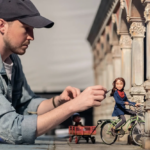
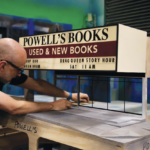
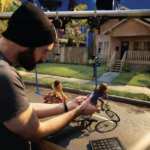
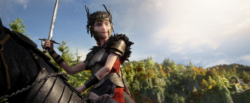
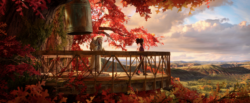
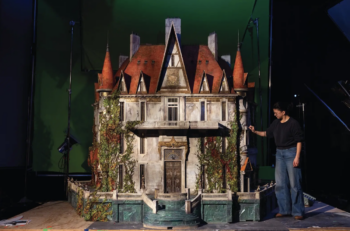
“Wildwood” was in production for seven years, with 1,000 artists working on the film. More than 132 practical sets were built, and over 140,000 individual faces were created for the film’s 236 unique puppets. And we have not even mentioned the numerous costume changes required for each character.
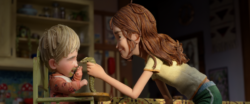
Co-produced and directed by LAIKA head Travis Knight and written by Chris Butler, the film is based on the 2011 novel by Colin Meloy, illustrated by Carson Ellis. The story follows two classmates, Prue McKeel (Peyton Elizabeth Lee) and Curtis Mehlberg (Jacob Tremblay), who are drawn into a hidden magical forest near Portland, Oregon, as they attempt to rescue Prue’s infant brother, Mac, who has been abducted by a group of crows.
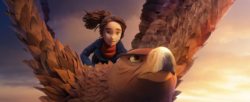
The voice cast also includes Carey Mulligan as Alexandra the Governess, Mahershala Ali as Brendan the Bandit King, Awkwafina as Septima the Rat and Angela Bassett as the General, a golden eagle, among others.
To better understand the challenges animators faced in bringing “Wildwood” to life, we interviewed several members of the production team.
In our exclusive interviews, Ollie Jones (Head of Character and Practical FX), Brian McLean (Director of Rapid Prototype), Nelson Lowry (Senior Production Designer), Deborah Cook (Head of Costume) and Brad Schiff (Head of Animation) discussed what made their involvement in “Wildwood” special, the challenges they encountered in creating the stop-motion animation, their favorite characters, what they hope audiences will take away from the film and what they consider LAIKA’s greatest contribution to the animation industry.
Ollie Jones (Head of Character and Practical FX) and Brian McLean (Director of Rapid Prototype)
You have worked on several LAIKA films. What makes your involvement in “Wildwood” particularly special and memorable?
Ollie: Every movie challenges us, right? But this movie had so much complexity and was so big. There are animals, and there were 2,800 shots. We had to create 236 puppets. And so, it was an overwhelming number of technical challenges for us.
Brian: From reading the script six years ago and getting ready to make this movie, it felt like we were climbing Mount Everest. It seemed like literally an impassable wilderness or problem to get through. And now, looking back and seeing all the successes and the amazing team that came together to make this film possible, I feel very proud to be part of such an epic film.
Who is your favorite character?
Ollie: I really loved the General (the enormous golden eagle voiced by Angela Bassett). In terms of making something you dream of, the General was that kind of project. It has authenticity in terms of its relationship to nature. There was the technical challenge of trying to make a bird’s wings fold up and its neck stretch, working with thousands of feathers, and seeing what the team could produce under the circumstances of trying to make something work that way for the very first time. I think that was really rewarding.
Brian: My favorite character is Curtis. He’s pretty simple in his execution. There weren’t a lot of technical challenges in creating him, but he’s such an endearing, lovable little guy, and he’s very funny and very cute. I just love the way his character comes to life.
What do you hope audiences will take away from watching the movie?
Ollie: I hope they just really make a connection. I think they’re going to connect with the characters, and they’re going to connect with the process, and they’re going to walk away feeling really fulfilled. It’s such a classic hero’s journey. We really see Prue’s arc and her growth. I really think people are going to come away with a real sense of fulfillment.
Brian: It’s such a powerful story. How far would you go for the ones you love? And I think it shows that Prue is not perfect. She’s a flawed character. There are a lot of flawed characters. You struggle between rooting for some characters and trying to figure out how they’re going to get through this very difficult time in their lives. It ends in such a way that you feel very fulfilled and very connected with a lot of the characters.
What do you think is LAIKA’s greatest contribution to the animation industry?
Ollie: Sticking with it. I do think they, like us, have supported this process, and there’s just been such an investment that we’ve seen the benefits all over the industry. With so many more people investing in stop-motion animation compared to when we were in college or when we started at LAIKA, I hope we can take some of the credit for that.
Brian: I think so much of what stop-motion animation has been over the decades has been very limited in its scope and scale, particularly in terms of what kinds of stories were considered possible to tell through stop-motion animation. With every film, we are redefining what that limit is. “Wildwood” just pushes that limit much higher than anyone even thought was possible.
Nelson Lowry (Senior Production Designer), Deborah Cook (Head of Costume) and Brad Schiff (Head of Animation)
You have worked on several LAIKA films before. What makes your involvement in this movie particularly special and memorable?
Nelson: I’ve done a bunch of stop-motion features, and they’ve all been challenging, but this is sort of like double the challenge because of the epic size of the film, the amazing story arc of the characters and the world we had to build around them. It also had a more elevated look because the characters were less stylized, and so the environment was a little more realistic.
It took a lot of planning, a lot of research and just hard work to get through it. But I feel that we kept the joyful spirit of Portland and the art of storytelling throughout the film. I’m proud of it.
Deborah: I designed the costumes in 2021. So, it was way back, and it was during COVID. We had an idea that the studio was really going through a kind of époque or renaissance in the scope of movies that we were taking on and the stories that we wanted to tell. So, I felt like there was a kind of renewed excitement for me in knowing where these characters were going to go and how much of a world they were going to populate, whilst also not quite knowing how it would all roll out.
Brad: We had never done an epic adventure fantasy before. We’ve learned something from every film that we’ve made. The previous five finally set us up to be able to tackle something as ambitious as “Wildwood.” We’ve all worked together for many years, nearly 20 years now. So, we all want to try to be our best for one another. Hopefully, it shows in “Wildwood.”
Who is your favorite character?
Nelson: Mine is probably Brendan (the Bandit King, voiced by Mahershala Ali), just because he’s such a powerful, larger-than-life character, and the voice work and everything just come together. The costume, the animation. I love that character.
Deborah: I am attached to a few different characters. I like the relationship between Prue and Curtis. I think I like Curtis. I liked his costume changes. They were really adventurous.
Brad: Curtis, for me. I think he’s such a sweet character. He’s a naive teenage boy who winds up having to face some really difficult decisions throughout his arc. And yeah, it’s a little sad, some of the things he winds up having to see and experience, but he’s still sweet all the way to the end.
What do you hope audiences will take away from watching the movie?
Nelson: I hope they can sit back and enjoy the beautiful world of animation and storytelling in this epic adventure. It’s unlike anything we’ve quite seen in stop-motion animation to date. I hope they see it a few times.
Deborah: Yeah, I think it’s probably one of the most ambitious stop-motion movies that any company has ever taken on. We all feel quite proud of it and hope that people really relate to it. It’s very much centered here, where the studio is based. So, there’s a special relationship between the studio and the people of Portland. I can’t wait for them to see it and for the whole world to see it as well.
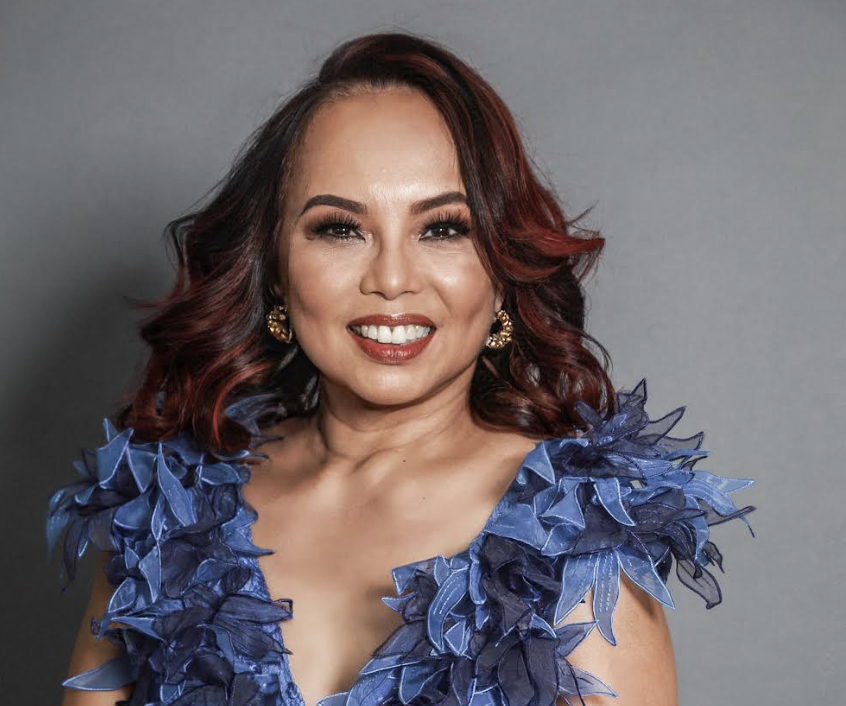
Janet Susan R. Nepales is an award-winning journalist and the first Filipina voting member and Associate of the Golden Globe Awards. She has been a member since 2008 and is the first Filipina to be elected to the Advisory Board. She is the author of the coffee table book “FASHION. Filipino. Hollywood. The World” and the co-author of the first FWN book “DISRUPT: Filipina Women: Proud. Loud. Leading Without A Doubt.” A graduate of UST (AB Journalism, cum laude), she is based in Los Angeles and is a Hollywood entertainment journalist and TV correspondent.