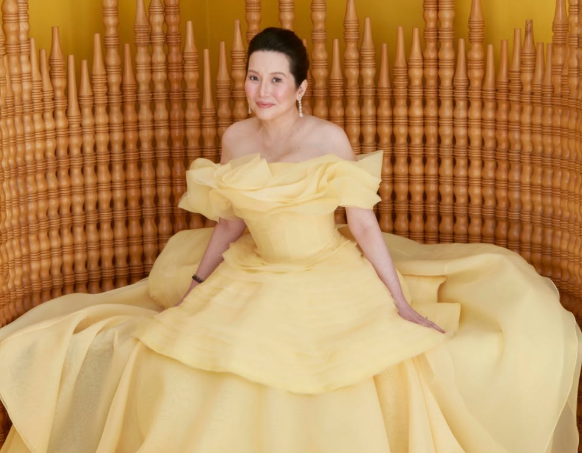







She was barely in her teens when a novelty song made her a household name. At 60, Sharon Cuneta remains a defining figure across generations of Philippine popular culture.
At 12, Sharon Cuneta did not set out to become a public figure for life. A novelty song did that for her.
In 1978, “Mr. DJ” became an unexpected national hit, lifting an elementary school-aged Cuneta into a spotlight that would never fully recede. She was still attending classes when the song climbed the charts. By the time she understood what public recognition demanded, it had already taken hold, shaping a childhood and a career that unfolded in full view.
Fame before adolescence
Early success often fixes performers in time. Cuneta did not remain fixed. She grew up in public, learning early that attention brings expectations that do not pause for age. The transition from pre-teen star to serious performer unfolded under constant watch, shaping instincts about work, restraint, and visibility.
What followed was not a straight line, but a process. Presence mattered, but so did progression.
A family accustomed to public life
Public visibility was not entirely foreign. Cuneta is the daughter of Pablo Cuneta, who served for decades as mayor of Pasay City, and Elaine Gamboa, who anchored family life as attention gathered outside. The household existed within the orbit of public service and scrutiny, offering early lessons in how attention can be both ordinary and exacting.

When entertainment drew her fully into the spotlight, the shift from private child to public figure was swift and largely irreversible. Childhood did not end. It changed form.
From novelty success to serious craft
Music opened the door. Film secured her place. By the early 1980s, Cuneta was anchoring box office films that shaped a generation’s emotional vocabulary. Over time, she emerged as an award-winning actress who continued to hone her craft, moving beyond ingénue roles toward performances defined by restraint, range, and emotional intelligence.
Her career was built not on repetition, but on accumulation. Popularity evolved into familiarity. Familiarity settled into permanence.
Love and loss, lived publicly
Cuneta’s personal life unfolded with the same visibility as her career. Her marriage to actor Gabby Concepcion captivated public attention and produced a daughter, KC Concepcion. Its dissolution became one of the country’s most closely watched celebrity separations, underscoring the cost of public intimacy.

There were no quiet endings. Decisions were examined, remembered, and replayed.
Her later marriage to Francis “Kiko” Pangilinan, a lawyer and current senator of the Philippines, followed a different rhythm. Together, they built a blended family, welcoming three more children into their life. Stability did not mean privacy. It meant negotiation, patience, and adaptation under continued scrutiny.
Recalibration in midlife
By midlife, Cuneta had lived several versions of success. Periods of pause were often labeled comebacks when she returned. In hindsight, they read as recalibrations, conscious decisions about how much of herself to give and when.

She spoke more plainly about health challenges, emotional fatigue, and faith. The tone was measured and grounded. Resilience was no longer performed. It was practiced. These choices did not diminish her presence. They deepened it.
What 60 signifies
Cuneta’s 60th birthday was marked publicly, but its meaning was quieter. It was not framed as culmination or victory. It marked continuity of presence, voice, and choice.

What distinguishes Cuneta is not the absence of turmoil, but her capacity to remain central despite it. Not unchanged. Not untouched. Still present.
She was a pre-teen when the country first learned her name.