





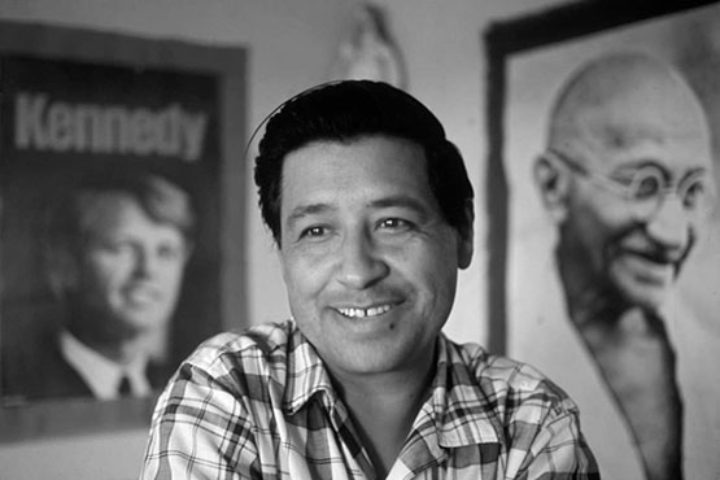
César Chávez, co-founder of the United Farm Workers. Chávez led national boycotts and organizing efforts that brought attention to the working conditions of agricultural laborers in the United States. – Photo credit : César Chávez Foundation
Labor leader’s legacy faces scrutiny as organizations suspend national commemorations and open independent review channels
LOS ANGELES — César Chávez, the co-founder of the United Farm Workers (UFW) and a central figure in American labor and civil rights history, is the subject of newly surfaced allegations of sexual abuse involving women and minors, according to statements released Tuesday by the organizations he founded.
The reports – described by UFW leadership as “profoundly shocking” – have prompted the immediate suspension of national commemorations tied to the March 31 César Chávez Day holiday, triggering a broader reassessment of a legacy long embedded in public institutions, education systems, and labor history.
What is being alleged
In a joint acknowledgment issued March 17, 2026, the UFW and the César Chávez Foundation cited reports of inappropriate sexual behavior involving women and minors that allegedly occurred during Chávez’s tenure as president of the United Farm Workers.
“Allegations that very young women or girls may have been victimized are crushing,” the UFW said in its statement, noting that while it does not have firsthand verification of specific incidents, the severity of the claims warranted immediate action.
Both organizations announced the creation of an independent, confidential reporting channel for potential victims, supported by trauma-informed professionals.
As of March 18, 2026, no criminal charges have been filed, and the allegations have not been adjudicated in court.
The movement he built
Any reassessment of Chávez’s legacy is inseparable from the movement he helped lead, one rooted in the struggle of farmworkers in California during the 1960s.
The modern farm labor movement took shape in 1965, when Filipino farmworkers, led by labor organizer Larry Itliong, initiated the Delano grape strike in Kern County. Chávez, alongside Dolores Huerta, joined the effort soon after, merging their organization with the Filipino-led Agricultural Workers Organizing Committee to form what would become the United Farm Workers.
Through nonviolent protest, national boycotts, and high-profile marches – including the Delano-to-Sacramento pilgrimage – the movement drew national attention to the working conditions of agricultural laborers. It secured union contracts that improved wages, introduced health protections, and formalized collective bargaining rights in California agriculture.
From civil rights icon to public institution
By the time of his death, Chávez had become a nationally recognized figure. He died on April 23, 1993, at the age of 66, in Arizona. His passing was widely mourned, and he was posthumously awarded the Presidential Medal of Freedom in 1994 by President Bill Clinton.
In the decades that followed, his name became institutionalized across the United States. Schools, public streets, parks, and federal observances – including California’s official state holiday – were established in his honor, cementing his place in the American narrative of labor rights and social justice.
A new dimension of scrutiny
The current allegations introduce a category of claims not previously central to public discussions of Chávez’s life.
Earlier critiques of his leadership focused on governance within the union – discipline, ideological rigidity, and strategic decisions regarding undocumented labor. The newly surfaced reports, however, raise allegations of personal misconduct of a potentially criminal nature, representing a significant departure from prior historical debates.
Legal and historical observers note that no formal complaints of sexual abuse were recorded in official labor or state records during Chávez’s lifetime, including those maintained by the California Agricultural Labor Relations Board.
The absence of documented cases has led to competing interpretations: that such claims may have remained unreported within the movement’s insular structure, or that they are only now emerging through retrospective accounts and investigative review.
National fallout and cancellations
The institutional response has been swift.
Major commemorative events planned for 2026 in Los Angeles, San Francisco, and Phoenix have been canceled or suspended.
In Texas, the fallout began on March 6, when the César E. Chávez Legacy and Educational Foundation (CECLEF) in San Antonio abruptly canceled its 30th-anniversary “March for Justice.” Internal municipal memos from Deputy City Manager María Villagómez cited a “sensitive matter” as the catalyst. Sources familiar with the matter indicated that local organizers had been alerted to a pending investigative exposé, reportedly by The New York Times, detailing the allegations. The foundation has since pledged to return approximately $60,000 in city-allocated funds.
A turning point in how the farm labor movement is remembered
Part of the renewed scrutiny also revisits Chávez’s late-1970s embrace of practices associated with Synanon, a California-based organization that evolved from a drug rehabilitation program into a highly controversial communal movement. Chávez adopted a confrontational group exercise known as “The Game,” in which participants subjected one another to intense verbal criticism in structured sessions.
Supporters at the time described it as a tool for discipline and internal accountability. Critics, however, have long argued that the practice fostered a climate of coercion, psychological pressure, and enforced conformity within the union’s leadership ranks. The association is considered controversial because Synanon itself later became the subject of criminal investigations and public condemnation, raising broader questions about the influence of its methods on the internal culture of the farm labor movement during that period.
The unfolding situation places institutions – including schools, municipalities, and labor organizations – in a complex position: how to reconcile documented contributions to labor rights with unverified but serious allegations of personal misconduct.
The UFW and the César Chávez Foundation have not issued definitive conclusions but have signaled that the allegations are significant enough to warrant structural response and independent review.