



The dedication of the Echo Park Branch Library honors the Filipino American author whose self-education through the Los Angeles Public Library helped transform a migrant worker into one of the most influential voices of the Filipino immigrant experience in America.
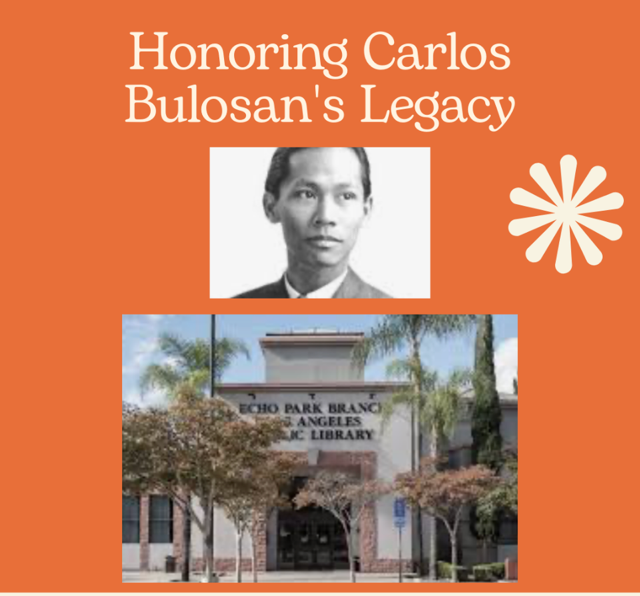
LOS ANGELES — The Echo Park Branch Library has been dedicated in honor of Filipino American author, poet and labor activist Carlos S. Bulosan, whose writings chronicled the struggles, aspirations and contributions of Filipino migrants in the United States.
The designation of the Carlos S. Bulosan Branch Library follows a community-led effort that drew support from educators, authors, community leaders and residents. Located near Historic Filipinotown and home to a Philippine Heritage Collection, the branch now links Bulosan’s literary legacy to one of the nation’s most significant Filipino American communities.
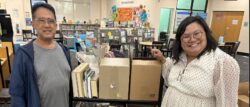
Bulosan, born in Pangasinan and arriving in the United States in 1930, is widely associated with depictions of Filipino migrant laborers in the early 20th century. His best-known work, America Is in the Heart, published in 1946, remains a foundational text in Filipino American, Asian American and working-class literature.
His path to becoming a writer was far from conventional. After arriving in the United States as a young migrant worker, Bulosan endured poverty, racial discrimination and periods of serious illness. Historical accounts indicate that while living in Los Angeles, including during years marked by tuberculosis and hospitalization, he immersed himself in books and pursued an intensive program of self-education through the Los Angeles Public Library system, particularly Central Library.
Carey McWilliams, one of California’s foremost chroniclers of labor, immigration and social history, later described Bulosan’s intellectual hunger in terms that have become closely associated with the writer’s Los Angeles years: “His ‘university’ was the Los Angeles Public Library … reading as though he’s compensating for years of missed schooling.”The observation carries weight because McWilliams documented many of the same labor and immigrant communities that Bulosan wrote about and later helped introduce Bulosan’s work to new generations of readers.
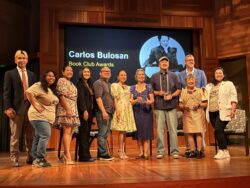
A central figure in the campaign was Jaime Geaga, who helped advance the proposal through the library commission and build institutional support for the honor. He was joined by James Castillo and a coalition of community organizations, including the Friends of the Echo Park Library and the Carlos Bulosan Book Club.
The formal process drew 121 public comments, all in support, according to the Philippine Consulate General in Los Angeles. The Board’s action followed an earlier approval to begin formal proceedings and a 90-day public comment period.
Beyond literature, Bulosan was known for his advocacy on behalf of workers. His writing frequently addressed economic inequality, discrimination and the pursuit of dignity among working people.
His influence reached a national audience in 1943, when his essay “Freedom from Want” appeared in The Saturday Evening Post alongside Norman Rockwell’s painting of the same name, placing his voice within a wartime conversation about democracy, opportunity and the meaning of America.
Decades after Bulosan turned to books while confronting illness, poverty and exclusion in Los Angeles, the library system that helped nurture his intellectual development has dedicated one of its branches in his name. The recognition places his story within one of the city’s enduring public institutions and gives lasting civic form to a writer whose work continues to shape understandings of the immigrant experience in America.



There was also the work & partnership of Los Angeles City Mayor Bass and her office/staff (Jenny Delwood & Eduardo Soriano Hewitt) in moving the proposal forward.