







WASHINGTON — Delays in renewals for Deferred Action for Childhood Arrivals (DACA) are raising concerns that some immigrants brought to the United States as children could lose valid work authorization while awaiting federal decisions, creating uncertainty for workers, employers and families nationwide.
DACA, established in 2012, provides temporary deferred action from deportation and eligibility for work authorization to certain immigrants brought to the country as children. It does not grant lawful immigration status, permanent residency or a path to citizenship. Recipients must renew their protection and employment authorization every two years.
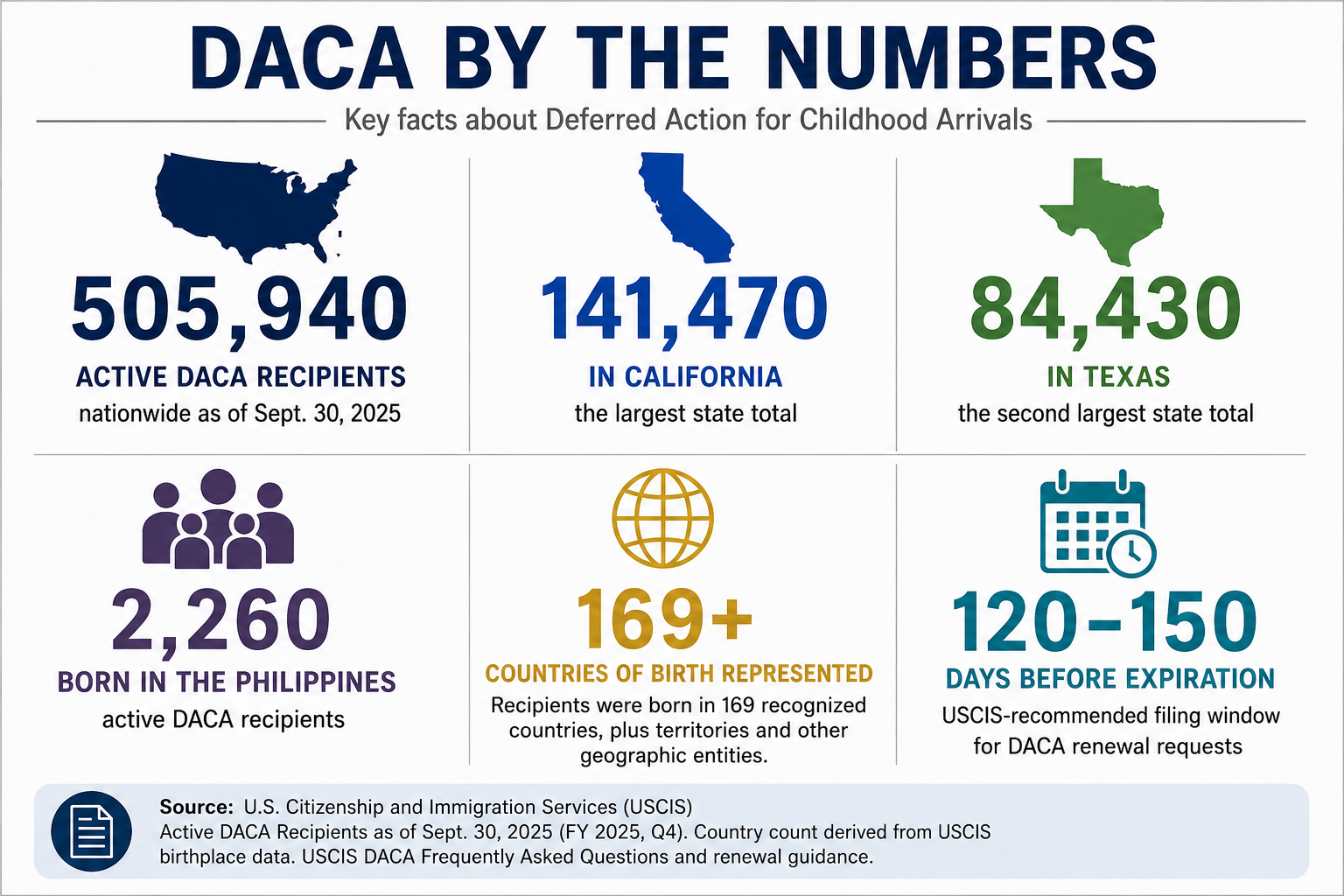
USCIS continues to accept and process renewal requests from current recipients, while first-time DACA requests remain restricted under court orders. The agency recommends filing renewals 120 to 150 days before expiration. Lawmakers say some applicants have nevertheless faced prolonged waits, including cases pending for months.
When a renewal is not approved before a recipient’s current authorization expires, the consequences can be immediate. Employers may place the worker on leave or end employment. Depending on state rules, a lapse can also affect a driver’s license. For families that rely on that income, the delay can quickly become a financial strain.
In May, Reps. Jim Costa, Adam Gray, David Valadao and Josh Harder wrote to DHS and USCIS urging action on what they described as significant DACA renewal delays in California’s Central Valley. The lawmakers said their offices had seen a sharp increase in cases, including many still pending after six months. They said affected recipients included first responders, educators, bus drivers and health care professionals.
In March, senators led by Catherine Cortez Masto and Dick Durbin, joined by California Sens. Alex Padilla and Adam Schiff, also urged DHS and USCIS to reduce renewal delays. They warned that lapses in work authorization can cost recipients jobs and disrupt employers, particularly in health care, education and small businesses.
USCIS data show the scale of the program. As of Sept. 30, 2025, there were 505,940 active DACA recipients nationwide. California had the largest number, with 141,470 recipients, followed by Texas with 84,430. Other states with significant DACA populations include Illinois, Florida, New York, North Carolina, Arizona, Georgia, Washington and New Jersey.
The program also spans national-origin communities. USCIS data show active DACA recipients born in 169 countries. Most were born in Mexico, but the data also list recipients born in South Korea, the Philippines, India and other countries. USCIS listed 2,260 active DACA recipients born in the Philippines, underscoring the program’s reach into Asian immigrant families as well as Latino communities.
DACA’s legal future remains unsettled. Congress has not enacted a permanent legislative solution for immigrants brought to the country as children, leaving current recipients dependent on renewals, agency processing and the timing of federal decisions.
The delays have placed DACA’s fragile structure back in view. More than a decade after the program began, its recipients remain protected only temporarily, their ability to work still tied to court orders, agency policy and the pace of federal processing.