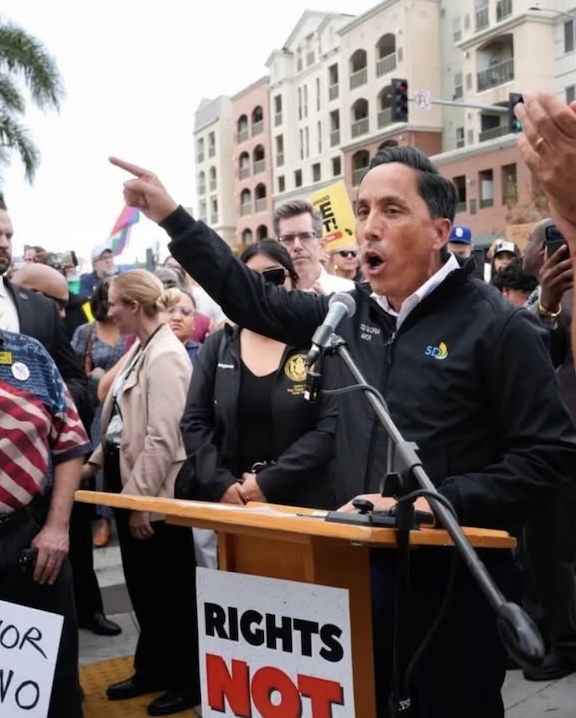







California Attorney General Rob Bonta (left) speaks at a community event, while U.S. President Donald Trump (right) delivers remarks during a formal address. (Photos from their official social media accounts)
States challenge major shift in federal housing strategy
SACRAMENTO — California Attorney General Rob Bonta filed his forty seventh lawsuit against President Donald Trump, challenging new restrictions on federal homelessness grants. The case targets changes to HUD’s Continuum of Care program, which funds permanent housing and services for people exiting homelessness.
Continuum of Care grants total about four billion dollars each year. Most funds support permanent housing. The program has operated for decades under both parties. Local officials credit it with helping vulnerable residents secure stable housing and avoid repeated homelessness.
California warns of large losses in permanent housing
California argues that the new rules would reduce permanent housing funds and redirect money toward short term or conditional models. Internal documents reviewed by state officials show that the shift could affect as many as one hundred seventy thousand people who already live in permanent housing. These residents include families, veterans and people with disabilities.
Bonta said HUD does not have authority to impose those limits. He said Congress never approved caps on permanent housing. He also said the department cannot change national homelessness policy through a funding notice.
“This program has helped states, local governments and nonprofits combat homelessness and provide stable housing,” Bonta said. “These new restrictions violate federal law and threaten proven programs.”
Coalition argues HUD violated federal law
California filed the case with a coalition of states and the District of Columbia. The states argue that HUD violated the Administrative Procedure Act by issuing sweeping changes without formal rulemaking. They also object to new political conditions attached to the grants. They say those conditions reach beyond the purposes defined by Congress.
Federal officials defend shift from Housing First
The changes follow Trump’s July executive order on crime and disorder. That order directs agencies to reduce support for housing first programs and expand treatment based or work based models. HUD leaders say the new rules follow that directive.
They argue that housing first does not address addiction and serious mental illness. They say communities need stronger tools to manage encampments and public safety. They also say federal dollars should support programs that show measurable results.
Lawsuit adds to growing federal-state clashes
California officials warn that cuts to permanent housing will destabilize families who already secured homes. They say local governments cannot quickly replace lost federal funds. Providers fear that expiring contracts may leave residents without support.