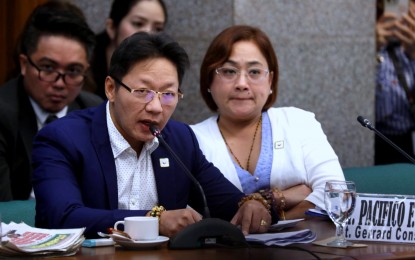






Sen. Robin Padilla, author of Senate Bill 1200 or the “Drug-Free Government Act,” which seeks annual mandatory drug testing for all elected and appointed officials. (File photo from his Facebook page)
MANILA — Momentum is building in the Senate to enforce drug-testing measures following reports of alleged marijuana use inside the chamber. Senate leaders have confirmed the rollout of a mandatory random drug-testing program, while several senators have voluntarily undergone tests with their staff. Parallel legislative proposals from Sen. Robin Padilla and Sen. Raffy Tulfo have added a legal dimension to the debate, with Malacañang warning against potential constitutional conflicts.
Escudero Confirms Rollout
Senate President Francis “Chiz” Escudero said the Senate will revive its Mandatory Random Drug Testing (MRDT)program this Congress. The chamber signed an agreement with the East Avenue Medical Center in March 2025 to conduct the tests, which will cover senators, officials, and employees. Escudero noted that more than 2,300 individuals underwent testing between 2018 and 2020, providing a precedent for the initiative.
Senators Lead by Example
Several senators have already acted:
- Migz Zubiri: Announced on August 16 that his entire office would undergo testing; on August 18 he and 35 staff members submitted urine samples for marijuana, methamphetamine, ecstasy, opium, and cocaine.
- Joel Villanueva: Reiterated support for workplace testing and said he is prepared to participate.
- Raffy Tulfo: On August 19, he and 54 staff members completed drug tests. Tulfo pledged a zero-tolerance policy—removing any staff who test positive—and vowed to resign if he himself does. He is also preparing a bill to institutionalize random testing for incumbent officials.
- Imee Marcos: On August 20, Marcos underwent a five-panel drug test with 38 staff and security aides. She required her team to participate, saying officials must lead by example.
- Loren Legarda: Ordered mandatory testing for her staff and reinforced office rules against illegal drugs, vaping, alcohol, and gambling.
- Kiko Pangilinan: Said he has no objection to being tested himself but will not require testing for his staff.
- Tito Sotto: Initiated the push with a formal letter to Escudero, citing the need to restore MRDT following reports of drug use in the Senate.
Marijuana Allegation Sparked Push
The campaign followed an incident report from the Office of the Sergeant-at-Arms, which cited alleged marijuana use on the fifth floor of the Senate building. The report named actress Nadia Montenegro, then a staffer for Sen. Robin Padilla. Montenegro denied the allegation, saying she only carried a vape device. She later resigned, a move confirmed by Padilla’s office. The matter remains under internal review.
Padilla’s Annual Testing Bill
Separately, Sen. Robin Padilla filed Senate Bill No. 1200, the Drug-Free Government Act, seeking annual mandatory drug tests for all elected and appointed officials, including the President.
The bill prescribes hair-follicle testing as the initial screen, with urine confirmation for positive cases. It also proposes voluntary random tests for candidates within 90 days before elections. Public officials who test positive would face administrative sanctions under existing law.
Padilla’s office defended the proposal after Malacañang branded it unconstitutional, urging that it be debated on the Senate floor.
Palace Holds Firm
Malacañang Press Officer Claire Castro reiterated that only random, suspicionless testing has been upheld as constitutional. The 2008 Supreme Court decision in Social Justice Society v. Dangerous Drugs Board struck down universal mandatory testing for political candidates and accused persons, but allowed random workplace testing for employees and students.
The Palace warned that Padilla’s proposal for universal annual testing would likely be struck down for violating the right to privacy.
Legal and Political Crossroads
- The Senate’s MRDT program under Escudero is consistent with constitutional limits and is scheduled for launch.
- Tulfo’s forthcoming bill seeks to extend random testing to incumbents but avoids including candidates, aligning with jurisprudence.
- Padilla’s SB 1200 faces strong constitutional objections, with the Palace invoking the 2008 Supreme Court ruling.