





Photos by Sthanlee B. Mirador
BY JANET SUSAN R. NEPALES
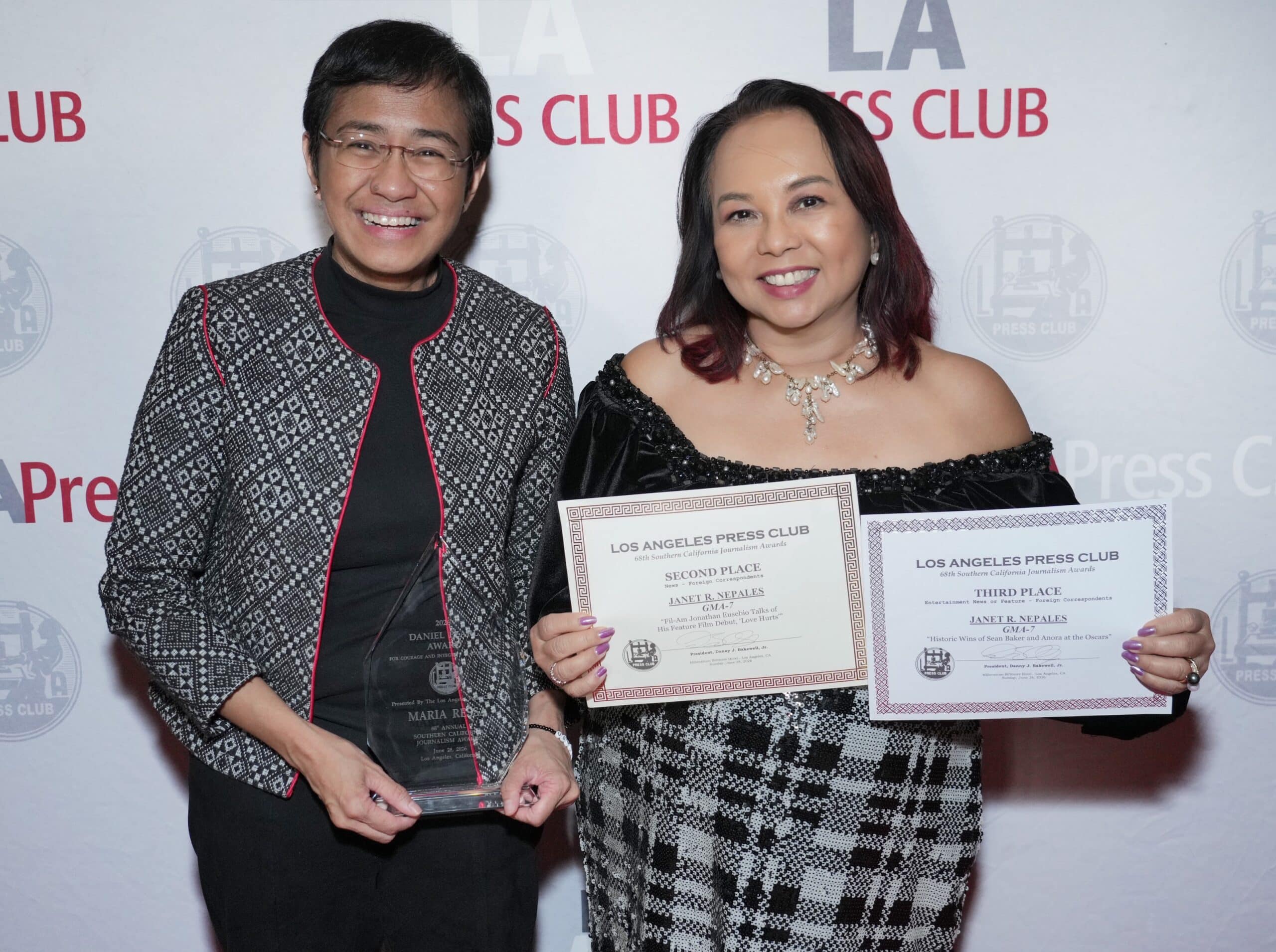
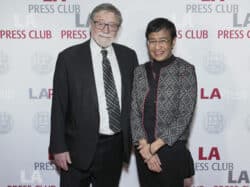
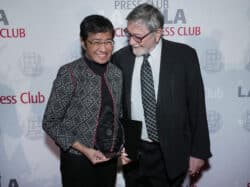
Maria Ressa received the Daniel Pearl Award for Courage and Integrity in Journalism from the Los Angeles Press Club on Sunday, June 28, during the 68th Annual Southern California Journalism Awards at the Crystal Ballroom of the Millennium Biltmore Hotel in downtown Los Angeles.
The 2021 Nobel Peace Prize laureate and author of “How to Stand Up to a Dictator,” “Seeds of Terror: An Eyewitness Account of Al-Qaeda’s Newest Center of Operations in Southeast Asia” and “From Bin Laden to Facebook” accepted the award from Judea Pearl, father of Daniel Pearl, the Wall Street Journal foreign correspondent who was killed by terrorists in Pakistan in 2002.
Ressa attended the annual awards gala with her sister, Nicole, and was introduced by Pearl.
Janet R. Nepales, Hollywood correspondent for GMA-7 and the Asian Journal, also received two honors for stories published by GMA News Online.
Nepales won second place in the News — Foreign Correspondents category for “Fil-Am Jonathan Eusebio Talks of His Feature Film Debut, ‘Love Hurts’” and third place in the Entertainment News or Feature — Foreign Correspondents category for “Historic Wins of Sean Baker and ‘Anora’ at the Oscars.”
Below is Ressa’s speech, lightly edited for grammar and clarity:
“Judea Pearl. The LA Press Club. Thank you to all the journalists in the room.
“Look, I come from the Philippines.
“I joke that we moved from hell to purgatory. But I worry that you have just gone to hell. I go to Purgatory Road. So, before I leave you today, let me tell you why it was so important to me to receive the Daniel Pearl Award. I want to tell you how close Danny’s story came to mine.
“Before Rappler, before the Nobel, before any of this, I was CNN’s lead investigative reporter in Asia, and I chased terrorists for a living. My first book is ‘Seeds of Terror.’ I tracked the networks that linked Al-Qaeda to Southeast Asia — the men who planned, in Manila in 1994, what would, six years later, become 9/11. I interviewed the killers, their Filipina girlfriends and their neighbors. I went to places no one else would go.
“In November 2001, I was in New Delhi, tracking a man named Omar Sheikh.
“Two years earlier, terrorists hijacked an Indian Airlines flight and forced India to free him from prison. He walked out — and the world let him go. I was building the story. Then Omar Sheikh offered me an interview in Karachi.
“I wanted to go. I had the reporting, I had the trail, and here he was offering an interview. But my features editor at CNN, my mentor, Steve Cassidy, thought it was too dangerous. I argued with him, but he did not give me the budget. He never approved the trip, so that meeting never happened.
“Weeks later, Omar Sheikh lured Daniel Pearl to a meeting in Karachi. He handed him to Khalid Sheikh Mohammed — the man I had been chasing, who had been in Manila in 1994 and who would confess to masterminding 9/11. He murdered Danny with his own hand. The same network I had spent years tracking across Southeast Asia had reached Danny Pearl.
“I have lived with that distance every day since. The same man. The same city. Steve decided it was too dangerous for me to go. No one made that decision for Danny, so he went. He paid for the truth with his life.
“That is our work. We go to the place where no one else will go, ask the question no one else will ask and carry the truth back so you do not have to go yourself. They killed Danny for it — and they filmed it to terrify the rest of us into silence.
“It did not work. Here is what I have learned in the years since then: When people are afraid, fear spreads. You know this in LA. But so does courage.
“Judea took the worst thing that can happen to a family and turned it into a light for the rest of us. That is its own kind of courage, and it humbles me to stand inside it.
“The threat has changed shape since Karachi. The killers used to need a camera and a knife. Today, they have something faster — technology that floods the world with lies, turns the truth-teller into the criminal and does it at a scale Danny’s killers could never have imagined. The lie now travels faster than the fact. That is not an accident. It is a design. And it is how a democracy dies — not with one blow, but by a thousand cuts.
“With every cut, you bleed out until, at some point, the body dies.
“So, what do we do?
“We hold the line. We do not die. We do not hide. You do not really know who you are until you are forced to fight for it — and in that fight, you find out you are not alone. It takes a network to beat a network. It takes all of us. Who? The journalists in the room. The citizens. Fight for your rights now.
“Because every day you do not, you get weaker. In 2019, I kept getting arrest warrants. I got them so often that I developed a workflow for posting bail. Eleven arrest warrants, 11 criminal charges.
“Rappler had 10 cases. It took us a decade to win those 10 cases for Rappler. I won 10. I still have one more left.
“To be here in front of you today — and my friends Ruben and Janet Nepales know this — I still have to ask the Philippine Supreme Court for approval to travel. It takes much longer to claw back your rights than to protect them now.
“You have to look at the Philippines because, when I spoke with Jon Stewart, I told him that what you are seeing in America today is the ‘Philippinization’ of America. But here is where you can find hope: You hold the line.
“You do your job as journalists because here I am in front of you, and the guy who tried to jail me for the rest of my life was arrested last year for crimes against humanity. Yes, he is now in prison, waiting for trial. Justice does come. But you have to work. Some of this work is part of the evidence now being used against him.
“Look, let me end with this. America is at a critical moment. What you do matters. You heard me tell Harvard students that I’ll go back to Danny. The question he answered with his life is the one I leave with you tonight. It is a question I asked in ‘How to Stand Up to a Dictator,’ which reached No. 3 on The New York Times bestseller list because Americans are trying to understand how we got to this moment. It showed what Americans were looking for. You have to write about how we got to this place and time and what we need to do to get out of it.
“Because today, we are fighting for facts. Last year, at the U.N., I was choosing how to describe this moment — an Information Armageddon or an Information Apocalypse. But that means the battle is over, and because I am an optimist, I chose Information Armageddon. This is that moment. If you value your rights, you have to jump in and answer the question Danny answered with his life, the question I asked Filipinos a decade ago and Americans need to answer now. A simple question:
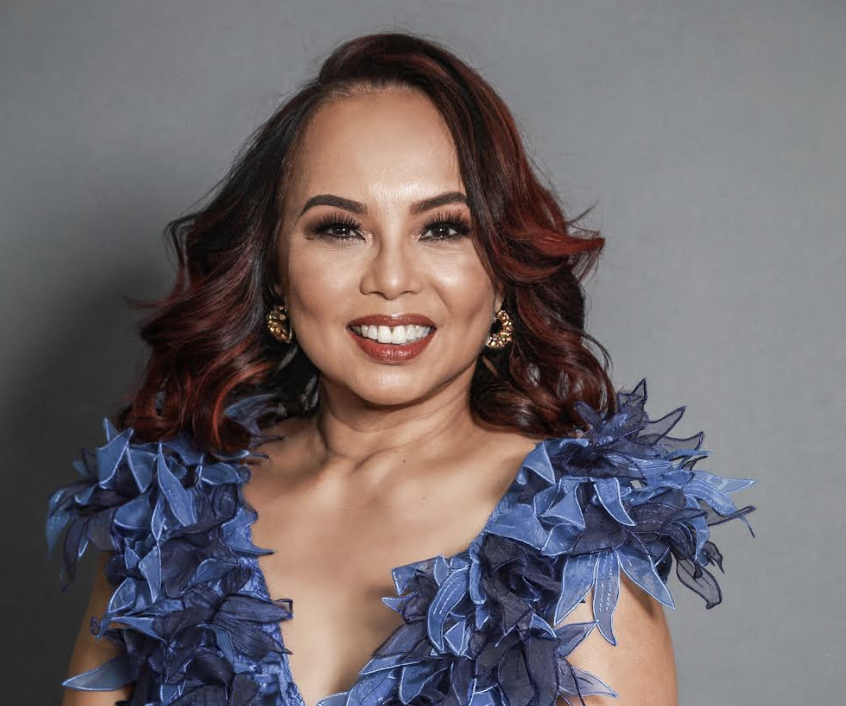
Janet Susan R. Nepales is an award-winning journalist and the first Filipina voting member and Associate of the Golden Globe Awards. She has been a member since 2008 and is the first Filipina to be elected to the Advisory Board. She is the author of the coffee table book “FASHION. Filipino. Hollywood. The World” and the co-author of the first FWN book “DISRUPT: Filipina Women: Proud. Loud. Leading Without A Doubt.” A graduate of UST (AB Journalism, cum laude), she is based in Los Angeles and is a Hollywood entertainment journalist and TV correspondent.


Wonderful testimony, exacting warnings, powerful reminders that all of us must not let our democracy die…. We must fight for the truth, demand freedoms for journalists to report facts… thank you for selecting this journalist to receive this high honor, Dr. Pearl.
Congratulations Ms. Ressa!