





By Janet Susan R. Nepales
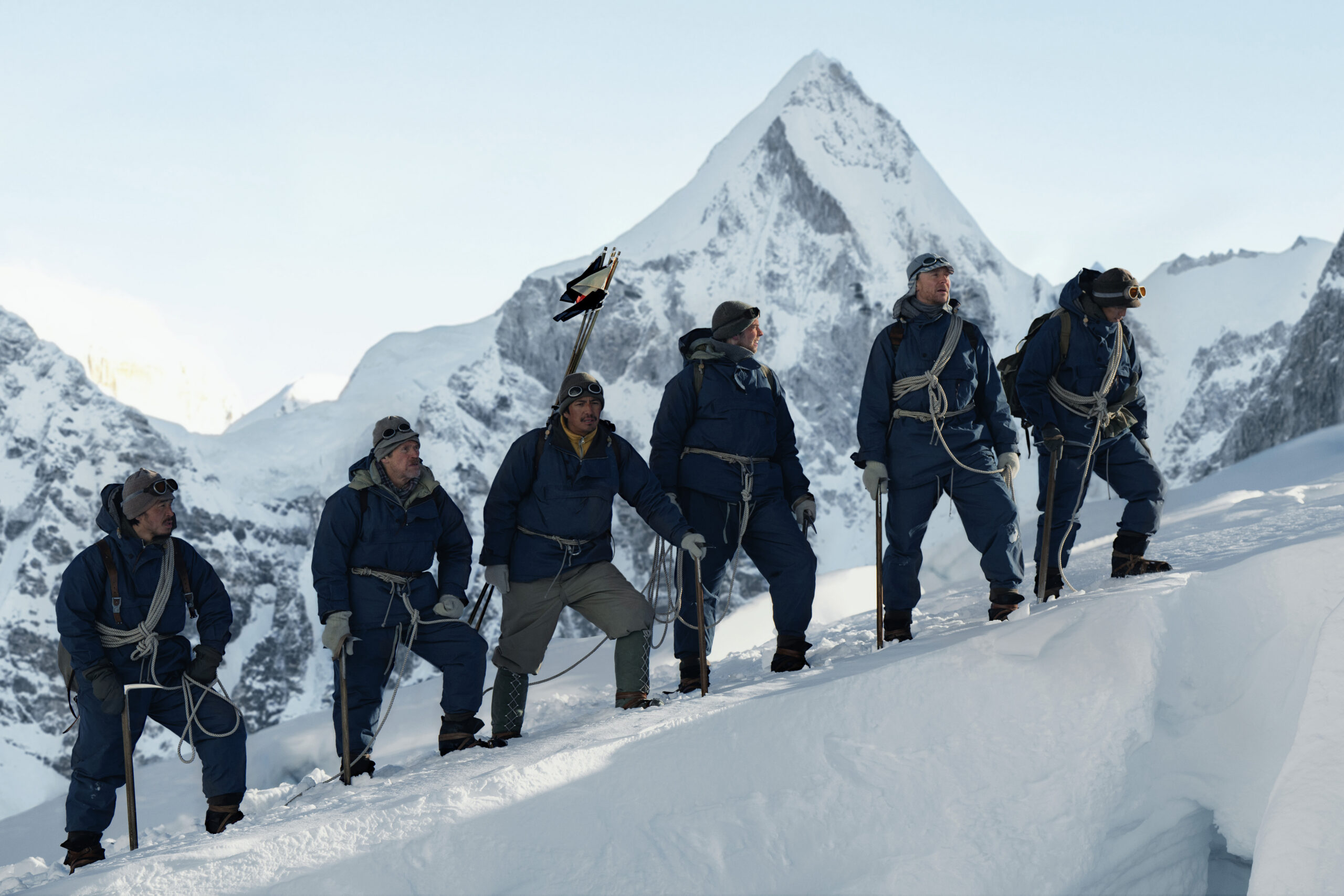
Australian filmmaker Jennifer Peedom, in her narrative feature debut, captures the harrowing and extraordinary journey of Tenzing Norgay and New Zealand mountaineer Edmund Hillary, who became the first climbers confirmed to have reached the summit of Mount Everest in 1953.
“Tenzing” explores their historic ascent from the perspective of Tenzing, a Nepalese-Indian Sherpa mountaineer, while also depicting the friendship and strong bond that developed between him and Hillary during their climb.
The film also explores how Tenzing viewed his ascent of Mount Everest as a spiritual journey. Since childhood, he had known the mountain as Chomolungma, or the Goddess Mother of the World.
The biographical drama, directed by Peedom and written by Luke Davies, stars Genden Phuntsok (Tenzing Norgay), Tom Hiddleston (Sir Edmund Hillary), Willem Dafoe (John Hunt), Caitríona Balfe (Jill Henderson) and Thinley Lhamo (Dawa).
In exclusive interviews, we spoke with Hiddleston, Dafoe, Phuntsok and director Peedom about their memorable experiences filming “Tenzing” in Nepal and New Zealand.
Tom Hiddleston (Sir Edmund Hillary) and Jennifer Peedom (Director)
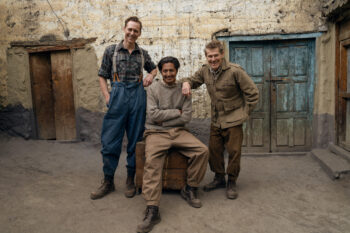
Tom, had you ever done any mountain climbing like this before?
Tom: No, never. Nothing like this. I’ve climbed some big hills in the UK, but they are hills compared to the Himalayas. Ben Nevis (the highest mountain in Great Britain) is, I think, just 1,300 metres (1,345 metres, to be exact). Scafell Pike (the highest mountain in England) and Snowdon (the highest mountain in Wales) are amazing mountains and afford such serenity and awe. But to do this in the Himalayas and on the South Island of New Zealand was unprecedented for me, completely unforgettable and unrepeatable. It was all new and an extraordinary adventure.
What was the most grueling part of making this movie?
Tom: I can’t really remember what was grueling because it was all such fun. But I think there were days when we went to the Hillary Step (a steep rock face just below the summit of Mount Everest) that were challenging. It’s a steep ridge just below the summit of Everest, which is now and will forever be known as the Hillary Step. And it is there at more than 8,000 metres (approximately 8,790 metres, to be exact).
And the drop off the mountain is precipitous and immediate. Ed Hillary and Tenzing Norgay stood before this unknown, sheer wall of rock and ice, and Hillary scrambled up it first, which is why it’s called the Hillary Step. We recreated it for real. It was in the Remarkables, the mountain range just outside Queenstown on the South Island, and it was right at the end of our schedule. We did it for real.
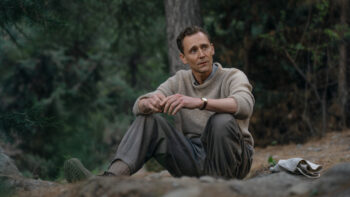
We were carrying heavy equipment, gear, oxygen, clothing, backpacks and supplies. We all had that for real. I had to. The greatest gift I was given by Jen was that I was going to do it for real. It is extremely intense because you feel your whole body is alive and active.
All mountaineers will tell you that mountaineering takes place in your legs, but sometimes, with the crampons, you’ve got one toe holding on to the mountain and two fingers supporting your whole body weight. You can feel your breath, and you can feel your heart rate. You feel intensely alive. You trust the rope, but at the same time, you don’t want to let go.
You also spoke with the late Kanchha Sherpa, the last surviving member of the 1953 expedition before his death in 2025. What did you learn from him?
Tom: Yes, I did. It was such a privilege to sit with Kanchha Sherpa and Genden Phuntsok, who plays Tenzing. We met him in Namche, his home in the Khumbu Valley, and he told us extraordinary stories about the expedition, about Tenzing’s remarkable leadership, his great care for the Sherpa team and his high expectations of himself and of them.
He said John Hunt was always having meetings. He said every day there was a new meeting. I asked him about Hillary, and he said he was so relaxed, kind and always ate with them. No airs, no graces, very laid-back and very tall. So, I was glad, at least, that I’m six-foot-two, so I could somehow represent that.
He said Hillary was always laughing. In the midst of this extraordinary challenge, with all the physical and spiritual difficulties they faced, Hillary was always laughing. There was joy in the endeavor, and it was a great insight.
Jennifer, you also collaborated with the families of Tenzing and Hillary. What did you learn from them? Have they seen the film, and what was their reaction?
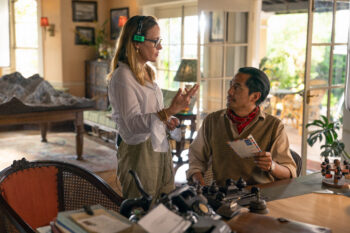
Jennifer: Yes. It was probably one of my most nervous moments, actually, sending the film to the family. Norbu Tenzing, Tenzing’s son, is a very dear friend of mine and has been an executive producer on the film. So, I would never have taken on this challenge without his blessing and the blessing of the rest of the family.
I had the enormous privilege, about ten years ago, of meeting Pem Pem Norgay, Tenzing’s eldest daughter.
Knowing her, having met her and having spoken to her about her relationship with her father were very much things I was able to bring into the role, the screenplay and those young actors. And it helped me. It helped humanize the great man. For those kids, he was still their father.
And I learned a lot about his relationship with Pem Pem’s mother, whom she talked about and of whom she didn’t have a single photograph. So, the opportunity to bring her character to life and recognize her role in supporting Tenzing in the story was also hugely important.
It was a really great gift to have that relationship with the family. And yes, they’ve seen the film. They came to the premiere in Toronto, and it was incredibly emotional to be there and watch it with them.
Norbu said to me that Tenzing and Hillary’s grandchildren will now know their grandfathers’ story. So that made me feel very proud.
Willem Dafoe
Willem, had you ever done any mountain climbing like this before?
Not really. I made a movie where I was a musher, a dog sled guy, and we shot a lot in the mountains. But it wasn’t the same elevation or the same kind of climbing.
What was the most grueling part of making this movie?
Just helicoptering to work every day. The helicopters would go away, and we were there. The elements were harsh, but we had interesting things to do and good people to work with. So that becomes your job.
Why do you think people go to such extremes, taking on these very challenging experiences and journeys?
I think it’s just because people sometimes need those kinds of challenges to find out about themselves, to find out what we’re here for. People have different motivations and different relationships with nature.
Some people want to conquer it; some people want to communicate with it. There are lots of shades in between, I’m sure.
But I think that’s life. Every day, we wake up and look for pleasure and meaning, and probably meaning more than anything else. So, this is one expression of moving toward some sort of peace or understanding.
Tenzing’s son is also an executive producer of this movie. Did he offer any advice?
Well, a lot of the family was around. They would deal more with Jen because she is the director, and she knew the family very well. With us specifically, not so much.
They were very hospitable and good hosts in Nepal, but most of that dialogue happened with Jen.
I would say we had a lot of people helping us with all kinds of things to understand the culture. So, they were involved in that somewhat as well.
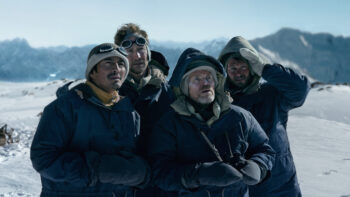
How was it working with Nepalese and Sherpa actors?
Fantastic. In fact, when I saw the movie, you’ve got to understand that I’m mostly in the mountain sections, so I didn’t see those other scenes being filmed.
I thought, how beautiful the Asian actors are. Great. Sometimes that’s not the case in Western productions where English is used. Asian actors are forced to speak a language other than their own, or they’re forced into situations that don’t necessarily reflect their culture.
But in this case, they’re doing things they believe in. They’re doing things they know. A lot of the time, they’re speaking in their own language, and they really are a delight and are very good actors.
So that was one of the pleasures. When I first saw the movie, I thought, wow, they’re fantastic.
What did you learn about yourself from this journey?
Oh, probably a lot of things. I’m not sure. I’m probably still digesting them.
But you learn about your body. You learn about what motivates you. When things get difficult, you learn about your relationship with pain and what it means to strive toward a goal.
That’s all there in a very practical way because sometimes it is tiring.
Sometimes you feel awkward. You’re dealing with this heavy 1950s climbing equipment. It’s not comfortable.
I’d just say the big takeaway is continued respect for nature and finding that what I felt even before the movie still holds true: Nature is always the thing that puts you closest to what is and, you know, what we’re here for.
How was your bonding experience with Tom and Genden? How did you get to know them?
Good. They’re very different personalities. We worked as a group because, you came to understand, we were helicoptering to work.
So, we got down, the helicopters went away, and it was just us. It was cold. We weren’t always active, so we were always together. We were always helping each other with gear and helping each other with problems when climbing.
It was a real bonding experience, as you can imagine.
So, Genden particularly, I had a lot of scenes with him. He was my neighbor in New Zealand, where we were shooting at altitude.
He’s a very sweet guy, very disciplined, and he worked so diligently and quietly. He was Tenzing for us.
And Tom is very well-educated, very English in many respects, very charming, very well-spoken and very gung-ho physically.
So, he was also a force in the group who always made people want to say, “Come on, lads!” That kind of feeling, which was also the function of my character, but I was slightly different.
Genden Phuntsok
There were reportedly 2,000 audition tapes submitted before you were selected for the role. Can you talk about your involvement in this project?
Oh, I really didn’t know that before. I never knew about this. Yeah. I think the first time I met director Jennifer Peedom, we had a video call. After that, they disappeared and didn’t connect with me for a long time, something like two years.
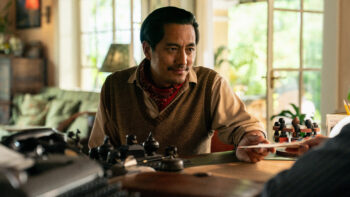
I knew they were preparing for the film. When I had the audition, there were only three actors being considered for this role, and I didn’t know there had been 2,000 audition tapes. And after that, they chose me.
You also met the late Kanchha Sherpa, the last surviving member of the 1953 expedition before his death in 2025. What did you learn from him?
Yes. He’s an amazing man. He’s a legend, too. He’s a good man. I went to his home and tried to learn more about the life of Tenzing Norgay and what he had done before.
He was living in Khumjung Village, and I’m really glad I had the chance to go there.
I felt very special being with the villagers there. I had a lot of fun, especially when I practiced my dialogue.
I practiced my dialogue with the yaks in that village, and with the sheep and horses, too. Even if they didn’t answer me, I just pretended they were other people listening to me.
Sometimes, I would talk to the villagers, and they would correct my pronunciation because they are Sherpa. They speak the Sherpa language very well.
They also taught me how to work with ropes and secure myself on the mountain, what to prepare, what to do and different climbing techniques.
It was a really good time for me. I learned so many things about mountaineers from being there.
What about your friendship with Tom Hiddleston?
Oh, yeah. That’s special, too, because I went there first and stayed for about a week before Tom came.
The first time I met Tom was at the airport called Tenzing-Hillary Airport in Lukla, Nepal.
I knew Tom was a big star, and I didn’t expect him to be such a low-profile man.
When he came out of the airport, I didn’t say, “Hi, Tom.” I just said, “Hillary, how are you?”
He came up to me and said, “Hey, Tenzing.” Then we hugged each other.

Janet Susan R. Nepales is an award-winning journalist and the first Filipina voting member and Associate of the Golden Globe Awards. She has been a member since 2008 and is the first Filipina to be elected to the Advisory Board. She is the author of the coffee table book “FASHION. Filipino. Hollywood. The World” and the co-author of the first FWN book “DISRUPT: Filipina Women: Proud. Loud. Leading Without A Doubt.” A graduate of UST (AB Journalism, cum laude), she is based in Los Angeles and is a Hollywood entertainment journalist and TV correspondent.