





Photos courtesy of LIONSGATE
By Janet Susan R. Nepales
I grew up listening to the great Michael Jackson – from his days with the Jackson 5 to his days as a solo artist.
His life, his love story, his musical career were all open books being dubbed the “King of Pop.”
Considered one of the most culturally significant musical figures of the 20th century, Michael’s fans followed him anywhere he went. They loved his songs, videos, concerts and fashion.
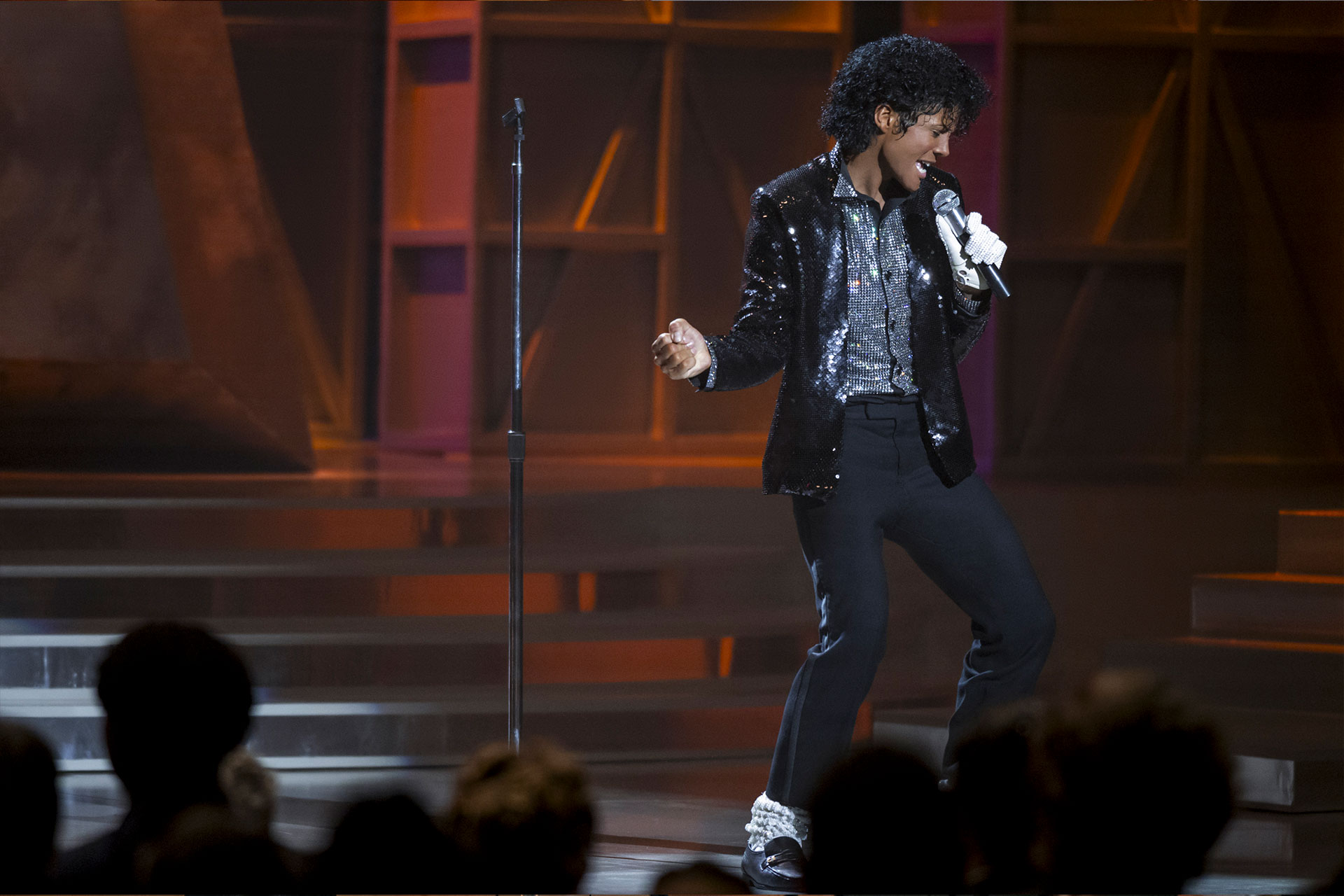
So, it is no surprise that the magic of “The Gloved One” is still there when the epic cinematic biographical film helmed by Antoine Fuqua and written by John Logan, “Michael,” became the highest-grossing biopic of all time, and as of press time, has earned over $977 million worldwide and counting.
We were able to interview in a global press conference the stars of the much-talked-about movie, Jaafar Jackson (who portrayed Michael Jackson) and Colman Domingo (who portrayed Joseph “Joe” Jackson).
Jaafar Jackson (Michael)
What was more challenging in your mind, preparing to portray Michael Jackson, The King of Pop, or your own uncle?
That’s a good question. I would say both were challenging. I looked at it from both perspectives, but also, I wanted to separate myself as a family member and look at everything from the beginning as if I knew nothing about Michael Jackson.
So, reading a lot of books, listening to all his music again from the Jackson 5 to the solo albums, and really just having a deeper understanding of who he was as a person. Being a family member, that really allowed me to go into my own personal memories and speak to certain family members to get very few nuances that you may not be able to find in a book or in a video or online. Both were very challenging and just learning how to separate and have a balance of both.



How did you navigate the tension between personal memory and performance craft when embodying someone as mythologized as your uncle? Did you ever find yourself resisting the public Michael in favor of a more intimate, private version that you remember, and how did that choice shape your portrayal of him?
It shaped my portrayal in the way I started. It really started, first, with understanding what acting is.
And diving into how to express certain emotions or really tap into certain. From Michael’s point of view, which was the most important thing. It’s diving into that and also finding my own inner confidence and knowingness of what that is but really immersing myself in Michael’s world to a point where I didn’t have to think too much. It became second nature.
So, just consuming everything Michael would. I read everything he would read. I watched films he would watch. Listened to music he would listen to. But then I have a work ethic that I found, which surprised me: just how incredibly hard he would practice his dancing and songwriting and just learning new things and how to exceed your own expectations, and to always stay curious. I always had that mindset about myself of how I wanted to go to work.
I was never satisfied with how I would embody Michael if it was in the dancing. I always wanted to keep learning. When it was the first day on set, I kept continuing to go home and practice even after we would wrap sometimes. If I wasn’t too tired, I was like, let me go practice because I know the next day we’re going to go and shoot this. I always had that mindset to keep going. That really only worked because I know Michael had the same mindset. That just allowed me to get more into the character.
He had great taste in films. Learning more about him, I’ve gone back and rewatched some of his movies. Not some of his movies, but the ones that he loved.
Michael used to say he wanted to keep a childlike sense of wonder about the world. What do you think we can learn from that philosophy nowadays?
It’s a beautiful philosophy because seeing the world through a child’s eyes really helps simplify life.
You don’t overcomplicate things, and that’s something I learned a lot in the process of seeing certain situations through the lens of a child. And to not overthink something, it’s all from a feeling and an innocence and a purity that Michael really gravitated towards, which is why he always wanted to create from that place. From the songwriting process to dancing, to always stay curious and not be jaded by what life has to give you.
And that inspired me to apply that to my own work and how I went about learning new things and even on set. To always stay curious and ask questions and never feel like you’re overstepping in that way. If I don’t know something, I would love to ask and break down what that is and just take everything like a sponge. It’s very important, and that’s something that’s needed more in today’s world, I would say.
Michael Jackson, beyond his uniquely lyrical singing, is a symbol of physical excellence in dance. What was the process of understanding that body, those feet, that dance? And how do you dance today?
That was such an incredibly challenging part of really getting into the character of Michael because we’re so used to seeing how he performs on stage and that type of energy he has.
And then, try and not copy but feel it for yourself. For me, it was all about the feeling. It took a while to get to that place where I felt confident, where I could look in the mirror while I’m performing or rehearsing and trick myself as to, oh wow, that really landed the way Michael did it. Or I hit that spin the way he hit it. And it wasn’t very consistent for the first two years, but I kept striving to get better and better and have that perfectionist type of mindset.


And it was very grueling to start with, and I was so self-conscious in the beginning about my own body and just really understanding the weight shift and the type of weight I had to lose to get to that body frame, and how the moves felt with that. As time went on, it got better and better. But also, just building that stamina because performing top to bottom with that type of energy is a lot. But then, to translate that to set, where you might have to do 10 takes, 15 takes, 20 takes from front to finish.
But to make sure that take one will still have the same energy as take 20. I did that in preparation. For me, the way I prepared was repetition.
Keep doing it over and over again until you can’t go anymore. And I got stronger and stronger as time went on. So, when I did go on set and was asked to do those big numbers and performances, I was confident enough to be able to tell myself, I can do that.
Colman Domingo (Joe Jackson)
None of your characters has ever been one-dimensional. They have always had layers. Following that logic, what layer of love exists in Joseph “Joe” Jackson? To what extent is he a loving father, and in what ways can that dictatorial father also be a loving father?
That’s a great question. My way into Joseph Jackson was to really examine a man of that time. I feel like to contextualize and know where he has roots, from Arkansas, and being a blue-collar worker and working in the steel mill, being a man from the Vietnam era, looking at his way in, and how to love his family is different than its very modern context.
I examine him through the lens of looking at my stepfather, who was part of a generation of men who thought their job was to be the provider and the disciplinarian, and to provide structure for the family while the mother provided the softness and the care. By looking at that, I looked at the way Joseph knew how love was through rigor, structure, and discipline. That’s loving from his perspective. So, for me, once I went inside and looked through Joseph’s eyes, I had to look at him as a father first.
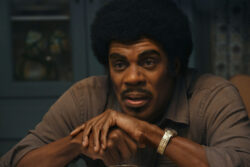
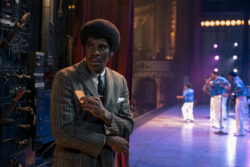
Someone who had nine children was going to be the provider and also knew that his children had talent. I wanted to give him the best that he has. Which is, he may not have had much, but he had the best to get the best out of his children. It’s an outside view whether or not that was dictatorial or loving. But in his eyes, he was doing the best that he could.
It can be, but it is one of those things where you just have to examine a man at that time. A black man at that time. I feel like looking at him through a modern lens is not the right lens. Everyone wants to make out a villain of someone. But everyone has complexity, and everyone has nuance. I knew that that was the task.
Joe Jackson is a strict father, an ambitious manager, and a controversial parent. What aspect of him surprised you the most once you began researching the role?
Oh, man. His sense of humor. It surprised me, as I got to know not only Jaafar and got stories from Jaafar, but also whether Marlon Jackson would visit the set, or the grandchildren, in particular Prince. They would tell me, like, stories of, like, oh, he had a special handshake. Like a fist bump that he would do with his grandchildren. And how he would surprise them.
He knew that he looked scary or something in some ways. He would use that to be playful, actually. So, he had a great sense of humor. I was researching, and I got a lot of these videos. They were Jehovah’s Witnesses, so they didn’t celebrate birthdays or holidays. But they would have Joseph Jackson Day, which was his birthday. So, these fantastic videos of him just sitting around with his wife Katherine and his grandkids and just watching the family being like any other family, and him being an ordinary guy, which was actually really cool to see.
Michael has broken records around the world, and the film has become the highest-grossing musical biopic of all time. Why do you think audiences around the world continue to be fascinated by the Jackson family story? Also, why do you think his life in music continues to resonate across cultures and generations?
Michael Jackson’s story and the Jacksons as a family are a true American story.
It’s about the possibility of what you can achieve when you are dedicated, and you are thoughtful. Joseph Jackson helped create such a tremendous musical legacy that is not only known in this country but also around the world. Because of Michael’s music and the Jacksons’ impact, you can go to any tiny corner of the world. I watch all these Instagrams that come up and feeds of children in these small countries and villages in Africa, Indonesia, or Brazil, and everyone knows Michael Jackson.
Because Michael Jackson kept reinventing himself in many ways and reinventing his music and his sound, you can’t particularly call it R&B, soul, or pop. Because he defines genre. That’s what he was even doing with his image. He kept redefining himself. So, remaking his image, you have different versions of Michael out in the world, which is interesting. There’s a lasting impact because his music is that good, and it’s human, and it makes you feel something.
If you go into Michael’s catalog and the Jackson family catalog, there are always tremendous messages about humanity, love, care, and each other in the music. That’s everlasting.
Do you have a personal favorite song?
Wow. It changes every day. I don’t know why, but the moment you said it, I thought “The Girl Is Mine” was one of my favorite songs.
You conveyed the nuance and the human being behind the complex Joe Jackson. Where do you think his demand for perfection and rigorous training comes from?
That’s a great way to do a deeper dive into it. It’s because of his rigor and his work ethic, being a blue-collar worker. There’s something about working in the steel mill and not having access or agency. As I got to know Joseph Jackson and who he was, I understood that he was also a musician.
Basically, his kids, they would play with his instruments. Then he started to notice that they had talent. So basically, they asked him, actually, “Dad,” because everyone was putting bands together back then, and groups. They literally asked him, “Dad, Dad, work with us. We want to have a group.” So, they have their own practice. He said, “Okay, I will work with you.” “We want to be the best.” He was like, “I will work with you to be the best then.” So, it was an agreement. It was never that he just did this to his children. No, they wanted to be the best, and they demanded that their father teach them and give them that practice.
And he did. It’s also part of who he was. He saw that his children had talent. In particular, it’s funny because Michael mentioned this in an interview, Jermaine was supposed to be the lead singer when they were kids. And then Katherine Jackson kept saying, “Oh, no. You’ve got to listen to Michael. Michael’s been singing around the house. You’ve got to listen to him.” He said, “No, Jermaine’s the lead singer.” And once he realized Michael’s talent and knew what it could do, knowing what it was doing in that eight-year-old body, he thought, “This is where we go, and this is how we can be the best.”
How did you approach portraying him without simplifying or softening that complexity?
That was going to be the challenge for me, more than anything. I knew who he was in the court of public opinion. I knew who he was from interviews and his presence. The moment I read the script; to be very honest, he was definitely the engine of being the villain. And then I thought, I was like, “Well, who’s the villain in Joseph’s eyes?”
And I think the systems are the forces that are trying to keep him from his sons and keep his position. One must remember that he was the manager of his children, and he was pushing that forward. It happens in the film, every time he goes into another room, someone else is trying to dominate and take over. It makes you think that it’s like, now he’s not only a father, but he was also building a business for his family. So, for me, for my money, I was like, let me examine him to say, this is a family business. It’s not an individual business. And he lays that out in an early scene.
But also, I knew that as they had nine children, Nia Long and I, we really made some conscious decisions with Antoine Fuqua and Graham (King) to say, okay, whatever’s in this script, there had to be love in that house. There had to be tenderness. You can’t tell me that someone who had nine children in a family, that family wasn’t complex in every single way, and there was touch. So, we made sure that we examined any moments, even moments of Joseph Jackson, as he walks into the house in an early scene, and you just see the weight of the world on his shoulders as a black man at that time.
And then walking in with all these mouths to feed. So, for me, it was like, let me give him his humanity in all these small ways. While he can still be the animal that he was as a businessman, he can also be a very harsh dictator in the house. Whether he believes he is or not, that’s others’ opinion. But from him, he’s like, no. It’s respect. It’s rigor. There’s a moment where, early on, we had a great discussion about it, about the first time he gave Michael a whooping.
And I said, “Well, I come from a house where I got whippings. I don’t think I was abused. But I got spanked. And usually, I got spanked when I was out of line, I was disrespectful, I spoke out of turn. And so, we made sure that we crafted that moment. So, Joseph’s just not walking in, whooping children. He feels justified. He’s like, “Oh, so my opinion doesn’t matter, Michael?” And Michael, the littlest one, is bucking up against his dad. And I thought, well, in this house, Joseph has to assert authority.
Otherwise, he has all these young men who are going to grow up and become big men, and they’re going to take over him. So, he had to assert his position. He was like, you get one; the rest will fall in place. You will know the line. So, for me, it was always justified when Joseph was a little harsh. I had to find out through Joseph’s lens when he was actually trying to bring things back in.
Can you confirm that there will be a second movie and what will be covered in that film?
I can confirm that there will be a second movie. There will be a second part. I know that Graham and Antoine are trying to figure out exactly what that is. I think they have some ideas. But it’ll be a concentrated time in Michael’s life. I don’t know exactly what it will cover. But I think what audiences really appreciated was that this is truly a celebration of this artist and his legacy and the music that he created for generations. I don’t know how in-depth they will get into other things.

Janet Susan R. Nepales is an award-winning journalist and the first Filipina voting member and Associate of the Golden Globe Awards. She has been a member since 2008 and is the first Filipina to be elected to the Advisory Board. She is the author of the coffee table book “FASHION. Filipino. Hollywood. The World” and the co-author of the first FWN book “DISRUPT: Filipina Women: Proud. Loud. Leading Without A Doubt.” A graduate of UST (AB Journalism, cum laude), she is based in Los Angeles and is a Hollywood entertainment journalist and TV correspondent.