






Imagine Spider-Man getting old like the rest of us.
But then, when an exceptional case comes his way, he has to come back as the Spider once more.
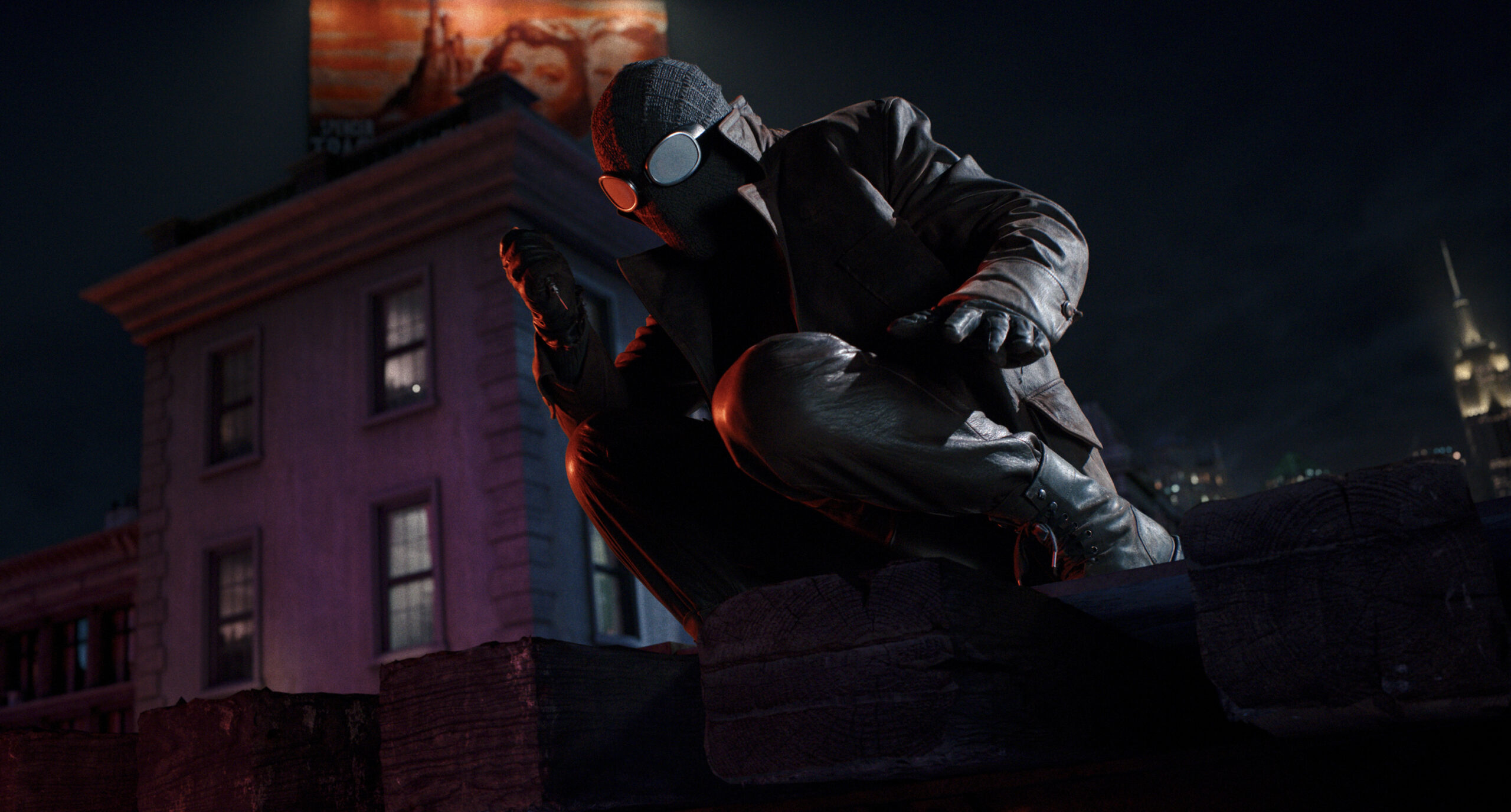
In his first lead role in a television series, Nicolas Cage stars as the aging and down-on-his-luck private investigator Ben Reilly, who grapples with his past life as the Spider, the only superhero in the 1930s in New York City.
From the producers and directors of “Project: Hail Mary,” Phil Lord and Christopher Miller, comes the superhero noir television series, “Spider-Noir,” developed by Oren Uziel and Steve Lightfoot, the showrunners of the series, for MGM+ and Prime Video.
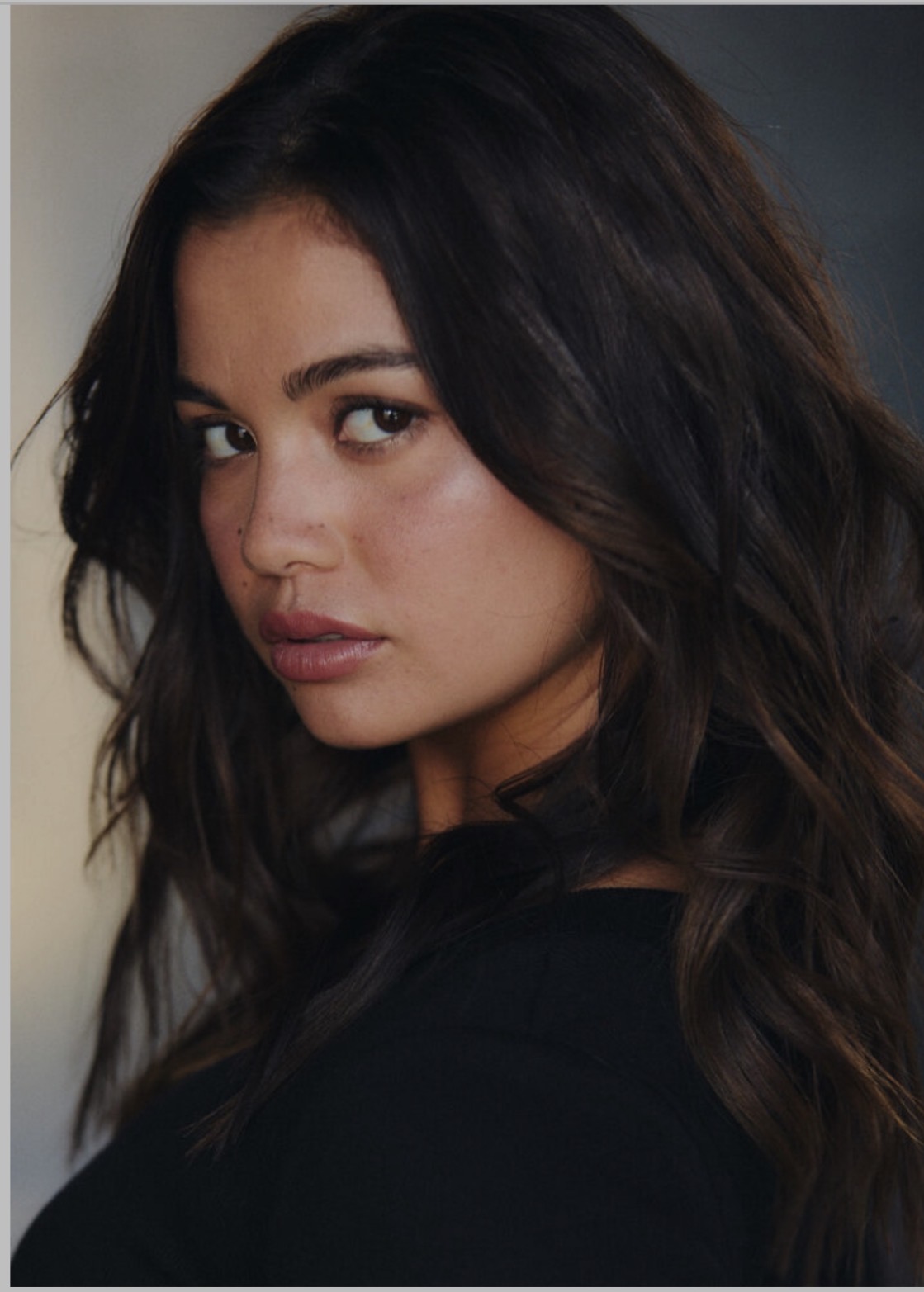
In a recent panel discussion, we were able to meet and speak to the creators, producers, and cast members – Uziel, Lord, Miller, and cast members Lamorne Morris (Robbie Robertson) and Karen Rodriguez (Janet) -as they talked about working on the unique project that was filmed both in a black and white version and a color version in Los Angeles.
The eight-episode series will premiere on May 25 on MGM+ and on May 27 on Prime Video.
The series also stars Brendan Gleeson (Silvermane), Jack Huston (Flint Marko/Sandman), Abraham Popoola (Loonie Lincoln/Tombstone), Li Jun Li (Cat Hardy/Black Cat), among others.



Oren Uziel (Co-Showrunner, Writer)
I feel like you have a particular kind of mind to envision a show like this. So, I wonder if you could start just by laying out when this came to you, your vision for what Spider-Noir could be, and how you started to run with it.
This came to me four years ago from Phil and Chris, because I had just checked my emails.
I was obviously a big fan of Spider-Man and the work that they had done in Spider-Man and Amy (Pascal) had done in Spider-Man. And it came in as a Spider-noir project set in New York in the ’30s. At the time, it was black and white. I’m a huge noir junkie. So, I thought this was something I could really work with.
And my first question was, can I make Spider-Man a little older than he usually is? Because I relate less to a high school kid and more to a middle-aged person.
So, when they said, “Absolutely, that sounds actually great and interesting. Follow your passion there,” it took off from there.


So, the idea of a middle-aged Spider-Noir is one thing. Nicolas Cage is his own creation entirely, and he, of course, makes this role so perfectly his own. Given his history, I suppose we should say, Spider-Verse and all that, how did that enter the picture? And from there, did you just let him run with it?
Well, he was obviously familiar with the character or a version of the character from working with Phil and Chris. He was the first person we went to. And when I sat down with him, he was just so well-versed. He’s been in movies and has been a movie star for 40 years. So, he just has his cinematic encyclopedic understanding of the genre of noir, but also of superheroes, because he’s also a huge fan of that.
He understood everything that I wanted to do, in terms of taking these two impossible things and mashing them together. He just got it right away. He also had so much to say about who this character could be and how to make it his own. He’s Nick Cage. He’s not going to do the usual version of things. So, it was a really good conversation between us for basically two years as we worked on it, or just how we can do this special thing.
Chris Miller and Phil Lord (Executive producers)
So, you guys know your writer for this. Walk us through the inception point.
Chris Miller: We’ve worked with Oren over the years several times, starting with the very similar to “Spider-Noir,” “22 Jump Street.” And we got along really well. And he’s really smart and really thoughtful. And we knew that he was a huge noir-head.
We knew this was a tricky one tone-wise, because noir often gets reduced to tropes and pastiches and visual flair. But what’s cool about Oren is that he understands the underlying story thematics that are underneath what makes a noir noir, not just a noir-looking commercial. So, he was the first person we reached out to, and it was the right choice.
Phil Lord: We go to Oren when we can’t figure something out. We like to do very bold, unusual, and difficult things, and Oren does too. He understands that a great noir is about people in impossible situations who can’t possibly dig themselves out. That’s what Chris and I were in until Oren came along.
So, all the episodes are going to be released, both black and white and color. Choose your own adventure kind of viewing, which is so genius. I have seen both versions. They’re both gorgeous, which you never know. I’m sure you guys were thinking a lot about that though, how to make sure that both formats worked on their own. So, what were those conversations about how to do something that I don’t believe has ever been done before?
Phil Lord: It’s hard. Why does one insanely difficult color timing job when you could do two? And God bless Amazon for understanding the value of that and investing in it, because the only way to do it is to have a lot of smart people work very hard for a lot of time.
Chris Miller: Right. When we were on set, the LUT that we were seeing on the monitors was black and white. So, we were always making sure that it was going to work in black and white, but we were capturing the color version also. But it was tuned to black and white. So, there was a lot of work that had to be done on the color.
We had this idea that we wanted to make it feel like it was more of a processed, three-strip/colorized vibe of something like what would have been of the era, which meant that every shot had to be bespoke color-timed, which is slow and hard and difficult, but we didn’t want it to feel like it was just some regular show. So, that’s why both versions have a really interesting stylistic value on their own, and it’s worth watching twice, guys.
Phil Lord: We like to push things really hard. We all talked about letting the sails out, really going for it. Then, usually, you’re used to the studio calling and being like, “It’s too dark.” And then the studio called and were like, “It’s not weird enough.”
Lamorne Morris and Karen Rodriguez (Robbie Robertson and Janet)
Lamorne, you’re playing someone who has a long history in the comics, and Karen, you are not. So how were these roles presented to you? I’m curious how the script reads. What can you say about getting into this project?
Lamorne Morris: They stalked me for it. No, I just remember getting a call about it, and that was it. It was just a call and a meeting. There are a number of ways you can get a job, but this one was my preference. “Do you want to…” “Yes. Yes, I want… I’m not sure what it is, yes.” But when they told me what it was and who was involved, obviously, I leapt at the opportunity to do it. And no, it’s been a great process the entire time.
I remember a moment with Nick. They had only given me half the scripts. I remember sitting down with Nick and we were talking about a scene we were doing, and he was informing me of something. He said, “Well, this will happen because of this in episode seven.”
I looked at him with a blank stare like, ” I don’t have that episode.” And he goes, “Do you not have the episode?” I said, “They haven’t given it to me yet.” He goes, “Well, come on. Why not?” And I remember going to Oren, Oren was like, “You don’t have it yet?” I said, “No, my team was… They said I can’t have it. Everyone’s so hush, hush around here that we couldn’t have it.” Now, the cool thing that I remember about that moment is that he basically recited almost every bit of dialogue back and forth between us verbatim. And it was wild to see.
That was the moment that I realized I was in the presence of someone who really, really knows what the F they’re doing. And so, the entire process has been great. It’s been a blast.
Karen Rodriguez: My story is very different. I did have to audition. And then about four months later, they came back, and they said, “Can we see you tomorrow?” The two original scenes, plus three or four more. I was like, “I am about to leave for Mexico to do another job. Okay. Yeah, totally.” Because when I first received the audition, the code name was old-fashioned, but I saw that Lamorne was attached. Nick was attached. And so, I did a little Google search, and it was like ‘Spider-Noir.’ But I had just those two sides, and the character definitely leapt off the page for me.
Very quickly, she reminded me of the women I had grown up with, women who love you really hard, but they are going to get you right. But it’s all done through love and a little bit of sass for sure. But I didn’t really allow myself to hope or dream. The callback came. It was a whirlwind. I met Oren and Harry, our pilot director, and it was just kismet. And the whole process has been like that. It just felt immediately like a family. I remember once I met Nick, we did table reading, and I was really nervous. I was like, “Dude, I’ve got to deliver because now I really want this job. I’m here.
It was such a whirlwind, but Nick is a wholly individual artist, and I didn’t really have to act very much. He really kept me on my toes and informed me about the relationship. He’s very easy to care about as a person. And then later on, I was definitely curious about the three of us, and it was just really good casting. Lamorne and I hit it off. He also keeps me on my toes. He’s so funny, and I just never know what’s going to come out of his mouth. It just was very thrilling to be in those scenes. The writing was so alive. I don’t know. It was just really one for the books.

Janet Susan R. Nepales is an award-winning journalist and the first Filipina voting member and Associate of the Golden Globe Awards. She has been a member since 2008 and is the first Filipina to be elected to the Advisory Board. She is the author of the coffee table book “FASHION. Filipino. Hollywood. The World” and the co-author of the first FWN book “DISRUPT: Filipina Women: Proud. Loud. Leading Without A Doubt.” A graduate of UST (AB Journalism, cum laude), she is based in Los Angeles and is a Hollywood entertainment journalist and TV correspondent.