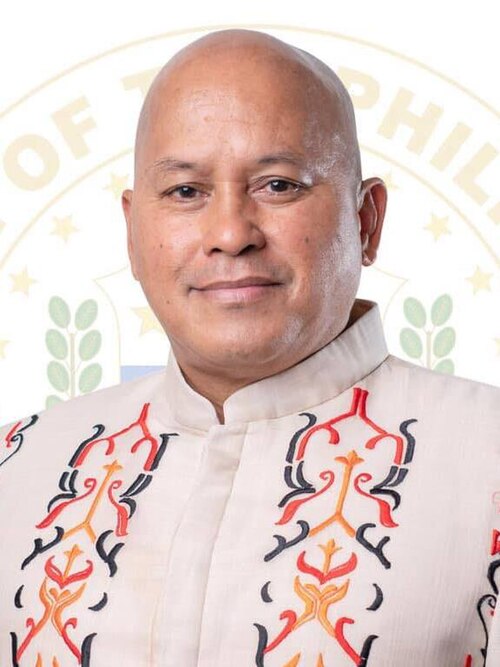





Sen. Panfilo “Ping” Lacson delivers a privilege speech titled “Flooded Gates of Corruption” on Aug. 20, 2025, exposing alleged ghost projects. | Senate of the Philippines
MANILA — The government’s investigation into alleged corruption in flood-control projects has expanded on multiple fronts, with the Commission on Audit (COA) conducting a fraud audit in Bulacan, the Bureau of Internal Revenue (BIR) opening a tax compliance probe into contractors, and the Senate Blue Ribbon Committee issuing subpoenas after several firms skipped its hearings.
The widening inquiry follows disclosures by the Department of Public Works and Highways (DPWH) that some projects in Bulacan appear to be “ghosts,” and a personal inspection by President Ferdinand Marcos Jr., who warned that the most serious cases could amount to economic sabotage.
DPWH Confirmation and Senate Allegations
Appearing before the Senate on Aug. 19, DPWH Secretary Manuel Bonoan admitted that reports from the field suggest some projects in Bulacan may not exist at all. “In all honesty… I think so,” Bonoan told senators when pressed on whether ghost projects were real.
During the same hearing, Senate President Pro Tempore Jinggoy Estrada specifically named Wawao Builders, owned by Mark Allan Arevalo, in connection with suspected ghost projects in Calumpit, Hagonoy, and Malolos. Estrada said the company’s projects in Bulacan may only be “the tip of the iceberg” and pressed DPWH for clarification.
Committee chair Sen. Rodante Marcoleta also cited Wawao Builders as a major contractor flagged by the “Sumbong sa Pangulo” portal and DPWH records. The data showed the firm was awarded 85 projects in Bulacan worth about ₱5.97 billion since 2022 and more than ₱9 billion nationwide. These contracts are now under review by both the Senate and COA.
Palace Portal Triggers Public Scrutiny
The controversy erupted after Marcos launched the “Sumbong sa Pangulo” portal on Aug. 11 to crowdsource reports of irregularities. He disclosed that of ₱545 billion in flood-control allocations between 2022 and 2025, about ₱100 billion—or one-fifth—went to just 15 contractors.
The President also pointed to thousands of projects listed with vague descriptions and several with identical contract prices across provinces, patterns he called “highly questionable.” The portal logged more than 1,100 citizen complaints within its first three days.
Senate Hearings and Subpoenas
The Senate Blue Ribbon Committee, chaired by Sen. Rodante Marcoleta, opened hearings on Aug. 19 under the banner “Philippines Under Water.” Only seven of the 15 contractors identified by Malacañang attended, prompting subpoenas for the rest.
Senators highlighted reports of ghost projects in flood-prone areas of Bulacan despite billions allocated for mitigation works.
COA Fraud Audit in Bulacan
On Aug. 19, COA Chair Gamaliel Cordoba confirmed that the agency’s Fraud Audit Office had retrieved key documents to begin its special audit of Bulacan flood-control projects from 2022 to 2025. The audit will determine whether projects exist, whether contracts followed procurement rules, and whether disbursements match actual work.
Any findings of irregularities could be referred to the Office of the Ombudsman or the Department of Justice for possible prosecution.
BIR Opens Tax Investigation
On Aug. 22, the Bureau of Internal Revenue (BIR) announced that it will examine whether flood-control contractors properly declared income and paid taxes. Officials said tax audits will run parallel to COA’s project validation, adding another layer of accountability.
Marcos Calls It “Economic Sabotage”
During a surprise inspection in Bulacan this week, Marcos visited a river wall reported as completed in government documents but found unfinished on the ground. He called the anomaly “economic sabotage” and warned that those responsible could face the gravest penalties under Philippine law.
Senators Warn of Systemic Leakages
In the Senate, several lawmakers presented varying perspectives on the scale of corruption tied to flood-control projects. Senator Panfilo Lacson, in a privilege speech he titled “Flooded Gates of Corruption,” said his office had prepared case studies indicating that the problem was far-reaching rather than isolated. He claimed that in many instances, only about 40 percent of project funds were actually implemented, while up to 60 percent was siphoned off through what he described as kickbacks under “pass-through” arrangements.
Senate President Pro Tempore Jinggoy Estrada echoed these concerns, describing the suspected ghost projects in Bulacan as “just the tip of the iceberg” and warning of potentially deeper anomalies that may involve collusion between contractors and officials.
Senator Erwin Tulfo branded the flood-control program a “grand robbery,” alleging that as much as 20 to 25 percent of contract values were being taken as kickbacks, leaving only 30 to 40 percent for actual construction.
Senator Joseph Victor Ejercito questioned the apparent mismatch between project allocations and the needs of flood-prone communities, raising doubts about why areas not vulnerable to flooding received disproportionately large shares of the budget.
Meanwhile, Senator Imee Marcos pointed to contractors who appeared to rent their high-tier licenses to smaller builders, calling the practice a structural flaw that enabled ghost or substandard projects to pass through the system.
Finally, Senator Bam Aquino underscored the social costs of corruption by suggesting that eliminating ghost projects could free up billions in funds for classrooms and other essential needs, stressing that every peso lost to fraud deprives students and teachers of critical resources.
Other Red Flags
Beyond Bulacan, attention has also turned to MG Samidan Construction and Development Corp., which declared only ₱250,000 in paid-up capital but was still awarded around ₱5.02 billion in flood-control projects nationwide between 2022 and 2025, according to ABS-CBN and Inquirer. At least seven of those contracts, spread across Abra, Benguet, and Mountain Province, carried the identical amount of ₱96.5 million, a pricing pattern flagged in the Senate as suspicious. DPWH officials defended the figures as based on standard cost estimates, but senators have questioned whether such uniformity points to deeper irregularities.
Continuing Local Works
Despite the controversy, some projects are moving forward. In Bukidnon, DPWH reported that a ₱95.5 million river dike and drainage system in Malaybalay City is being fast-tracked under a presidential directive to bolster local flood defenses.
The results of COA’s fraud audit in Bulacan are expected to determine whether the investigation broadens to other provinces where similar complaints have been raised. Subpoenaed contractors will be required to explain their role before the Senate, while the BIR conducts its own tax compliance checks. With President Marcos warning that the most serious anomalies may amount to economic sabotage, the flood-control program, one of the government’s largest budget items, now faces an intensity of public and institutional scrutiny unseen in recent years.