




By Janet Susan R. Nepales
Creators Bobby Pontillas and Bernard Badion have done something bigger than themselves.
They have not just created an award-winning indie fantasy animated TV series for global audiences that deals with Filipino mythology and culture with an all-Filipino cast, made by Filipino animators in the Philippines called “Sun Chaser.”
They have created a movement.
With no big studio budget, limited resources, but the passion to propel Filipino talent behind and in front of the cameras, the two Filipino Americans went back to their roots, dug deep into themselves, and ignited their Filipino hearts and souls to create something beautiful.
Their creation: the “Sun Chaser.”
The story follows Jordan Santos (Manny Jacinto), who is “a self-absorbed teen whose carefree summer is upended when an ancient icy villain attacks his grandmother’s island in the Philippines.”
Aside from Jacinto, the other cast members include Liza Soberano, Charo Santos, Dingdong Dantes, Eugene Cordero, JR DeGuzman, AC Bonifacio and KD Estrada.
The former Disney animator and Oscar nominee for the short film “One Small Step,” Pontillas, told us in an exclusive interview, “It was more about solidarity and more about, listen, this is like a Filipino story made by Filipinos taking place in the Philippines. And you know, these are the benefits in the future that could benefit our industry moving forward, not just us, but the younger generation.”
Together with Badion, another acclaimed Filipino American creator who has worked with Nickelodeon, Disney, Imagine Entertainment and Amazon, the two have created “Sun Chaser,” which they have tagged as “Made With Pride in the Philippines.”
After winning at the Annecy International Animation Film Festival’s Animation du Monde Award in Annecy, France last year, considered the Oscars of Animation, “Sun Chaser,” will premiere its first episode for free on YouTube, giving audiences around the world their first look at the series on June 22 at 9:00 pm PST.
Alongside the premiere, a Kickstarter campaign will be launched to support the production of future episodes and to help continue building the world of “Sun Chaser.”
The project is fully animated in the Philippines by Toon City and PlayLab and co-produced by Liza Soberano’s Funny Face Films.
In exclusive virtual interviews, we talked to Manny Jacinto and the creators Pontillas and Badion.
Manny Jacinto (Jordan)
Please tell us how you got involved with this project.
I’ve been a fan of Bernard (Badion). We’re friends. The Filipino community is so small and tight-knit. And Bernard was one of the first people I was introduced to, and we’ve been wanting to work on something together for a really long time.
There was a pilot that we were working on together that involved boxing that didn’t really pan through. And then we were just constantly trying to work together, and then “Sun Chaser” came along.
I also met Bobby Pontillas at a Gold House event. And we got along really well. So, I think both Bobby and Bernard pitched me this project, and it was centered around Filipinos. It was going to be made by Filipinos as well, which is so special. So, I definitely wanted to hop on board once they told me that.
Why do you think this project is so important for Filipinos?
It’s representation. It puts a light on our culture. Not just the culture in general, but even just the people who work to try and get our culture out there.
Bobby has been in animation for such a long time, and he’s worked on such incredible projects. And for him to bring on animators from the Philippines to work on something that they’re incredibly proud of, I feel is so special, and that rallies the community. It shows that Filipinos are incredibly talented and hardworking, and that they can collaborate to make something really special as well. So, from all different aspects, there are so many reasons why this feels so special.

Can you tell us more about your role here and why do you like the character?
Jordan is a teen who spends his summer over in the Philippines. And during the summer, this supernatural, chaotic event happens, and it basically unlocks these ancient powers within his culture, within the Filipino culture, but also unlocks a legacy within his family that he never knew about.
That’s the gist or the synopsis of the TV show. And I love getting to play Jordan just because he is me. I would spend my summers in the Philippines with my Lola. That was the only time that I ever got to see them. So, it really just resonated. It was really the story that reflected my childhood.
So, the Lola here is portrayed or voiced by Charo Santos. Did you spend some time with Charo?
No, I wasn’t able to, unfortunately. With animation, it’s all very much in a bubble, in a booth. But I’m sure once it all comes out, we’ll all get to celebrate and watch it together.
In your younger years, did your Lola or Lolo tell you about some Filipino myths? What stood out for you?
Not particularly, but they would mention superstitions; if anything, they would talk about instances when maybe relatives who have passed away have come and visited them in their dreams. We didn’t discuss a lot about the manananggal or other types of mythology. It’s only until I got much older and really found out about this rich mythological culture that we have in the Philippines. That got me really excited, but they were trying to spare me from having nightmares.
So how much fun did you have in animation? What are the challenges of being a voice actor in animation?
A lot of it is you have to portray, especially with something like this that’s incredibly physical, and there’s a lot of action going on. It’s really getting every aspect of your physical body into the voice. So not being afraid to be vulnerable, to try different things. But Bernard, he was with me in the booth, and he made it just incredibly comfortable and fun to do.
This is your first time working with Bobby and Bernard. How was that?
For the most part, Bernard and I have been trying to come up with something together. So, there were a few iterations of projects that we were trying to work out, but this is the first one that really came to fruition.
I know it’s a different situation when it comes to voice acting. So, you never worked with any of the cast members – Liza Soberano, Dingdong Dantes, Eugene Cordero, JR de Guzman?
Not in person. This is the second time that I’m working with Liza on an animation thing, because “Forgotten Island” was the first thing that we did together. But yeah, it’s difficult to get two people in the booth. But luckily it works out in the end.
You mentioned “Forgotten Island.” So, can you talk more about this project as well? And also, you’re doing season three of “Fallout.” Can you talk a little bit more about that too?
With “Forgotten Island,” it’s also a bit of the same premise (as “Sun Chaser”). We talk about Filipino mythology. So, there are those different creatures like the aswang that we run into. It was interesting taking on both projects at the same time, but even though they were separate, there was a lot of encouragement and support within both camps, which is really nice.
Because one’s obviously a movie and one’s a TV show. The fact that I even get to say that is pretty incredible because there’s not a lot of Filipino representation, not just now, but like for the past. You’ve been in this industry for a long time. There hasn’t been a lot of representation at all over the past few decades. And the fact that I get to say that there are two that I’m part of is super, incredibly special.
So, with “Forgotten Island,” it’s about two best friends who encounter a supernatural, chaotic event that leads them to a secret island, and their friendship is put to a test while they gather the memories of the night that happened before. It stars Liza Soberano and H.E.R., Gabby Wilson.
I can’t say my role in the movie yet. It will come out soon anyway.
It’s a special project in and of itself because those guys- Joel Crawford and Januel Mercado are two best friends, and I feel like their friendship really plays a lot into this movie. I can see the passion in it. So yeah, it’s super special to see.
In terms of “Fallout,” there’s not too much I can say right now. We’re just getting started, but I’m a huge fan of the show, so I’m really excited to be a part of it.
So, with everything going on, do you think Asian representation is getting much better in Hollywood?
My theory is if we have to ask that question, it’s probably still at a point where we have to do a lot of work. When we no longer have to ask that question, that’s maybe when we’re good. But unfortunately, that’s not the case. But I try to see it as positive. Like, if there isn’t that much representation, like we as people of color, as Asians, as Filipinos, there are so many, there’s a plethora of stories that we can tell and that we can bring forth. So, I try to look at it in a more positive sense that we get to be lucky enough to tell those stories. Since they’re not out there yet.
Do you have any dream projects for yourself?
It’s always so many things. I feel like I’ve only really started to be honest, but I don’t know if it’s more dream projects. I think it’s more like I would love to work with certain directors and certain showrunners. Whether it be like Jordan Peele or with Lulu Wang. So many different talented people. I would love to collaborate with. So, it’s more about certain projects.
Have you been to the Philippines lately?
Yeah. I actually just went to the Philippines earlier this summer. I went to see family, but also to possibly scope out the possibilities of being able to film over there for projects.
That was my next question. If you were to work with any Filipino director, who would it be?
Oh, man. There’s a good amount that I’ve met and talked to and just have had meetings with. There’s Alessandra de Rossi who is trying to direct as well. There is Antoinette Jadaone who did the film called “Sunshine.” There is one Filipino filmmaker. He won the Sundance Award for his film “Filipiniana”. Rafael Manuel.
Have you met Lav Diaz?
We haven’t met yet, but hopefully down the line. There’s a good number of talented filmmakers, and I would love nothing more than to try and find the right project with the right director over there.
You’ve done a lot of action, romance, and now animation. What kind of genre are you looking at?
I want to do all, Janet. I want to do it all. The next couple of things that we have coming up, one’s a rom com, like a true rom com, which feels nice. It’s called “Love Language.” And then I finished a Western that we filmed last year with Ben Foster that should be coming out called “The Stalemate.” So, if I’m able to do a musical, that’d be great. If I can do a horror movie. That fits. That would be wonderful. I just want to explore all the different avenues, to be honest.
Bobby Pontillas and Bernard Badion (Creators, writers, directors)
Congratulations, Bobby and Bernard, for this award-winning, all-Filipino-made animation TV series, “Sun Chaser.” For both of you, why is this a passion project for each one of you?
Bernard: Why is this a passion project? It’s all around. To start off, Bobby and I have been on this project for about seven years. We started a long, long time ago. And we started just meeting in like restaurants at our own places where we live, and the only two people who cared about it for years were just me and Bobby. We were just throwing around ideas about a boy going back to the Philippines, finding this kind of workplace family, makeshift family on a boat, and going on adventures.
The story stems a lot from myself and Bobby’s experience of being in a third culture growing up in a culture that is not our parents’. And the first thing that we connected on when we first started talking about this project was when we would go back to the Philippines, how people look like us. But it was so foreign.

The experience was great. It gave you a sense of discovery, and there was a bit of fright, a bit of shock. And we wanted to turn all those emotions into a story, into something beautiful. This is what we came up with.
So why is it a passion project? It stems from my own experience as a kid and now as a father. I don’t want to speak for Bobby, but from Bobby’s own experience too. And that’s why we’ve been so passionate about it and just beating the drum for it for seven years. And now we’re here.
Bobby: To go off of what Bernard is saying, just the initial inspiration behind it, Janet, like bringing it to the Philippines – it became very clear to us that the only way to make this would be to bring it to the Philippines and have it be made by Filipino artists. Right? So historically, Janet, the Filipino animation industry has been service work studio, like there’s phenomenal artists over here that do work for Disney or Warner Brothers service studio work, right? But at some point, we decided that you know what, there’s so many amazing artists over here.

There are so many mythological stories that we can tell over here. Why don’t we start telling our own stories? So, after we started developing “Sun Chaser” in the US, it became very clear that the way to move forward was to go to the Philippines and make it with the Filipino talent pool over here. So that’s very important for us as well. Super important. Super something that I’m passionate about, Janet.
It is like coming from LA to Manila; I see the talent pool here, both young and old, especially the young generation. It’s very important for them, in my mind, for them to see something like this happen. And we’re hoping that it continues forward in the future so that it uplifts the animation community over here and changes the paradigm of the animation community here. So, we’re not just server studio work; we’re creating our own ideas, making it all the way for years to come. So, we’re trying to shift that a little bit for the Philippines.
Can you talk more about working with the Filipino animators in the Philippines? Was there something that you had to adjust to?
Bobby: So post-COVID, everyone went a little bit remote. And so, it makes sense, Janet, because like everyone’s coming from these different provinces. Like we are obviously set in Manila, but I would talk to people in the city that were veterans. They were like, yeah, my commute is three hours away because they live in Pangasinan or Pampanga or like Laguna or like coming from. And they used to commute like all the time, like three hours one way, three hours back. That was just the way that it happened in animation. So, since the quarantine, it’s changed a little bit. Everyone’s working remotely.
That is something that I’ve had to get used to. I think it’s good. But it helps them just keep working on these projects and not have to travel for six hours every day. But hopefully, we can find a middle ground where we have enough people in the studio and enough people working remotely in “Sun Chaser” last year. And this year we have people working from Pampanga, but also like Pico, which is like down south, like ten hours. We have people working from the Visayas, which is like a flight away. So, it’s pretty, pretty, pretty wild to tap into the talent all across the country and not just Manila. So that’s a big advantage of that remote stuff as well. You just have to get used to it.
I didn’t realize the scope of the animators all over the country. Wow.
Bobby: Massive. Yeah.
So, Bernard, can you talk about your friendship? How did you and Bobby collaborate on this story?
Bernard: When we first met, Bobby was at Disney. We didn’t know each other before. I do these Filipino writer exec meetups, and I had this list when COVID was going on or when there was a strike going. Like I ran this list. I ran this master list of Filipino writers. And then I put it out there so that people could find Filipino writers. Bobby sent me a request, and then I didn’t even send my name back to you. I was like, hey, here’s five names that I think maybe you’d want to, people you’d want to talk to. And then you email me back, and then you’re like, hey, it looks like you’re a writer too. Can I get your info? Yeah. That’s right.
Bobby: That’s perfectly well put, Janet. Essentially, I was at Disney developing a Filipino project in 2019, right before COVID. And my development director said, you need to find a Filipino writer, someone who’s funny. And I was like, okay, all right, I’ll get into it. And so, I just Googled, like, Filipino writers in Hollywood. I came across the organization that Bernard is putting up with a few other people, which was a community of writers in Hollywood. And Bernard was the one putting it together. And then he sent me the names of like four or five people. I met with those four or five people. And then I said, but you’re also a writer. Your credentials say you’re a writer. And he’s like, yeah, but I’m new to the game. I’m new to the game too, bro. And I was like, let’s just meet and talk through the project I had at Disney, and we did.
We met up at a restaurant, and we hit it off. Bernard was new to the game, like he said, but I was also new to the game. But what I liked about Bernard is that he had a passion for it. He had the gusto of it. And I went back to my development director; his name is Jermaine Turner. And I was like; I found a guy. He’s not super seasoned, I’m not super seasoned, but he has hunger. And that’s when my and Bernard’s relationship started back at Disney.
So, this is a story also about Filipino mythology and culture and a Lola. Can you talk about your own childhood and did your Lola or Lolo talk about Filipino mythology to you?
Bernard: I heard all the stories when you’re a kid. Like the White Lady, the dwendes (dwarves), like all these stories are meant for you to stay safe, right? Like, don’t go down that alley. Don’t go at night. Just go to sleep, like things to tell kids to be safe. And I would get all those stories, and they never came more real for me than when I was in the Philippines with family. It would just highlight your experience, like wherever you are.
My family is from Hagonoy in Bulacan, a small town called San Roque. And I would run around with all my cousins and the kids in the area, and just knowing those stories, or like someone saying that, like, hey, there’s a White Lady down the street, it’s like, run away. And then we’re running in the middle of the night.
It’s going to be funny when American viewers see this because they’re like, the White Lady, like, why is that White Lady? Why is that scary? Google it. It’s an actual spirit monster.
It was something from my childhood that I think from a lot of our childhoods that you’d only get from your family and your friends who are Filipino. Then you don’t really get to talk about this mythology at school because it’s a Filipino experience.
So, I think “Sun Chaser” is a great way to share those stories to our own audience, to the Filipino diaspora everywhere, because we can relate to it, but also to people who are not Filipino to bring them in this really fun way. They are our stories, and when Bobby and I talked about this, “Sun Chaser” is definitely very inspired by Filipino mythology, but we also wanted to make it accessible to everybody.
When you see it, like even in the trailer, you can see, as we know, manananggal is usually an evil character. I was like, man, that’s one of my most favorite characters in all Filipino mythology. The fact that it splits its body and then the legs are somewhere and then the other half is flying in another place. I’m like, man, that’s an incredible power. Can we make that into like an auntie?
It’s just fun, and so we made that character into a good character, into a person who watches over the kids. We have all these little twists. We really wanted to be funny. We wanted to put people into a fun adventure that it’s pointed at kids, but I think it’s pointed to everyone who’s a kid at heart, whether you’re Filipino or not.
Bobby: Perfect. When I was growing up, the Philippines was always a magical place. When you’re growing up in Seattle or Los Angeles or the Bay Area or like Bernard, and I’m sure your family Janet over there in Los Angeles, it’s one thing over there. It’s another thing when you go to the Philippines; it’s like smaller. Everything’s more magical, everything’s darker, there are more ghosts, there are more ghost stories, there are more spiritual stories.
I remember feeling that as a kid. And Bernard’s right, when I went back to the Philippines, it just seemed like a supernatural place, and we wanted to tap into that and introduce that aspect to the global audience.
When you look into that. The mythology, it is dark. And you know what? I’m for it. I’m good with dark.
How were you able to gather all these amazing talents – Manny Jacinto, Liza Soberano, Charo Santos, Dingdong Dantes and everybody else?

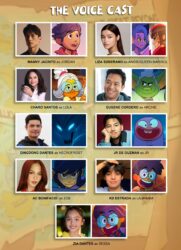
Bernard: I’ll start. So, with that group that I was saying that I was a part of, getting together Filipino writers, executives, and everyone working in Hollywood. Over the years, I’ve been in Hollywood now for over 15 years. I started with just a really small group of friends who were Filipino. I didn’t know a lot of people in town who were Filipino and working in the industry. Two of them are Thomas Reyes, who’s an additional writer on “Sun Chaser,” and then Eugene Cordero, who I met doing improv at Upright Citizens Brigade.
We would always have lunch, and we’d be like, man, there have to be more Filipino people in town. So, I started doing the work. We all got together, and I found a community of talented Filipino people who we have these drinks nights and meetups, and over the years, just doing that and working, meeting incredible people.
I’m a writer. So, I had a script going around when I hit the town when I did the NBC fellowship. I had the script.
I was really proud of it. It somehow got to Manny Jacinto. And we ended up doing another project years ago. It’s still alive, but since then I’ve known Manny, and I always knew that if there was another project that was worth his time, I’d want to share it with him. This became that project.
The funny thing is that same project, that same script that Manny read, ended up in Liza’s hands. And that’s how I got connected with Liza. And same thing. We got connected to that script, but it was always if there was anything good enough to show her. “Sun Chaser” became that thing. And then from there, obviously Eugene’s on there, JR de Guzman. All the American cast members are through that community of people whom I knew.
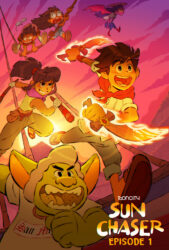

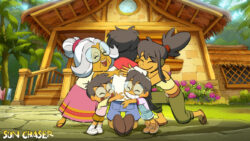
Then once Liza was on board with us, she was so passionate about the story and so passionate about storytelling for kids and for the Filipino diaspora that she came on as a producer and I got to give her all the credit for our cast in the Philippines, who she brought on – the Dantes family (Zia and Dingdong), AC Bonifacio, KD Estrada, all those people really came from Liza’s connections.
We’re just really lucky that it all worked out this way. A year ago, Bobby and I were talking when I was in the Philippines. I said, hey, who do you think the cast should be? And we threw around these names as just a pipe dream, like, oh, maybe these people. I was like, I’m friends with these people, and it’d be cool if we could get them, but we really didn’t know. And it all came together as the project became realized, and as the script was finalized.
Honestly, there’s the script, and there’s the personal relationships. But also, all the work that Bobby and the animators did on “Sun Chaser,” it’s very engrossing. It really attracted the talent. So, all of that together. That’s how we got who we got. And we’re just blessed to have everybody.
What is the significance for you of the Animation de Monde Award in Annecy?
Bobby: For me, the significance of that would be to prove not only to ourselves, but to the people whom we worked with, Janet – Toon City Animation, the CEO of Toon City Animation, Miguel del Rosario- that there was something there that was quality and that the global audience would want more of, right?
So, we went over to France. We, we were privileged to win this award. And it just goes to show, for Toon City Animation, for the CEO, that let’s keep going. I think that specific award, he looked at that and was like, there’s an audience here. Let’s keep the momentum going. That’s all we could ask for. And it was a modest budget, to be fair. It was a modest team, to be fair. But just that award meant a lot to us, wouldn’t you say, Bernard?


It encouraged the CEO of Toon City Animation to keep it going. However modest it might be. Very small steps. I think at that point. And then once we got that going, production, Janet, it was just like a snowball, like bigger and bigger and bigger. Like Bernard was working with Liza’s production company, and once he got connected with Liza’s company and also tapped into his resources in LA, the voice talent came on and everything like that. So that one small award, seemingly insubstantial in the moment, helped us gain confidence from the production team here in Manila.
Bernard: Winning the Animation du Monde at Annecy last year. It was like a lightning rod. Right? It really gave everyone that big, that big hint that we were on the right path. And I think as Bobby just explained, that’s when everyone came together creatively, business-wise. No matter how small, we kept pushing, and we know that “Sun Chaser” is something special. And we want to take care of it as much as we can and bring it to light up to as many people in the world as possible.
So of course, there are some challenges in creating something like this. What were some of the challenges, and how did you hurdle them?
Bobby: The big challenge in production would probably be everyone working remotely. I talked about that a little bit before. But that’s something that you recognize the benefits of, like helping people situate themselves working on “Sun Chaser” from their province. That’s a big challenge.
With any small production budget, there’s also a big challenge. But we find our way when we were tapping these big-name artists. Obviously, we don’t have a budget like a big studio, right? But what we try to do, Janet, is pitch “Sun Chaser” in a way that it was more about solidarity and more about, listen, this is like a Filipino story made by Filipinos taking place in the Philippines. And you know, these are the benefits in the future that could benefit our industry moving forward, not just us, but the younger generation.
If they could see something like this happening, then there’s a bright future, right? So, everyone who came on board the project knew that they weren’t going to be millionaires or whatever, but they understood the memo. They understood that it was for the greater good of filmmaking, animation-wise, in the Philippines. And then in the bigger picture for the diaspora, like Filipino Americans, all around the world.


So, it’s more than just a story. It’s more than just a project. It’s for the country. It’s for industry here. And because of that, they were willing to jump on board and commit to it. Then hopefully the story that Bernard and I craft is just icing on the cake. Something quality that it can share and be proud of.
Bernard: There was a cool comment on our Instagram after the trailer was posted at the end of the trailer; it says, “Made with Pride in the Philippines.” And there were a couple of comments that were like, oh, that’s such a flex to be able to say that there’s not a lot of projects out there that get to say this, of this caliber.
And it’s something to be very prideful of because we Filipinos, we’ve been featured in projects, but to be able to make it in the way that all the animators are Filipino, everyone in front voicing it is Filipino, that all the creatives, all the business, everyone’s Filipino.
It is made with pride in the Philippines. It’s a rare thing, and it’s a beautiful thing. And as Bobby said, we just hope it keeps growing.
You decided to launch it on YouTube on June 22nd, at 9:00 p.m. Any special reasons?
Bobby: We’re very inspired by and influenced by the new resurgence, the new generation of indie animation that is making content direct to consumers, and the beautiful thing about that route, Janet, is that you’re taking your future into your own hands. You created something, and there’s no reason to gatekeep it. You could just put it out there for the mass audience to see the general populace and build a community that way.
There are lots of examples in recent years post-quarantine, where creators, indie creators, have put their pilots out there online for free and builds a community up. And then just kept that going that way.
I was really inspired by that because that makes sense. Bernard and I come from the big studios; I come from Disney, and it’s very different. You create a project, and you have to wait years for it to come out. But this is different. This is indie animation, and you can create a project. Then you can showcase everyone’s hard work, put it out there for free, build a community, and then build a groundswell of fans. Then you can go from there and create more episodes.
We want to, with this Kickstarter, Bernard and I are starting; we want fans and the community to be a part of the creation of this show. We want them to absolutely feel like they’re a part of making the show. The episodes that come after this one that we’re going to premiere. It’s a synergy where instead of us giving you content, they’re bringing their opinions. They’re following into more episodes that we’re going to do in the future.
What do you hope “Sun Chaser” will inspire among Filipino kids after watching it?
Bernard: A big reason why I wanted to make “Sun Chaser” was it’s been so long now, but my child, my kid was four years old, and I was just thinking, man, how cool would it be if this existed? While he was a kid, he could grow up knowing not just telling these stories of Filipino mythology with friends and family, but see it on a screen, just like things that he would all see through all the other different animated and live-action things that are on screen. But in a way was delivered in this way, this kind of beautiful way where everyone can be brought in. I hope it inspires kids, especially Filipino kids, that they’re important and their stories are relevant. And in the future, tell more stories. That’s what I hope.
Janet Susan R. Nepales is an award-winning journalist and the first Filipina voting member and Associate of the Golden Globe Awards. She has been a member since 2008 and is the first Filipina to be elected to the Advisory Board. She is the author of the coffee table book “FASHION. Filipino. Hollywood. The World” and the co-author of the first FWN book “DISRUPT: Filipina Women: Proud. Loud. Leading Without A Doubt.” A graduate of UST (AB Journalism, cum laude), she is based in Los Angeles and is a Hollywood entertainment journalist and TV correspondent.