








“Wherever creative love enriches life, the Spirit is present and operating. The same is true when a person graciously loves himself or herself. If you enter into the love of God for yourself, knowing your wondrousness as a creature, forgiving yourself the way God forgives, then you have an encounter with the Spirit. Generous self love enables you to give the gift of love to others.” – Elizabeth A. Johnson
I was having coffee and breakfast at a busy, vintage, Japanese-owned cafe, watching Glen cook breakfast, Linda take the orders, and Maria refill water glasses.
On my left was a young woman enjoying her bacon and pancakes. She ordered Portuguese sausage with hash browns for her husband. “Nice, that’s what I would order for my husband, too,” I said.
Our conversation moved forward as we discovered our commonalities: We are both Filipinas with science backgrounds, and our fathers are from Ilocos, hers from Dingras, Ilocos Norte, and mine from Vigan, Ilocos Sur, in the Philippines. She was an avid listener, picking a word from my sentence and connecting it to hers. It was a brilliant way of telling me that she was actively listening.
We continued our dialogue weeks later at a Korean coffee shop, sharing an egg sandwich and, for me, a charcoal coffee latte. A shared meal is, for me, a form of shared humanity.
Soulful Introspection on Her Life’s Journey
Her birth name is Judith, from the Bible. As she grew older in high school, it became Judy. “Judith did not fit me anymore and after, it became Jude, it became more me. I grew up in a predominantly Caucasian neighborhood, one of three Asians in my school. I wanted to be like the other kids.”
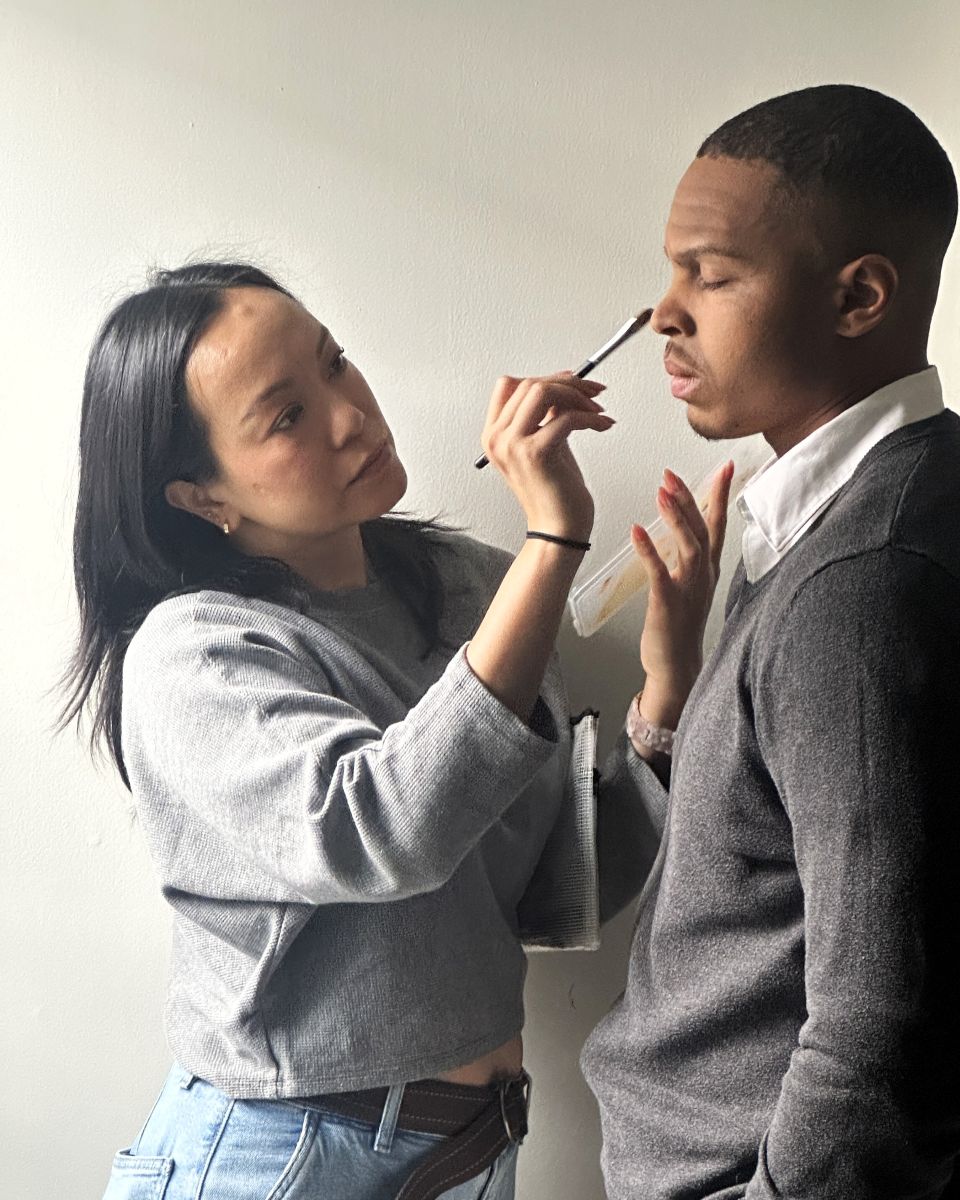
Feeling like an outsider during her formative years in school resulted in a natural desire to belong, to be cherished for who she is. It got to a point that when she came home, she told her parents to talk to her only in English. “Even if they talked to me in Tagalog, I responded to them in English.”
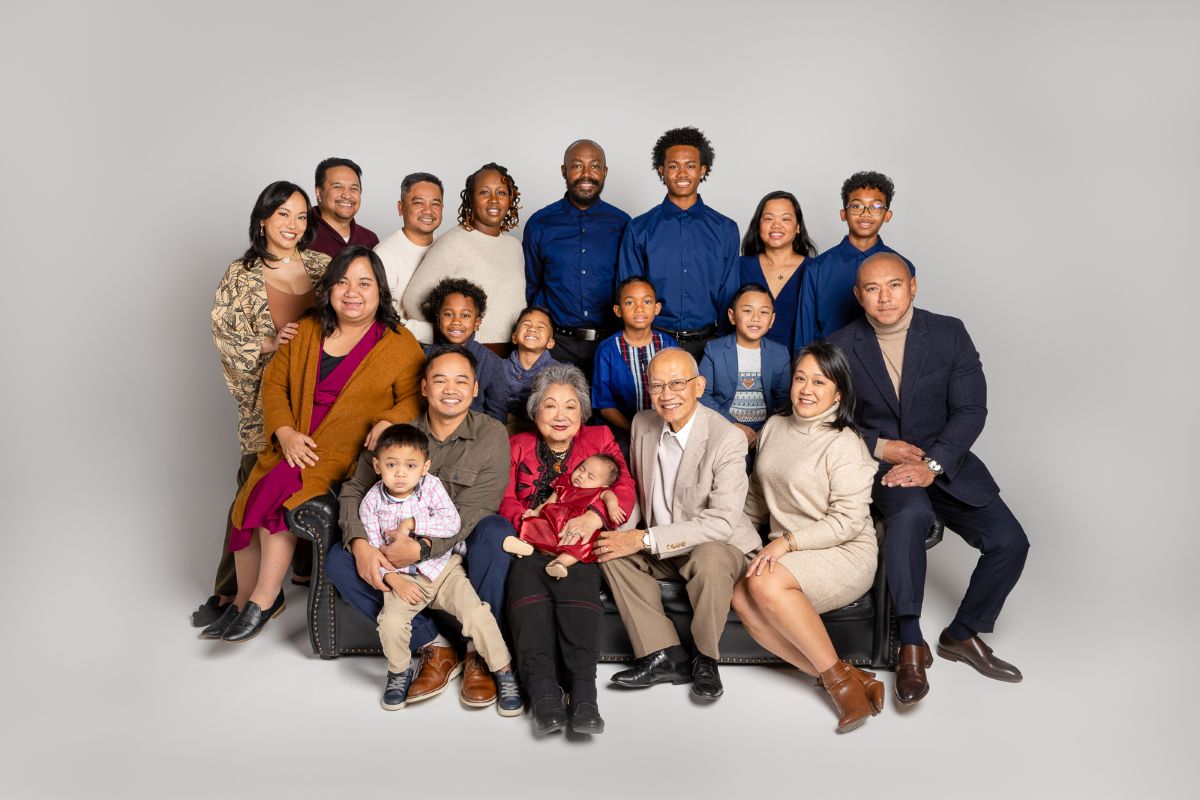
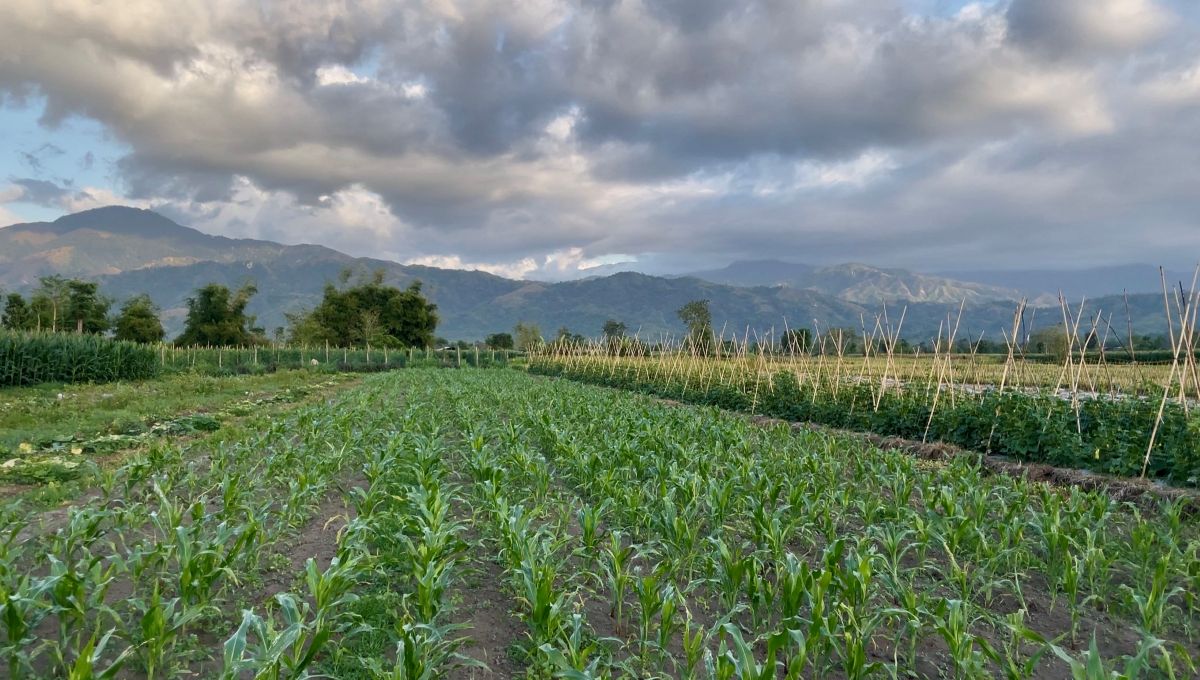
Her father is Precious Andam, an immigrant mechanical engineer from Dingras, Ilocos Norte, known as the municipality’s rice granary. He became the head mechanical engineer at Children’s Hospital Medical Center in D.C. There, he met Alice, an immigrant nurse from Plaridel, Misamis Occidental, “known for its natural beauty, including the pristine Bawbawon Island and its commitment to organic farming, including kayaking, hiking and birdwatching.” They got married, had two children, and adopted two boys and a girl. Recently, they celebrated their 50th wedding anniversary.
“I learned the importance of work ethic from my parents. I saw their life examples of discipline, my dad working 9 to 5 daily, and my mom working three 12-hour days for the week.”
“I became stronger-willed growing up, though I very much like being what others want me to be — malleable.”
She described her assimilation journey and how, when exposed on weekends to folks of similar upbringing, “I felt a sense of belonging.” She described it as an inner feeling of wholeness, of liking the same stuff, of being able to relate to their activities, to the things they did, and to their supportive extended family members.
She experienced a Bildungsroman, “where a character’s name change symbolizes transformation, maturity, reinvention or identity formation. Immigrant Bildungsroman often include Anglicized names to show assimilation pressures. In a Bildungsroman, a name change can represent assimilation into a new culture, gaining autonomy and discovering one’s true self.” Source: Cora Oriel, June 2026.
So, from Judith, to Judy, to Jude, to a “disposition for benevolence, where sidestepping her ego allows mystical moments to move outside herself.” It was a case of envisioning her soul losing itself in love, as described by Gregory Boyle in Cherished Belonging. Cherished belonging is love fully engaged. It is tenderness in action.
Cherished Belonging to a Marital Partner
“I am married to Edmundo Martinez. He is wonderful and supportive,” she said with ebullient enthusiasm.
“How so?”
“We have been together now for 25 years, married for 17 years in August. It is more than just communication and growing together. It is finding who I am, who he is, and we are growing together, as us, communicating what we love and what we don’t love.”
He instilled in her certain principles in choosing her current career, and “he guided me toward what I want.”
He noticed that she enjoyed putting on makeup and suggested, why not monetize it? He illustrated the importance of concentric or overlapping circles in making decisions, the so-called Venn diagrams.
She drew three overlapping circles: one circle for compensation, another circle for skills, and a third circle for the colleagues she works with. If two circles out of three intersect, then the work is not as dreadful. And if three circles out of three intersect, there is satisfaction as “your passion, skill and purpose intersect,” she adds.
For example, at work, one is exposed to a first circle of skills, a second circle of income, and a third circle of colleagues you work with. In the first circle, are you gaining the skill set you need to improve yourself? Are you getting the exposure you need to broaden the scope of your skill set? Go to the second circle: Are you fairly compensated? The third circle is your circle of colleagues: Do you like them? Do you grow as you interact with them?
If all three circles are met, you gain an appreciation for your career path and achieve harmony and satisfaction.
That diagram has guided her decision-making since she finished her college degree. Her present career choice, now spanning 15 years, has brought her a sense of contentment and radiance.
It is as if she has reached “an interior castle where she has reached her highest degree of maturity,” and has one question left: “How do I align the compass of my heart with the energy of this wild God? We find the God of infinite welcome — of generous hospitality, close to see the intimacy of the unseen and allows us to live in the immediacy of wonder” (Gregory Boyle, Cherished Belonging).
“When you feel good with the way you look, it makes it easier to feel good about who you are,” she emphasized, a principle that resonated with me.
It is how she approaches every client — her wholesome being meeting another.
Is the Face the Mirror of a Person’s Soul?
Jude paused, thinking about her response. She described it this way: “Our faces are our ways of communicating as humans. We emote with our eyes, head, and nonverbally with our faces, connecting with people. That part of me when I work [is what I am mindful of], not to alter the way they look, but to enhance their natural beauty. Most of the time, women apologize for how they look, at times even asking to make them look in their fifties, though the client is in their sixties.”
She reminds them of their beauty, that “each spot or pigment is part of your memory.”
Where did this self-assurance come from, I asked?

“I believe I am more than my outward appearance. I learned to be comfortable in my own skin.” Others refer to that as “growing more skin,” a form of cherishing oneself.
She draws on her memories to describe how her family gives her a sense of belonging.
It is why she wants to preserve her maiden name and not change it. Andam comes from the lineage of her father, meaning “fully prepared.” She believes her surname, “Andam,” represents part of her life’s journey, and taking on another surname, her husband’s, would be “symbolized erasure.” She adds, “Fortunately for me, my husband understands that.”
She remembers what her mom, Alice, did to prepare for weekend activities.
“Perhaps it is looking at Alice Andam, my mom. I watched my mom get ready and being in so much awe of her after putting on her makeup. It was not transformation. It is enhancing what she has. I help my clients, enhancing their natural beauty, helping them be the best version of themselves. It is not transforming them, but keeping them true and real, as each face is very individualized. I am okay with wrinkles, okay with aging, and each pigment, each spot is a memory and experiences we have lived through. When you feel good [with] the way you look, it makes it easier to feel good.”
‘Imperfection Is Not Ugliness’
That multilayered wisdom, from facial aesthetics to where the beauty of her mom first drew her awe and attention to how folks mature and develop, was a revelation.
“Imperfection is not ugliness,” she adds.
I recall an African American woman who was walking on the sidewalk in front of my house. I went out the front door and stopped her abruptly. Imagine her walking briskly when I suddenly asked, “Your aura radiates peace. What is your secret to life?”
She smiled and said, “I leave any place that I find, or work at, better than I found it.” I shared that with Jude, moved by her radiance and the vibrant aura that I observed in her: no makeup, clear skin, and just serenity.
She has been working with a broad range of advertising and marketing clients, models and ordinary folks, including non-models, or even public figures like Tiger Woods.
With regular people who at times apologize for how they look, “I reassure them that their interesting faces are revealing their accomplishments, their trials, their tribulations, and why would we take that away?”
“I learned to do that during the pandemic, even more so, as within my personal bubble, without any work for eight to ten months, I went through a mental turmoil. I learned to separate my work from my self-identity. My hobbies are parts of me, but they don’t define me. Yes, I do enjoy nature, beach, travel, snowboarding, spending time with family and friends. While my job is a representation of my career, I remain curious about what I do in commercials, the fashion realm, advertising campaigns, live events, premieres, narrative work, short film, television.”
With that curiosity about her projects, she keeps learning.
A Science Degree — “Just a Piece of Paper” — to Skin Aesthetics
How did you get to where you are today from finishing a degree, I asked?
Ms. Andam graduated with a Bachelor of Science degree in marine biology from Old Dominion University in Virginia. In taking her comparative religions class, “I learned different organized religions: Buddhism, Christianity, Taoism, Judaism, Catholicism. Common to them are their origins and belief systems; their similarities prevail despite the differences,” she reflected.
“The unstated stigmas became implanted in our culture, leading to self-hatred. It made me understand transgenerational trauma — how not to pass on that trauma to the next generation. I also learned, reflecting on other people’s experiences, what I would do differently so as not to go through that traumatic experience. What would I do differently? I learned that to help my clients is by helping them be the best version of themselves.”
Armed with a college degree, she cultivated a growth mindset, aware of how conservative and sheltered her upbringing was. “So I looked at my folks’ lineage and asked questions: What can I learn from their experiences?”
From a foundation of science, she first worked in an aquarium in D.C. “I had an inkling that I did not fit in this field.” But she stayed the course.
“I was mentored by the dean of students, whom I approached, feeling that my 3½ years had been wasted. He advised me that the diploma is merely a piece of paper, that after I graduate, I can pursue what I want. I hunkered down, both in defiance and out of respect for my parents, and I graduated.”
She moved from job to job, from working in an animal hospital to customer service to working as an office manager for a chiropractor. In those jobs, she felt something was lacking and left after 18 months.
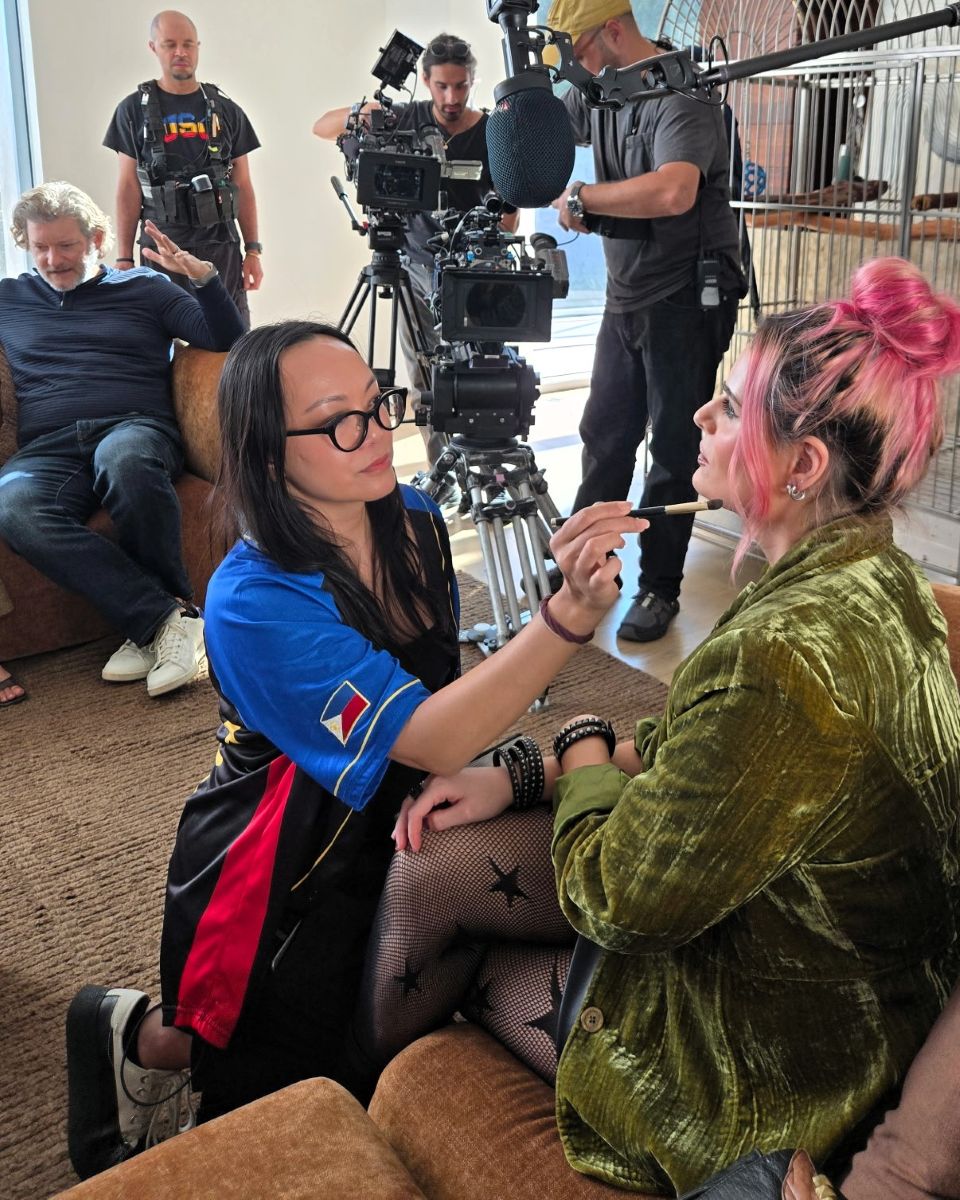
Instead of chasing after a paycheck or dwelling on disappointments, she started looking for what she wanted to do in her late twenties. Following the advice of her spouse, she researched how to monetize makeup application, something she loved to do. She looked at those who worked at makeup counters and those who were self-taught, but knowing her science background, she wanted a structured way of learning about the industry.
She went to Cosmix, a makeup school, where she undertook six months of rigorous learning about skin biology, skin physiology and skin conditions. She learned more than makeup, aced her subjects, and got high grades. Each day was tiring, yet she had immense satisfaction.
Fast-forward to today, she has a website illustrating her portfolio and her current projects over the last 15 years. Her website is a representation of the diverse genres of what she has achieved, going into another field and integrating what she learned in college.
Her sense of contentment is unlike “modern city swamps where nothing is never enough. There is a coherence in her complexity of thoughts, working within a field of fragmentation, like the center of the onion bulb that hides the propensity for growth,” as Dr. Katrin de Guia wrote in her book, Kapwa: The Self in the Other.
“When it comes to narrative work, I enjoy the emotional resonance that viewers experience through film and TV and the camaraderie that grows from working together with a production crew. My dream is to continue working on projects that inspire change and move emotions.” — Jude Andam

Prosy Abarquez-Delacruz, J.D. writes a weekly column for Asian Journal, called “Rhizomes.” She has been writing for AJ Press for 18 years. She also contributes to Balikbayan Magazine. Her training and experiences are in science, food technology, law and community volunteerism for 4 decades. She holds a B.S. degree from the University of the Philippines, a law degree from Whittier College School of Law in California and a certificate on 21st Century Leadership from Harvard’s Kennedy School of Government. She has been a participant in NVM Writing Workshops taught by Prof. Peter Bacho for 4 years and Prof. Russell Leong. She has travelled to France, Holland, Belgium, Japan, Costa Rica, Mexico and over 22 national parks in the US, in her pursuit of love for nature and the arts.



Thank you so much for sharing this beautiful and inspiring story / interview.
I can relate to her in many ways specially during my younger years , when I was in college at UST and before getting married.
Thank you mare.
More power to you.