






By Janet Susan R. Nepales
Where in the world does one have to present two valid IDs to get another ID? Only in the Philippines, folks!
Such is the tedious, nonsensical, annoying bureaucracy that is practiced in the country. So, what happens to the poor people trapped in a chaotic and inhumane system?
These are the issues and questions that the award-winning film “2 Valid IDs” spotlights.
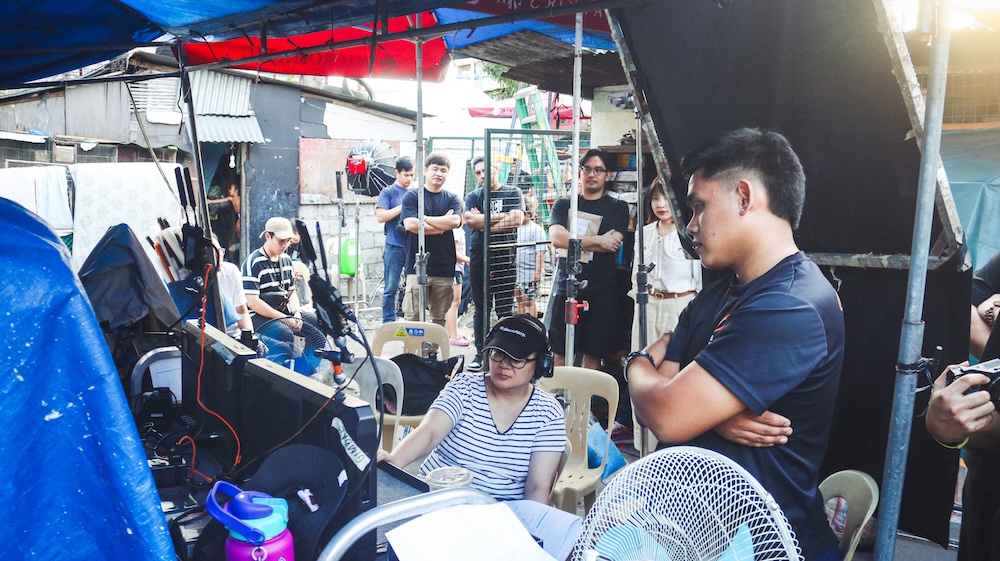
The film, directed by Ma-an L. Asuncion Dagñalan who gave us the award-winning “Blue Room” and written by Abet Pagdagdagan Raz of the critically acclaimed “La Traidora,” was the winner of the recently held Cinemalaya Awards and bagged the Special Jury Award, the Audience Choice Award and the Best Actress Award for Marietta “Pokwang” Subong.
According to Dagñalan in her Director’s Notes: “’2 Valid IDs’ is more than a story of bureaucracy, it is a reflection of the truth where access to basic needs is hindered by poverty, excessive red tape, rigid rules, and a system that demands documentation rather than urgency and compassion. Hence, many Filipinos are pushed into a world of ‘fixers,’ forged identities, and moral compromise. They are doing this not because of selfishness, but out of necessity and love.

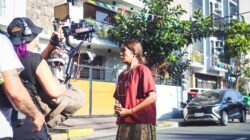
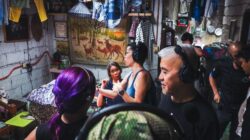
“In this film, we confront these questions we often ignore: What is the value of a human life in a broken system? How far would you go to save the one you love? And why do we ask for 2 valid IDs before we even ask what help someone needs?”
In an exclusive interview, we talked to director Dagñalan and scriptwriter Raz on their inspiration for the movie, the challenges they experienced and what they hope that audiences would get after watching the film.
What was your inspiration for the movie?

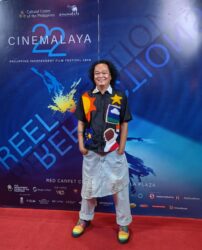
Abet: It all started when my mom got hospitalized for one month. So, I had to do everything – I watched her and took care of all the paperwork. Although we had a private room, I also went to the public and wards areas and I saw the situation. You will die not of illness but more of desperation because you will feel that the government is not taking care of you. When my mom died, I said I will do a story on this.
During that time, there was a meme on 2 valid IDs on Facebook which became popular. So, I thought of using this meme because it is famous and marrying it with the idea of the dire hospital situation where you see the deteriorating health system. It is so hard to get 2 valid IDs because of the red tape and bureaucracy. And that is how the story of the movie came from.
Ma-an, what made you decide to pursue this project when Abet presented it to you?

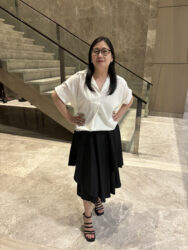
Ma-an: First and foremost, it advocates…it talks about the socio-political situation here in the Philippines. It’s not just about poverty. It discusses how broken our healthcare and identification systems are. Since my first film, “Blue Room,” is a socio-political film, my heart is really leaning towards it, and secondly, the protagonist is a woman. So, I accepted immediately.
Can you talk about the casting for this film? Why did you choose Pokwang as Sylvia, Joey Marquez as Ramon or Zaijian Jaranilla as Denver?
Maan: Let’s start with Zaijian because I know him. Not personally; I’ve watched him since he was a kid. I know the caliber of his acting. So that’s why we thought of Zaijian to be part of the film, and then I watched Joey Marquez in his film, and he’s quite serious in that film. I loved his dramatic acting. And then for Pokwang, she recommended me for the role of Sylvia, and I felt that she could play the role of Sylvia.
I also saw some of her anthologies where she played very dramatic roles. And thirdly, we have the same ideologies, same political beliefs, and same moral values.
There were two scenes that really stood out for me: the one where Pokwang was so desperate she broke down because she wanted to be the first in line and the final scenes where they were questioning her use of MA. instead of the spelled-out MARIA. Ma-an, can you please talk about those two scenes and how you navigated them?
Ma-an: The first one was in the remittance center, and it was an emergency.
For the remittance center originally, there was supposedly a cut shot with the people from the remittance center. But we thought to have that kind of treatment just to focus on her because we thought during the editing. We decided just to have that shot to have a more dramatic and emotional situation in that sequence.
So, we did that for this visual treatment instead. But in terms of acting, we already discussed this during the acting workshop. We discussed what kind of characters we had and even her posture. Being a farmer in the northern part of the Philippines, you can just imagine how many hours a day she works, seven days a week. So, for the posture, she was a little bit stooped. But in terms of acting, for those who experience that kind of situation wherein your loved one is confined in the hospital, and you feel hopeless and desperate already. That’s exactly how you’re going to react.
For the second one, we’re talking about the morgue now. Very silent. At first, honestly, we thought of having a musical score, but during the post-production, after the picture lock, we felt that it was going to work if we only have a minimal musical score, and then we’ll just work on the sound design. So that’s why we ended that way with no score, just ambience, just to feel more the pain of Sylvia.
So, who was your inspiration for the character of Sylvia? Is this a combination of different people?
Abet: It’s a composite character. Every time we discuss this one, I remember my late mom. Her name is Socorro. (Becomes emotional and teary-eyed)
Abet: So, when you finished the script, you gave it to Ma-an right away. What made you decide to choose Ma-an as your director?
Abet: We worked together at TV5. So that was like 15 years ago. I know the sensitivity of Ma-an as a director.
And so, what were the challenges you encountered in this film and how was your journey?
Ma-an: The major challenge was to look for investors because of the war, we all know that everything went up, from gasoline to everything.
Hence our budget as well bloated. It was difficult for us to look for investors because they were so afraid to put their money in the film or in the project because they didn’t know yet what’s going to happen in the future. And then there was even a major investor who pulled out.
That’s why, imagine, we started filming in March, but we had to stop in the middle of it. We had eight shooting days in Metro Manila. So, we had to stop on the fourth day because we did not have enough budget.
So, we looked for another investor. Thank God we were able to do so.
For both of you, what do you hope audiences will get after watching this movie.
Abet: I hope this is a wake-up call and an eye-opener. I hope it makes a social impact and start a conversation. Hopefully, it will be transformative.
Ma-an: For me, it’s already given that the film is relatable. So, I just do hope that there are more people from the government, especially the policy makers or the legislators who will be able to watch our film. And it’s a good thing that Senator Risa Hontiveros was able to watch the film.
And then there was another one who contacted me from Akbayan. They wanted it to screen in the House of Representatives. So now it’s already happening.
As filmmakers, Abet and I can only share our stories and experiences. That’s the only thing we can do. Everything now relies on our legislators and policymakers.
What’s your plan now after this Cinemalaya screening?
Ma-an: Other than the festivals, we want to screen it here first in the Philippines. So, we’re really pushing to have a theatrical release, but we just don’t know when. So hopefully this year.
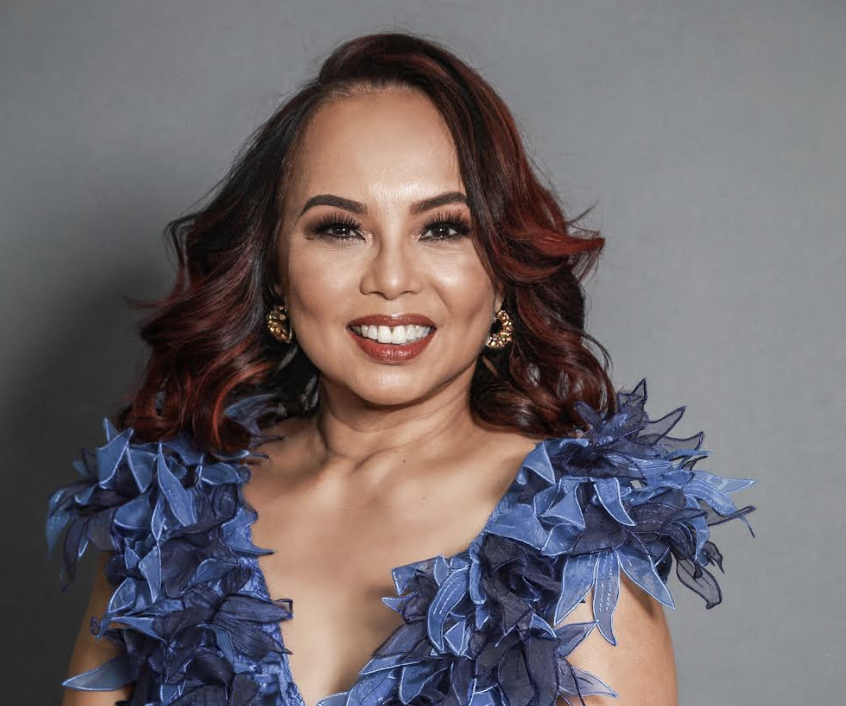
Janet Susan R. Nepales is an award-winning journalist and the first Filipina voting member and Associate of the Golden Globe Awards. She has been a member since 2008 and is the first Filipina to be elected to the Advisory Board. She is the author of the coffee table book “FASHION. Filipino. Hollywood. The World” and the co-author of the first FWN book “DISRUPT: Filipina Women: Proud. Loud. Leading Without A Doubt.” A graduate of UST (AB Journalism, cum laude), she is based in Los Angeles and is a Hollywood entertainment journalist and TV correspondent.