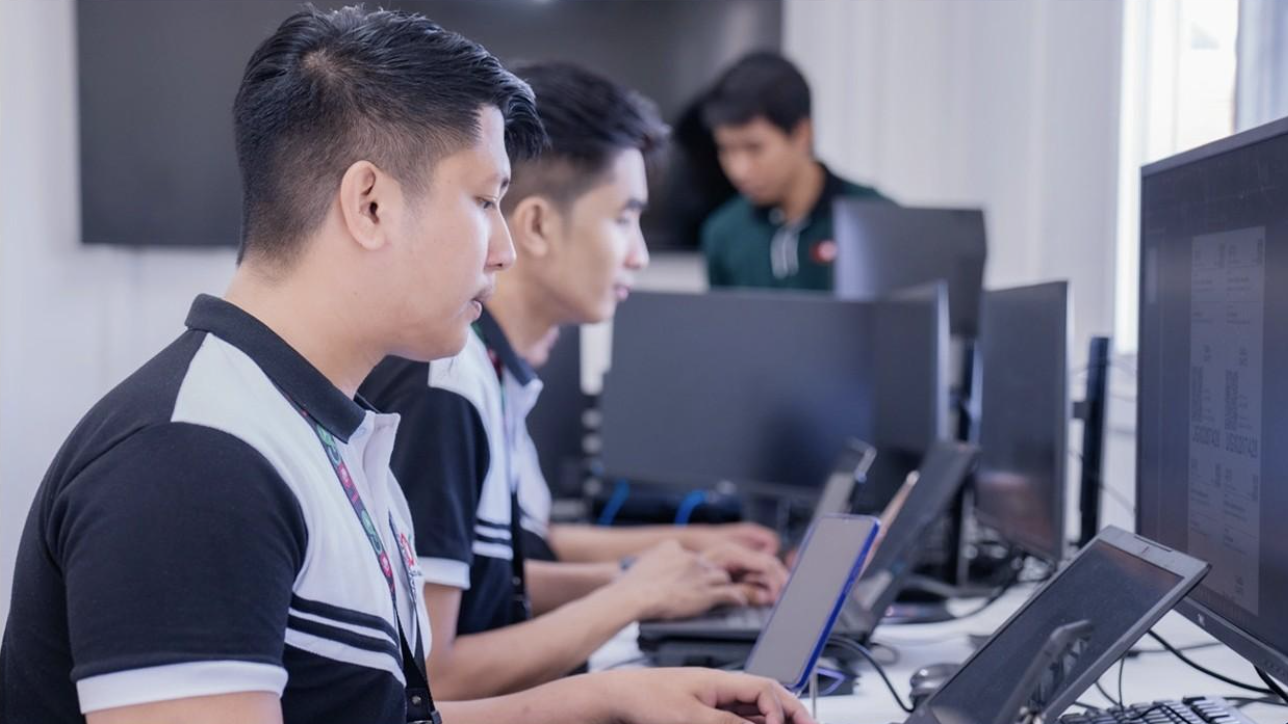








Philippine Stock Exchange (PSE) President and Chief Executive Officer Ramon S. Monzon has championed the exchange’s investor education roadmap and digital initiatives aimed at expanding financial literacy among young Filipinos. (Photo courtesy of the PSE)
The Philippine Stock Exchange plans to launch a gamified stock trading platform for college students, building on its investor education roadmap to broaden financial literacy and expand the country’s still-limited base of retail investors.
MANILA — The Philippine Stock Exchange (PSE) is set to launch a gamified stock trading platform for college students next year, building on its investor education roadmap and digital strategy to expand the country’s still-limited base of retail investors.
The initiative, confirmed by PSE officials, aims to promote financial literacy among the youth by allowing students to simulate real trading using virtual money, leaderboards, and rewards. By merging gameplay and finance, the exchange hopes to make investing more engaging and less intimidating for first-time learners.
PSE President and Chief Executive Officer Ramon S. Monzon has emphasized the importance of reaching younger audiences through technology-driven financial education. The project extends the exchange’s earlier programs, such as the PSE Campus Expo, Clash of the Universities, and partnerships with schools under its Investor Education Roadmap, which integrates capital-market awareness into university learning.
Learning through play
Gamified learning, the use of game-based tools to teach complex subjects, has emerged as a powerful approach to financial education. By combining competition, technology, and instant feedback, it helps students understand market behavior without the risks of real-world trading.
Financial educators say this approach works best when paired with proper guidance. Without a learning framework, students may focus on short-term gains rather than disciplined, long-term investing. For the Philippine Stock Exchange, the challenge will be to strike a balance between engagement and realism, ensuring that play leads to lasting financial understanding.
Global practices in financial education
While the Philippine Stock Exchange is developing its gamified platform independently, similar initiatives abroad show how technology can enhance learning about investments.
These programs are not affiliated with or partnered with the PSE and are cited only for comparison purposes.
In the United States, the CME Group University Trading Challenge is one of the world’s largest experiential finance competitions. Each year, hundreds of university teams from over 20 countries engage in a month-long simulation that mirrors real-time futures trading, combining live market data, mentorship, and post-trade analysis.
Singapore’s StockWhiz, created by the Singapore Exchange (SGX) with fintech partner TradeHero, allows participants to manage virtual portfolios and mirror top-performing investors. It uses leaderboards, cash prizes, and brokerage credits to motivate participants while emphasizing education.
In Europe, Hungary’s KEBA Student Investor Challenge blends simulated trading with academic tasks such as quizzes, essays, and presentations. Finalists present their strategies before financial professionals, turning a competition into a full-scale learning experience.
These global models demonstrate how gamified platforms can strengthen financial literacy – principles that align with, but remain distinct from, the PSE’s own effort to build financial awareness among Filipino students.
Building the next generation of investors
Despite the rise of digital platforms and mobile trading apps, market participation in the Philippines remains low. As of 2024, the Philippine Stock Exchange reported about 1.7 million stock market accounts, representing less than two percent of the adult population.
By engaging students early, the exchange hopes to widen that base and nurture a financially literate generation. Its gamified approach seeks to make investing less abstract and more relatable, helping young Filipinos gain confidence and move beyond the perception that the stock market is only for the wealthy.
Analysts say success will depend on strong academic integration. Universities could embed the platform in finance and economics courses, while regulators such as the Securities and Exchange Commission (SEC) may set guidelines to ensure transparency and fair participation.
If successful, the PSE’s program could serve as a model for ASEAN markets seeking to engage younger investors. The rollout is expected to begin with pilot universities before expanding nationwide. The goal is not merely to win simulated trades but to cultivate financial discipline and literacy that last beyond the game.
Across Asia, exchanges from Singapore to Tokyo have also introduced student trading simulations to make investing more accessible and less intimidating. If the Philippine Stock Exchange achieves its goal, the next generation of Filipino investors may emerge not from boardrooms but from classrooms — equipped with curiosity, discipline, and the confidence to shape their own financial future.

The Asian Journal Media Center curates information disseminated from both the public and private sector throughout the World. The media center publishes a collection of the World’s most newsworthy topics set forth by our editorial board. Stories that our team of journalists believes are critical, vital, and entertaining information that aspires to help the Global Filipino community make well-informed decisions, opinions, and actions. Our Media Center believes that a well-informed and well-rounded society is a thriving society.