






Is AI or Artificial Intelligence a friend or a foe? Will AI replace actors in the entertainment industry? How can AI help the industry?
These are some of the worries and concerns of people in the entertainment industry. They are scared of losing their jobs, the economic impact of the use of AI, the loss of creative uniqueness and authenticity, among others.



As Agatha Christie said, “Fear is incomplete knowledge.”
We fear the unknown. And AI is something new to us, something we don’t completely know and understand. Whether we are ready or not, AI is here to stay. It is reshaping everything – how creators develop experiences, storytelling and how businesses are delivering value.
It has become one of the most powerful engines and the entertainment industry is one of the most affected.
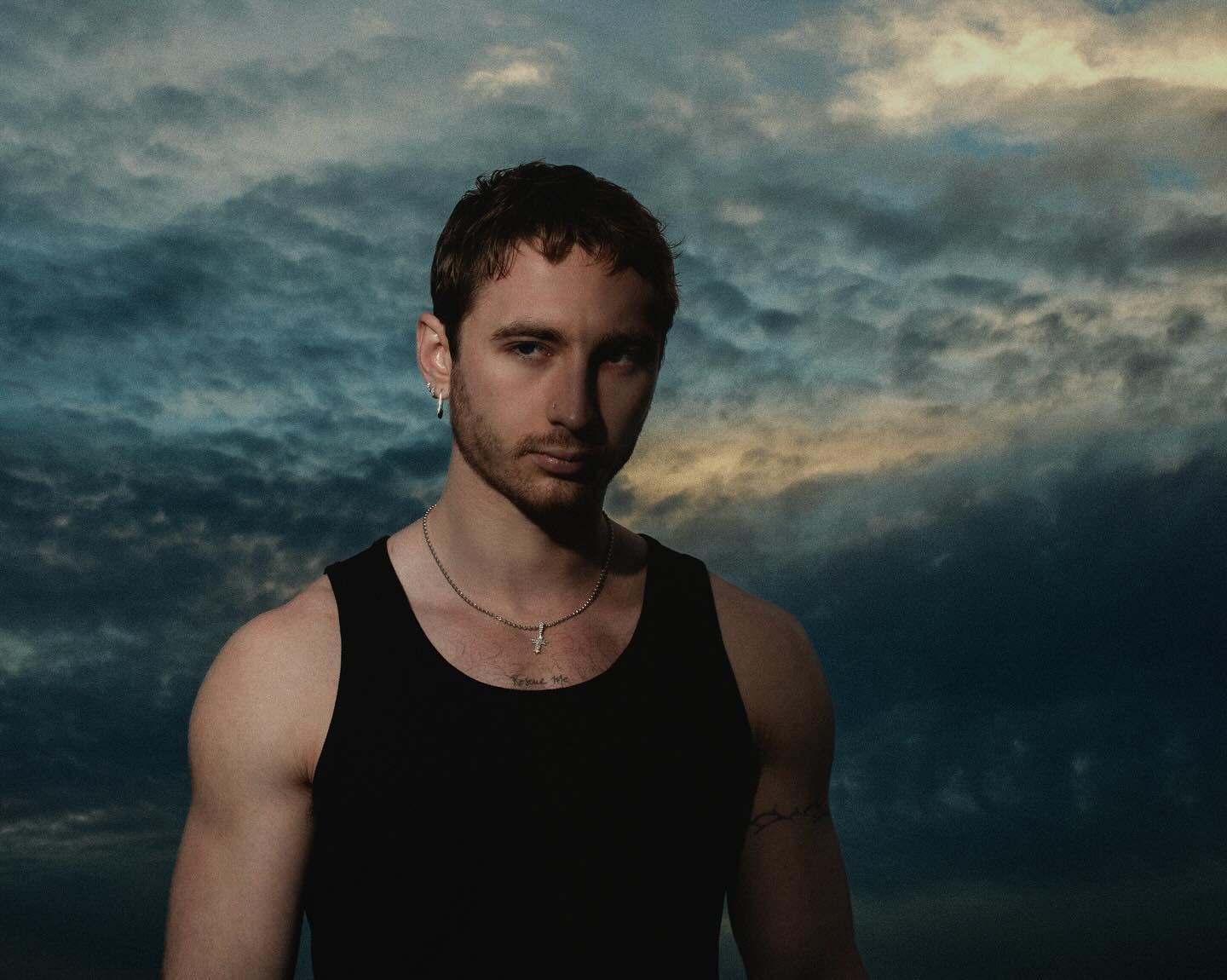
To help us understand more about AI and how it is helping the industry, we recently talked to the founder of SX3 Studio, Sasha Kasihua.
The public narrative around AI is often loud and reductive. Within film and performance, however, the conversation is far more nuanced: how do we integrate new production tools without compromising authorship, emotional clarity, or aesthetic discipline?
SX3 Studio was built around a simple principle – AI is not a creative voice. It is a production instrument, directed with the same rigor as lighting, editing or set design.
In a virtual interview, we asked Kasiuha what led him to create the SX3 Studio and why he believes the entertainment industry needs AI.
He replied, “Seeing how technology has been utilized and what the missing points are with the new AI technologies, I decided to create my own studio and concentrate on premium and luxury, and not angles with AI technology and working with AI for many years and seeing capabilities and where it can be used, especially like substituting stock footage, creating extra footage, and creating quick social campaigns.
“I found that it’s not widely embraced, and people are still afraid and use it as a slur. But with the right creative direction, art direction, and good intentions, in a way, creating a proper campaign, it becomes a really powerful tool.
“In a way, I’m treating this like it’s CGI era. It’s no different between CGI and illustration. So, it’s like you have the opportunity to embrace new technologies, which evolves in really fast pace.”
Kasiuha, who has collaborated with Madonna on her “The Celebration Tour,” creating AI-generated environments, with Tom Ford for his fashion storytelling visuals, and with John Galliano for his artisanal collection, elaborated more on his works with these celebrity A-listers.
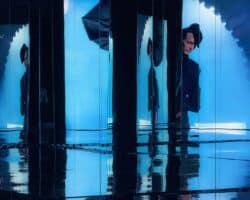

The boyish-looking creative director and multidisciplinary artist based in New York revealed that “my journey with AI technology started with Stanford. When they reached out to create a promotional piece for the show, which was projected outside, like on the building in New York City. And technology back then was far more intricate and more technical.
“It was in 2022, and it was a great experiment to create. It looked almost like CGI. To be honest, it’s why it became interesting to me. I saw the opportunity, how this technology is going to evolve, and what can be created, especially in the luxury and entertainment industries. And that was a great opportunity to try.
“No one knew it was AI. It works well. When it’s properly done and edited in post-production with any kind of AI work, you cannot tell the difference between CGI or AI, which I find quite interesting.
“Miss Madonna. As I was saying just now, I was evolving so rapidly that in 2023, you were able to create a video from text prompt.
“But we decided to embrace this technology. And instead of using stock footage, we decided to try AI technology because of time restrictions, production schedule and limitation, and last-minute changes. So, it became quite a savior, I would say, because if we were to do like a CGI it would take us longer to do different stages, iterations and find the right approach.
“You don’t want to use stock footage. Everyone else can use that. It might not have the proper motion or look or a certain kind of cinematic feel. That’s why with Madonna, she was open to trying new technologies and moved in that direction, which came out quite interesting, especially when it’s abstract; it helps. It’s technology. Every year, there is a new update, a new technology.
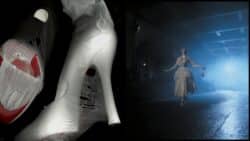
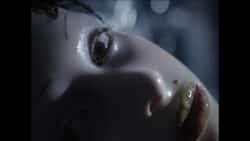
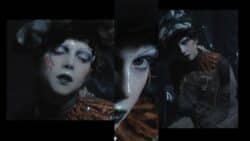
And during Maison Margiela’s “Nighthawk,” a John Galliano film, we needed some excerpts, inserts of the bureau footage to elevate the storytelling to show different elements that we had no opportunity to shoot, or there were no visuals for it. So, pretty much we went into technology, AI, and we created extra bureau inserts.
“Even this month, technology is moving so fast. When the director didn’t shoot close-ups of the person for their promotional video, we went into AI, and we created extra footage of the person in different setups in the area. Basically, my approach is that AI can be treated like CGI. It’s the same way you see the CGI technology. And it really comes to like how you are directed and put together a story to elevate whether it exists or create new visuals.”
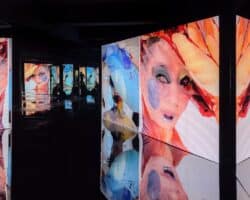
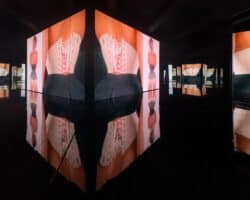
Kasiuha, who merges emerging technologies with immersive narrative and sculptural images, told us how he would convince naysayers about AI that AI is a good tool, especially when it comes to visuals.
He pointed out, “I’m speaking mostly for the visual aspect, it can substitute video footage, it can elevate storytelling for directors when you need extra footage or even actress inserts to elevate their storytelling, and it’s great for commercial work when they turn around. It’s so fast, and you have an opportunity. Sometimes, budgets are limited, and you can create certain drone shots or helicopter shots.
“Back then, like in the 90s, early 2000s, it required so much money to put in the budgets to do that. Later on, with CGI, it was still taking big budgets and longer to create visuals. And now, pretty much anyone can do it when they have good art direction.
“It becomes a great accelerator of creativity and how directors and creative directors can push further. In this stage of development of the media, we need to elevate the work because now the stakes have become higher. Higher because people expect visuals, anything that comes in on social or even on a commercial to be even better.
“Because if kids with AI can create something cool and viral, then for the commercial industry, especially in the luxury industry, it becomes more. The case level becomes more demanding.”
Kasiuha, who is a graduate of Chemical Engineering, pointed out that this is the reason why he understands the technological aspects of creativity. “They go hand in hand,” he explained. “Technology rapidly accelerates and embraces creativity in the early stages.
“It’s very crucial to everyone to try at least to understand it, because you never know where you might utilize it, even if you are an art director or photographer, like if you know how to use the tools, it becomes a powerful thing. But yeah, I came from chemistry into the arts.”
So, when did he decide to venture into the AI business, we asked.
“Honestly, it came naturally because over the years I’ve been exploring technologies, collaborating with different AI tech companies,” he replied. “And it just came naturally because I see potential and I see what lacks in a way. No one brings AI to luxury and premium entertainment industries at the level that I feel that song and can live. It doesn’t look like a waste of megabytes, pretty much.
“Technology can create something strong, emotionally resonant, and it can live longer.”
His dream project?
He shared, “I definitely would love to work more in fashion. Fashion entertainment is something I am passionate about. Fashion is great, like storytelling, creating the fantasy where technologies and my creative mind are really thriving there.”

Janet Susan R. Nepales is an award-winning journalist and the first Filipina voting member and Associate of the Golden Globe Awards. She has been a member since 2008 and is the first Filipina to be elected to the Advisory Board. She is the author of the coffee table book “FASHION. Filipino. Hollywood. The World” and the co-author of the first FWN book “DISRUPT: Filipina Women: Proud. Loud. Leading Without A Doubt.” A graduate of UST (AB Journalism, cum laude), she is based in Los Angeles and is a Hollywood entertainment journalist and TV correspondent.