






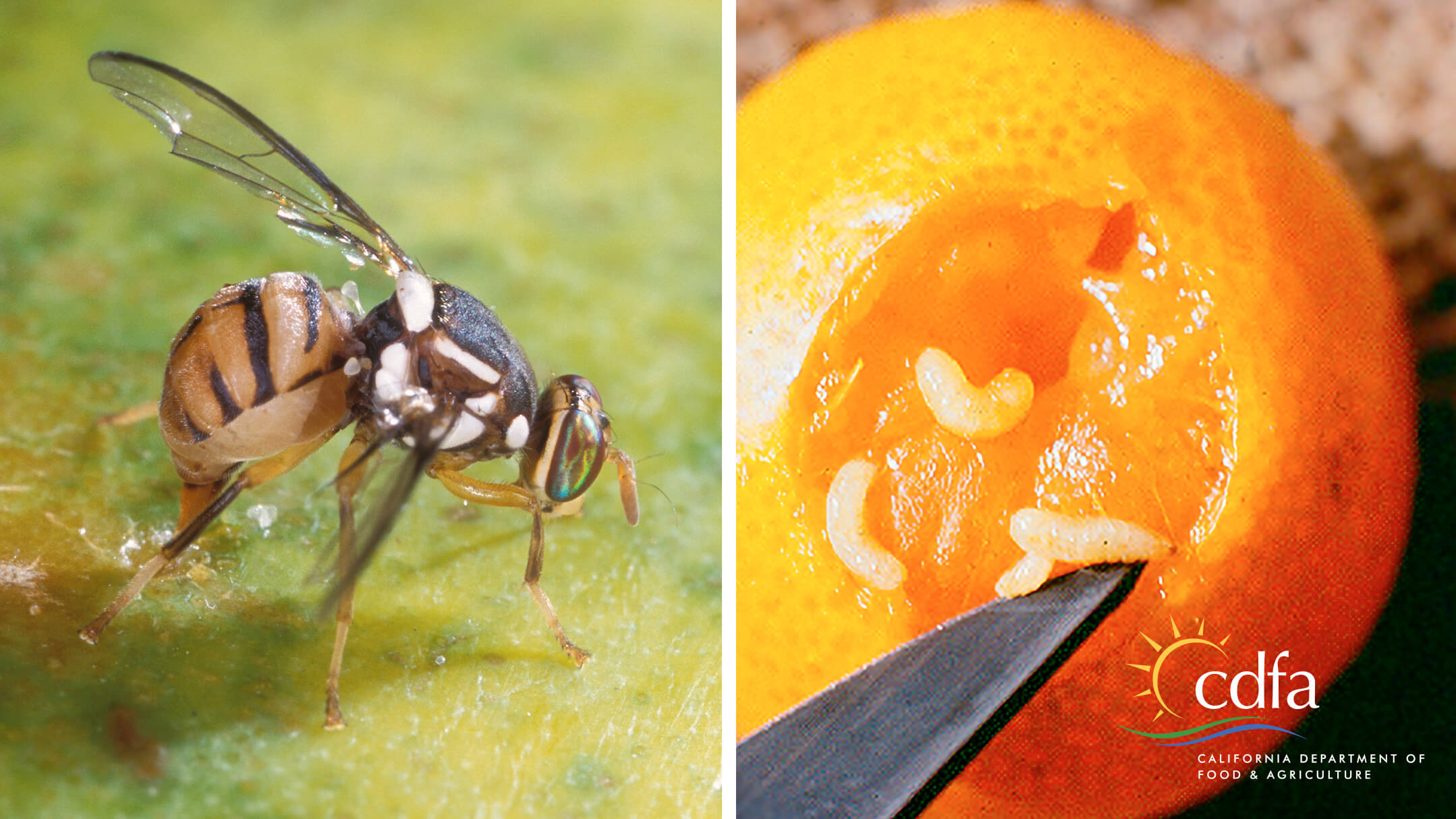
ACoM briefing highlights pressure on resources, quarantine enforcement and risks to farms and home gardens
California agricultural officials said this week that repeated incursions of invasive fruit flies are putting growing pressure on the state’s pest-prevention system, with a senior state official acknowledging that resources may not be keeping pace with the threat.
The officials spoke during an Aug. 18 online briefing presented by American Community Media, or ACoM, titled “Protecting California Communities from Invasive Fruit Flies: Why It Takes Collective Action by Everyone.”Moderated by ACoM journalist Sunita Sohrabji, the session examined how invasive fruit flies reach California, how authorities detect and eradicate them and what residents can do to prevent their spread.
Speakers included Victoria Hornbaker, director of the California Department of Food and Agriculture’s Plant Health and Pest Prevention Services Division; Abraham Lopez Zuniga, a CDFA emergency response team leader; Jordan Peterson, a Los Angeles County agricultural official; Hung Dang of the Orange County Agricultural Commissioner’s Office; and county detector-dog handlers.
Hornbaker rejected the suggestion that invasive fruit flies are winning.
“They continue to come at us, but between the CDFA, the USDA, and the counties, we continue to eradicate those fruit flies,” she said.
Mediterranean, Mexican and Oriental fruit flies are among the invasive species California encounters. Hornbaker said they can attack more than 250 types of produce, threatening commercial agriculture as well as backyard and community gardens.
She said seven quarantines in 2023 stretched California’s response capacity. Separately, CDFA reported in April that seven invasive fruit-fly quarantines during the 2023-24 period were the most recorded in a single year and cost more than $208 million to eradicate.
Officials identified travel, produce mailed between households and plants or fruit obtained through unverified online sources as pathways through which invasive pests can enter California. They did not attribute every current infestation to any one pathway.
Lopez Zuniga cited the Mexican fruit fly quarantine in San Diego County as an example of the work required after a detection. Inspectors intensify trapping, examine fruit for larvae and, when necessary, remove host fruit to interrupt reproduction. He credited residents with helping inspectors gain access to properties.
“Keeping California safe is a job of all of us Californians,” he said.
Asked whether California’s detection system and budget were keeping pace with recent pest incursions, Hornbaker referred to a comprehensive pest-prevention analysis and said “the funding, the resources maybe aren’t keeping pace with the pest pressure that we’re seeing.”
She said CDFA is responding through staff training, partnerships and efforts to reduce risks before agricultural products reach California.
Asked about small family farms facing quarantine restrictions and compliance costs, Hornbaker said CDFA does not have resources to provide direct financial assistance. She said the department can still help growers meet requirements and connect them with inspectors and university extension specialists.
On enforcement, Peterson said county inspectors at parcel facilities can reject agricultural products that fail California entry requirements or are infested. Hornbaker said that inside established quarantine areas, nurseries, fruit sellers and commercial growers may operate under compliance agreements, while officials can place hold notices restricting produce movement until requirements are met.
Peterson described Los Angeles County’s trapping network as an “early warning system” designed to find invasive pests before they reproduce and spread. Detector dogs identify parcels that may contain fruits, plants or other agricultural material; inspectors then examine the contents.
Lisa Samson, an Alameda County agricultural investigator and detector-dog handler, said invasive fruit-fly interceptions have become more frequent during her years in the program.
“It was pretty rare,” she said of earlier finds. “It’s becoming pretty common.”
Asked whether hard-rind fruits such as citrus are less susceptible, Lopez Zuniga said vulnerability depends on the fruit-fly species, season and available host plants. He urged backyard and community gardeners to inspect plants and produce for unfamiliar insects or unusual damage and report suspicious findings.
Hornbaker said climate change can expand the geographic ranges where invasive insects survive and potentially make parts of California more suitable for them, but she did not identify climate change as the specific cause of current infestations.
Asked whether federal deregulation could contribute to future infestations, Hornbaker did not link current fruit-fly problems to federal policy. She said CDFA remains in close communication with USDA officials and monitors federal actions that could affect California’s pest-prevention work.
Dang, speaking as both an Orange County agricultural employee and home gardener, cautioned against relying on unverified online sellers for unusual tropical plants. His advice to travelers: “Keep it as a memory and don’t bring it home.”
For residents inside a fruit-fly quarantine, Lopez Zuniga said homegrown fruit should not be given away or moved untreated from the property. It can be eaten or processed at home. Discarded fruit should be double-bagged and placed in regular trash rather than green-waste containers. Suspected invasive pests can be reported to CDFA at 1-800-491-1899.