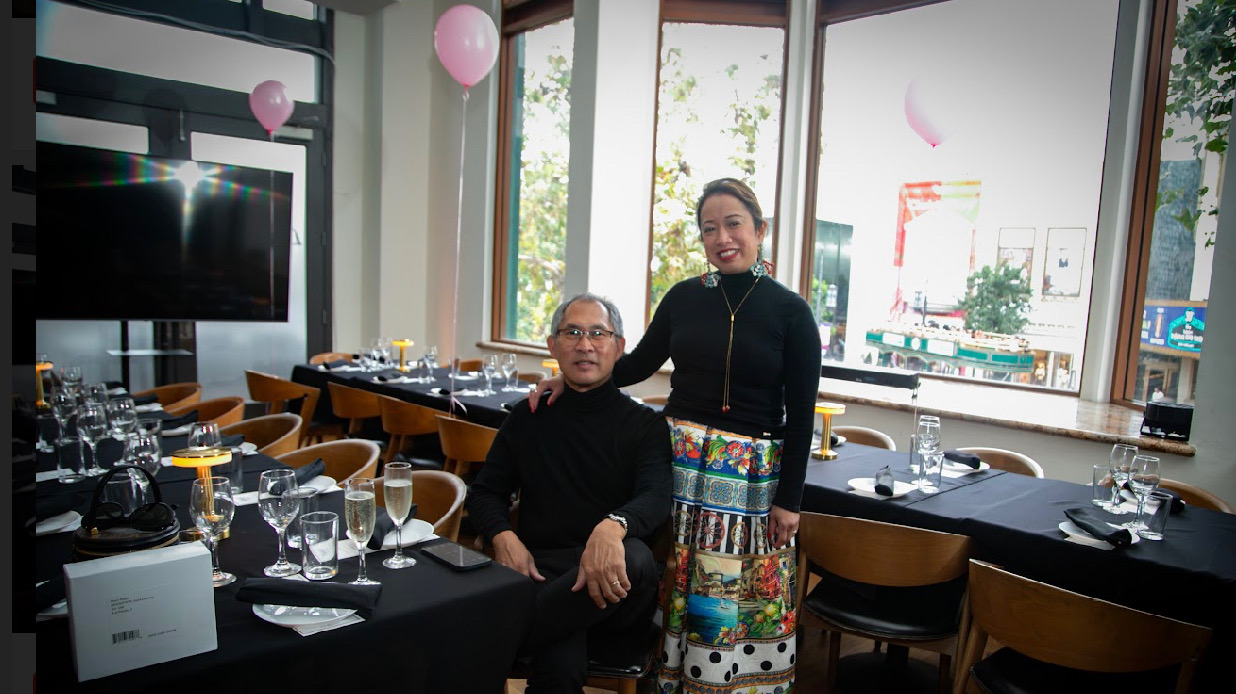







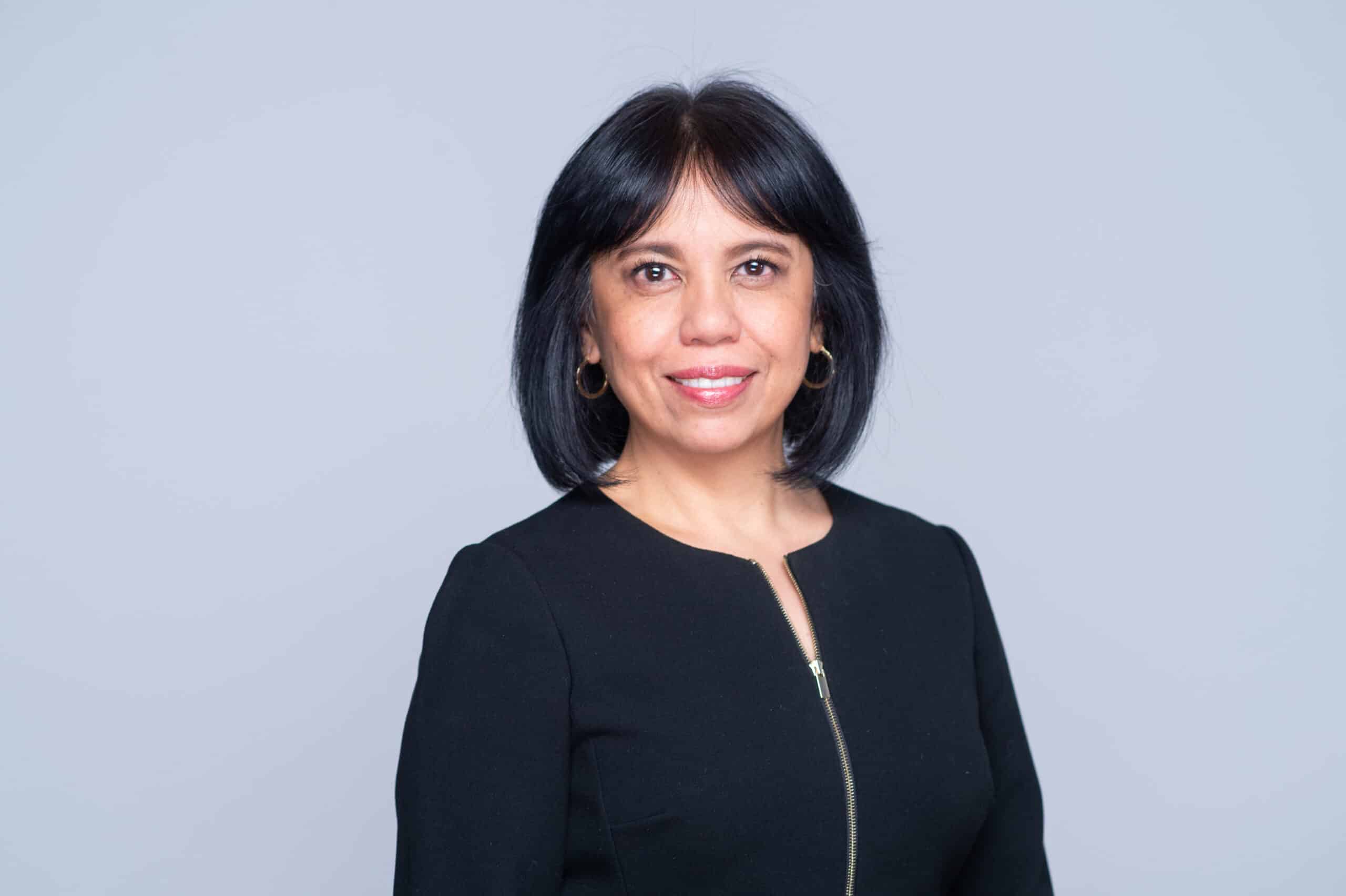
Vivian Young, global head of Asian and Pacific Islander Affairs at JPMorganChase. (Photo courtesy of JPMorganChase)
From a childhood marked by the pressure to assimilate to a senior role at JPMorganChase, Young reflects on career reinvention, cultural identity and why professional success carries a responsibility to lift others.
Growing up on Long Island, New York, Vivian Young wanted to look like the other children around her. Few families in her community were Asian. Some classmates mocked her appearance, making gestures at their eyes and calling her racial slurs. She struggled to understand why she was being singled out.
“I wanted to have lighter skin. I wanted to have lighter hair. I wanted to be just like everybody else. I wanted to be American,” Young recalled in an exclusive interview with Asian Journal.
Decades later, Young is global head of Asian and Pacific Islander Affairs at JPMorganChase, where her responsibilities include strengthening connections among employees, business leaders and the communities they serve. The child who once wished to blend in has become an executive who urges others to recognize their differences and help make colleagues’ contributions visible.
Her career has included wealth management, financial planning, product development and marketing. But the experiences she returns to when discussing leadership begin earlier: with a young immigrant family’s efforts to belong, the people who recognized promise in her and a career move that forced her to reconsider what she could do.
The promise and price of becoming American
Young came to the United States at age 3. Her father was an accountant, and her parents were in their mid-20s as the family began building a life in a new country. They lived first in Brooklyn, then moved to Long Island, where Young and her sister grew up. Young recalls that theirs was one of only three Filipino families in the community.
Her parents wanted the family to become fully American. They emphasized speaking only English and hoped their children would grow up without a Filipino accent, viewing assimilation as a way to integrate fully into American society.
“I don’t speak Filipino, but I understand it. I will answer you in English,” she said, describing the lasting effect of those expectations.
Assimilation, however, did not spare the family from prejudice. Young recalls experiencing racial bullying and witnessing discrimination directed at her parents. She wondered how they were supposed to reconcile such treatment with the opportunities they had come to seek.
At the time, she did not embrace Filipino food or culture. With few Asian classmates and few role models who resembled her, she wanted to resemble the people around her. The small number of Filipino families who had found one another formed a community, but that did not erase the pressure she felt to fit in.
Other people offered a different lesson. Young remembers mentors and allies who saw potential in her before she recognized it herself. Their encouragement gave her examples of how a person could help another imagine a larger future.
College expanded her perspective. At Stony Brook University, she met students from different places and backgrounds who spoke other languages and openly embraced their cultures. Her sorority big sister was Filipino, a connection that brought the familiarity of shared experience.
“I’d say that was the turning point for me,” Young said.
She began to understand that being American did not require setting aside her Filipino identity. That change in perspective would influence how she eventually viewed her own professional strengths.
The courage to leave the familiar
Young’s curiosity about finance began with a weekly ritual. Her father took her to the bank to deposit part of her allowance. Saving was familiar, but investing was not. She wondered what stocks, bonds and brokers did, and what took place on Wall Street, where her father worked in the city.
She became a Certified Financial Planner and worked at U.S. Trust Company of New York, advising individuals and families on financial planning, investment strategies and wealth transfer. She developed knowledge of the tax and estate-planning rules governing clients in New York and neighboring states.
Then her husband’s professional opportunity prompted a move to San Francisco. Young was in her 30s and faced a consequential choice. Continuing the same advisory work in California would mean learning a substantially different legal framework, including its community-property rules. She could retrain or try a new kind of work.
An opening at Charles Schwab offered an unfamiliar direction. Schwab had acquired U.S. Trust in 2000, expanding its wealth-management business. According to Young, the firm wanted someone familiar with U.S. Trust who could help bridge communication between the organizations. Her experience advising clients was useful, but the role would take her into areas she did not know.
“I don’t know how to build products or platforms,” she remembered thinking.
The person hiring her believed she could contribute through her knowledge of the people and business, even without direct experience in product development or marketing. Young accepted the job.
“I would say that was completely nonlinear,” she said.
At Schwab, she learned about developing products, marketing services and identifying client segments. Her subsequent responsibilities involved trust-related products and platforms. She discovered that she enjoyed creating services and bringing together people with different expertise.
The move had required a risk, but it also showed her that a career does not have to advance through a succession of familiar jobs. Skills cultivated in one field can become valuable in another.
Young identifies three strengths that helped her navigate those changes: building relationships, listening and curiosity. Understanding a problem, asking the right questions and earning other people’s trust could matter as much as entering a role with all the technical knowledge already in place.
She joined JPMorganChase in 2012, later holding responsibilities in its Private Bank and Wealth Management businesses involving products, trusts and estates services, and financial planning tools. She subsequently served as global head of Bank Product Marketing in Asset and Wealth Management.
The professional lesson Young draws from those transitions is not that expertise is unnecessary. It is that people can sometimes contribute in ways a job title or established career path does not immediately suggest.
Today she tells people she mentors, “I see something in you that you don’t even see in yourself.” It is advice shaped by the people who once recognized her own abilities before she knew where those abilities might lead.
From personal advancement to leadership
Young’s current role connects her corporate experience with the questions of identity and belonging that marked her childhood. She works with JPMorganChase’s business resource groups, executive forums and business partners to strengthen relationships and opportunity for Asian and Pacific Islander communities.
Among the issues she discusses with younger professionals is the difference between doing good work and ensuring that decision-makers know about it. She understands the hesitation to draw attention to one’s accomplishments. Modesty, she said, is valued in her culture, and she has felt that reluctance herself.
“But to me, it’s not bragging, it’s facts,” she said.
Young advises professionals to describe what they have done and support it with results: problems solved, projects completed and contributions to organizational goals. Recognition should not depend entirely on whether someone else happens to notice.
She makes a similar point about speaking in meetings, particularly when a younger employee is surrounded by more senior colleagues.
“There is a reason and a purpose for why you’re there, and you need to claim it,” she said.
For Young, accepting an invitation to contribute means being prepared to offer a perspective. She does not present confidence as a replacement for substance, but sees unnecessary silence as a missed opportunity for the individual and the organization.
She also credits aspects of her Filipino upbringing with helping her lead. The sensitivity to other people’s needs that she associates with her culture, she said, has strengthened her relationships at work. She described empathy as the most important of those qualities.
After years of wanting her background to be less apparent, Young now regards it as a professional asset. As she put it, “your culture is your superpower.”
The responsibility to bring others along
Young draws a distinction between mentoring someone and actively advocating for that person’s advancement. Mentoring can mean giving advice or encouragement in private. Advocacy means using one’s influence to identify talent, recommend people for opportunities and ensure their work is recognized.
“We do a lot of mentorship. We do that quietly,” she said of a tendency she observes among Asian American professionals.
She believes leaders can do more to raise the profile of talented colleagues. In conversations with successful Filipinos across industries, she has heard people wonder why they know so little about one another’s achievements.
“I don’t think we do enough work pushing other people forward,” she said.
Young connects that responsibility with bayanihan, the Filipino tradition of mutual assistance. The same spirit can be expressed at work through introductions, recommendations and deliberate recognition of people whose accomplishments might otherwise go unnoticed.
Her point extends beyond Filipino Americans. She says effective leaders should help people from different backgrounds be heard and should resist treating Asian Americans as a uniform group. Communities differ in their histories, circumstances and needs. Data can help reveal those differences, she argues, but should not be used to rank who deserves attention.
She also wants Filipino Americans to know more about the people who preceded them and those achieving distinction today. Young believes that learning about accomplishments across business, public service, journalism and the arts can give younger generations more examples of what is possible.
That visibility requires effort, she said. In an age when digital platforms influence which stories receive attention, Young cautions that “the algorithm is not going to give voice to Filipinos.”
“Only we can do that. Only we can give voice for ourselves, for our community, and to lift up others.”
A different measure of success
Young’s experience challenges several assumptions that once shaped her outlook: that assimilation demanded minimizing her Filipino identity, that a career should follow an established course and that professional achievements would necessarily speak for themselves.
The work she now values includes recognizing promise in others and using the influence of leadership to make opportunities more accessible. It reflects the role played by people who encouraged her at uncertain moments in her own life.
Near the end of the interview, Young was asked what she hoped a Filipino woman in her 20s, just starting her career, would take from her story.
She did not offer a career strategy or a formula for advancement.
“She is enough,” Young said.
Then she repeated the thought.
“She doesn’t need to prove anything to anybody, she is enough.”