




From overflowing outer courts to roaring stadium crowds, the Filipina star is changing the atmosphere of international tennis and drawing a vast new audience into the sport.
WASHINGTON — Weeks before Alex Eala began the tournament that would deliver the biggest championship of her career, the Mubadala DC Open’s ticketing office was already seeing evidence of her unusual drawing power.
Tournament chairman Mark Ein said at least 80 percent of player-schedule inquiries concerned Eala, despite a field that included Jessica Pegula, Naomi Osaka, Zheng Qinwen, Elina Svitolina and defending champion Leylah Fernandez.
The demand offered one of the clearest measures yet of the Alex Eala phenomenon. The flags, chants and crowded viewing areas surrounding her were no longer simply expressions of national pride. Her presence was influencing ticket interest and prompting organizers to look beyond rankings when estimating attendance.
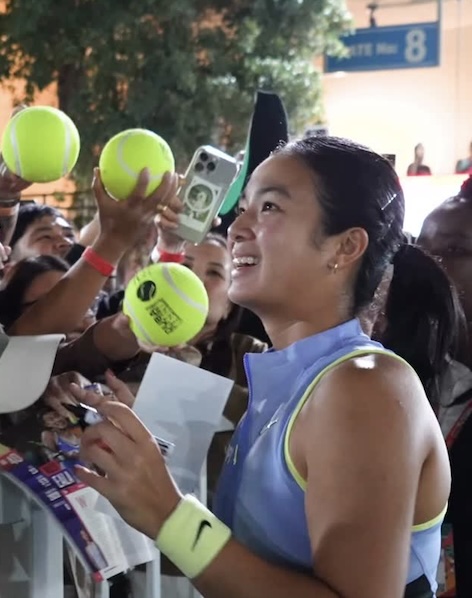
Eala then gave those supporters a championship to remember.
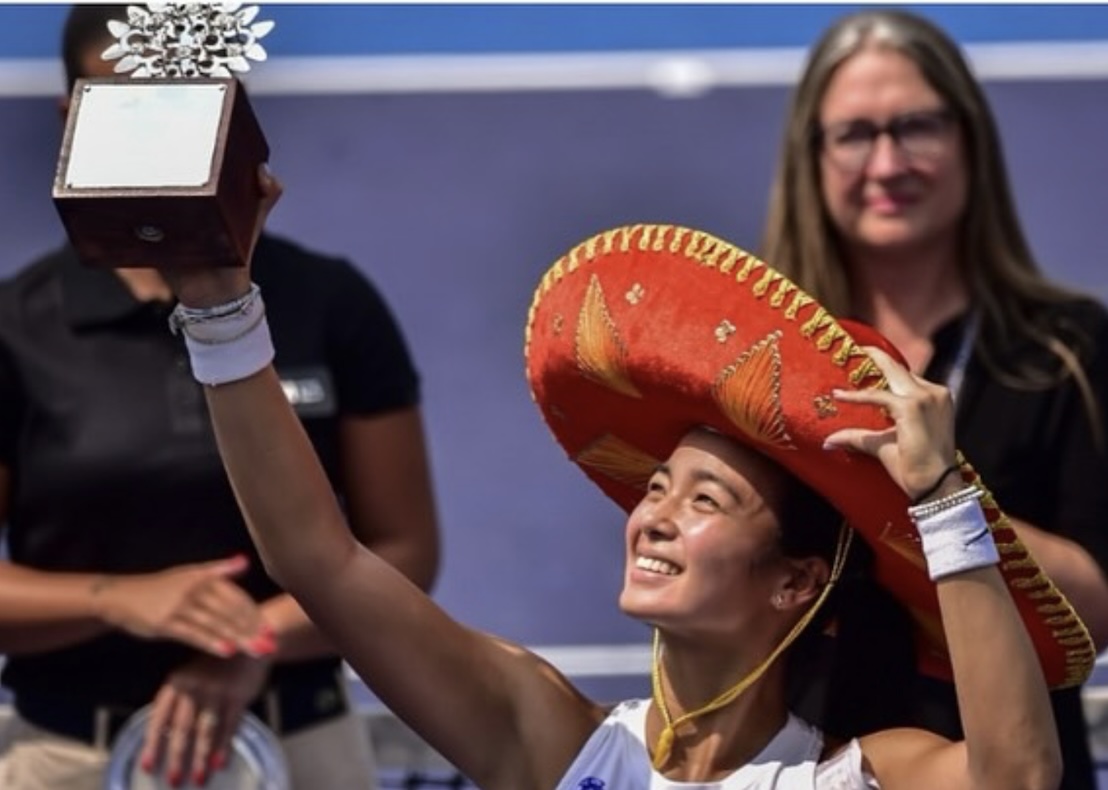
The 21-year-old recovered from a set down to defeat top-seeded Pegula, 4-6, 6-4, 6-0, in a rain-interrupted final. She won the last nine games to become the first player representing the Philippines to capture a WTA Tour-level singles title. The victory lifted her to a career-high No. 20, the first Top 20 ranking attained by a Filipina.
Her path through Washington included victories over Olympic champion Zheng, defending champion Fernandez, Svitolina and four-time major winner Osaka. She had beaten five accomplished opponents to earn the trophy.
Washington also marked a step beyond Eala’s WTA 125 championships in Guadalajara in 2025 and Birmingham in 2026. WTA 125 events are sanctioned professional tournaments but are classified separately from the main tour. Washington, a WTA 500 event, awarded four times as many ranking points and became her first main-tour singles title.
The crowds, however, had followed her long before the trophy.
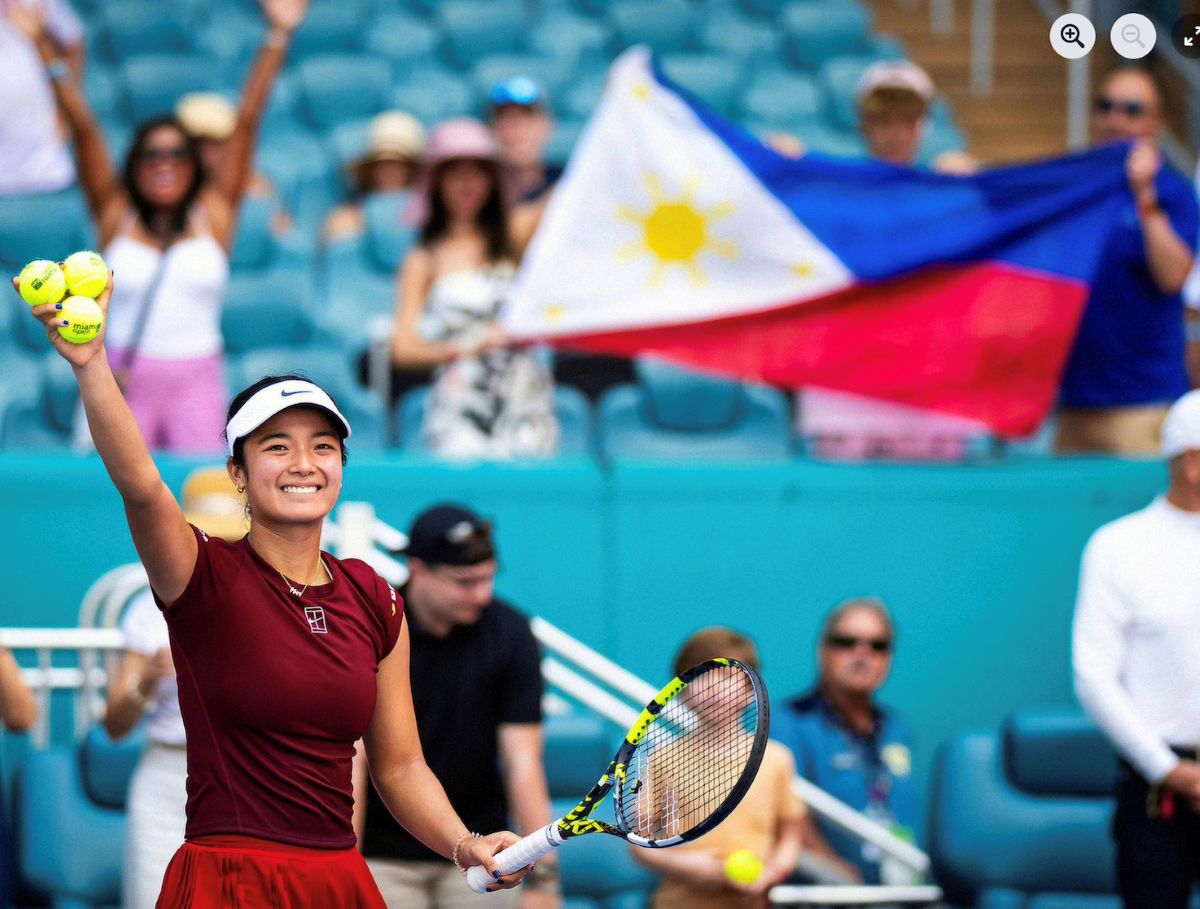
Philippine flags often appear before Eala walks onto court. Families arrive in national colors, supporters crowd practice areas and chants of “Alex” and “Laban” can turn a tournament thousands of miles from Manila into something resembling a Philippine home event.
That following has complicated a basic part of tournament planning: deciding where she should play. Early-round assignments are usually influenced by rankings, seeding, broadcast obligations and a matchup’s perceived appeal. During the earlier part of Eala’s rise, her ranking did not fully reflect the number of spectators hoping to see her.
At the Australian Open, Court 6 filled for her first-round match against Alycia Parks, while many others watched on large screens around Melbourne Park. In Abu Dhabi, a heavily pro-Filipino audience watched Eala erase a 4-0 deficit in the deciding set and save a match point. In Dubai, her matches drew near-capacity and sold-out crowds dominated by Filipino supporters.
Australian player Daria Saville captured the business logic in a lighthearted observation. She said that if she were directing a tournament, she would make every effort to secure Eala’s participation because Filipino supporters would come for her and remain for other matches.
Some spectators arrive as Eala supporters and leave as tennis followers.
Pegula has watched that transformation from across the net. Their first meeting came during Eala’s breakthrough at the 2025 Miami Open, where the overwhelmingly pro-Eala crowd surprised the American. By the time they met again in Washington, Pegula understood that the following was neither temporary nor limited to one city.
During the trophy presentation, Pegula thanked Filipino supporters for helping tennis grow around the world. Her remarks recognized that Eala was attracting families and communities that had not previously followed the professional tennis calendar closely.
The enthusiasm has also entered the families of other players. American doubles specialist Desirae Krawczyk, whose mother is Filipina, said on The Player’s Box podcast that her mother had become one of Eala’s most devoted followers.
“She’s crazy about Alex,” Krawczyk said.
Krawczyk recalled reminding her mother that she, too, had a match on a day the older woman planned to watch Eala. At Indian Wells, her mother wanted to prepare pancit and lumpia for the Filipina star.
The exchange offered a warm portrait of Eala’s appeal. Her following is expressed not only through tickets and flags but also through Filipino customs involving family, food, hospitality and pride in someone succeeding far from home.
Manila gave Eala a true home tournament in 2026 when the Philippine Women’s Open debuted as a WTA 125 event at the Rizal Memorial Tennis Center. Yet her following extends far beyond that one week. Across North America, Australia, Europe and the Middle East, established Filipino communities repeatedly transform distant tournament grounds into home courts of their own.
Professional tennis is particularly suited to such a following. The tour moves through cities where large Filipino communities already live, waiting for the tournament to arrive.
Eala’s results have given the phenomenon staying power. Miami showed that she could defeat elite opposition. The U.S. Open delivered a Grand Slam breakthrough. Wimbledon took her into the second week of a major. Guadalajara and Birmingham established her as a WTA 125 champion. Washington delivered her first main-tour title.
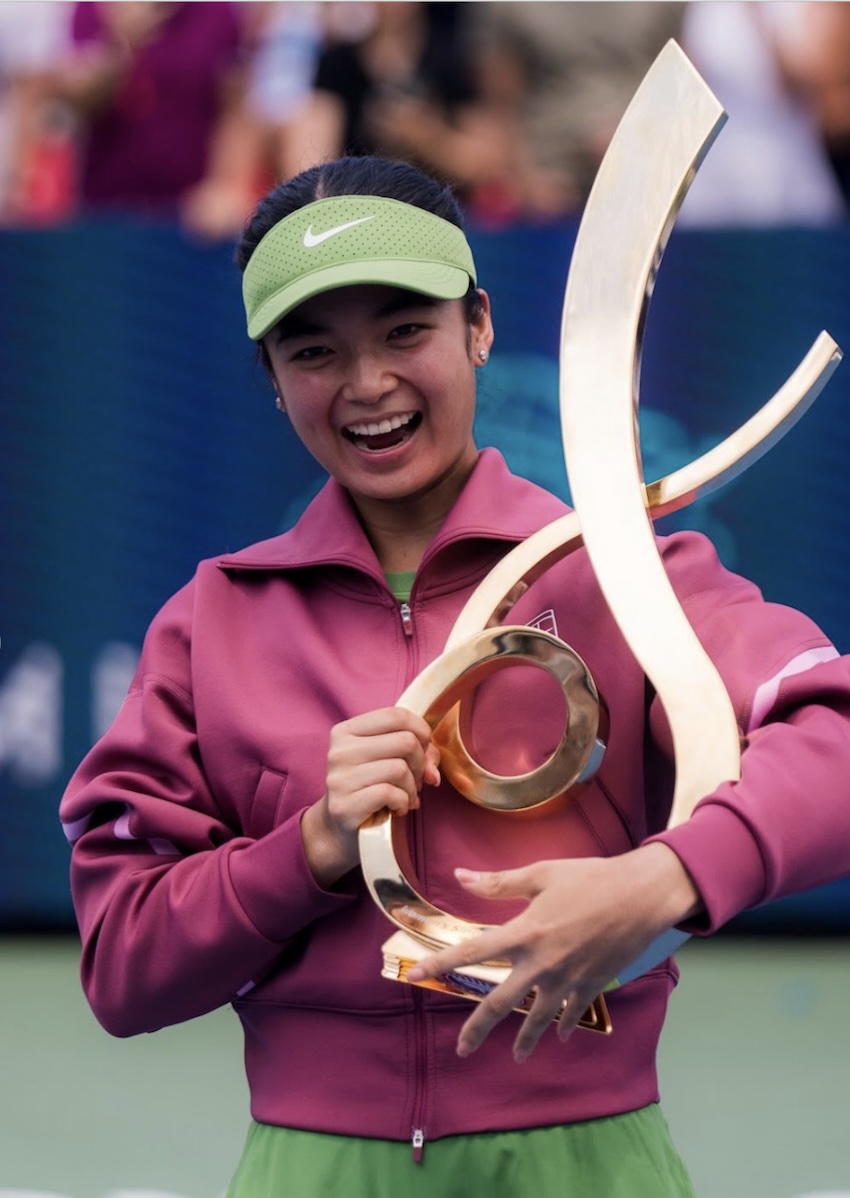
The timing of the Washington ticket inquiries is important. Supporters were asking about Eala before she reached the final and before she lifted the trophy. They were not merely responding to an unexpected run. They had sought her out from the beginning.
Wherever Eala plays, Philippine flags appear. Families gather. Practice courts become destinations. An outer court can begin to feel too small.
She is bringing more than another young contender to professional tennis. She is bringing a worldwide community that is filling seats, discovering the sport and making itself heard.
Where Alex Eala plays, the Philippines finds a home court.