






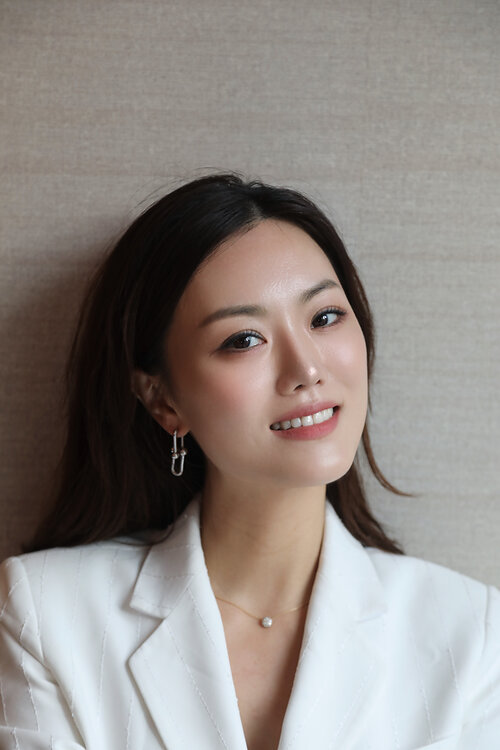
Sora Lee
Sora Lee knows what it looks like when an industry reaches an inflection point. Over the course of her career, she has held leadership roles at Netflix, Meta, and TikTok; companies that helped reshape how consumers discover, engage with, and ultimately adopt new behaviors. Now, she is betting that beauty is entering a transformation of its own.
In July, Lee was named Co-Founder and CEO of JIYU, the Korean skincare brand positioning itself at the intersection of K-beauty innovation and the growing longevity movement. The appointment marks a shift from advisor to operator for Lee, who had already been working closely with the company on its Korean strategy and product direction.
She is stepping in at a pivotal moment for the business. JIYU is projecting more than $100 million in annual revenue in 2026, following triple-digit year-over-year growth fueled by U.S. demand and momentum across TikTok Shop and Amazon. As CEO, Lee is now tasked with turning that momentum into something much bigger: expanding the product portfolio, growing retail and strategic partnerships, entering new markets, and building JIYU into a global brand.
But the larger ambition goes beyond scale. JIYU is making a bet on longevity skincare. It’s a shift away from the beauty industry’s traditional focus on “anti-aging” and toward maintaining healthier, more resilient skin over a lifetime.
For Lee, it’s an opportunity to bring together the different threads of her career: technology, consumer behavior, the creator economy, Korean beauty, and brand building. Lee shares why she decided to move from advising JIYU to leading it, the kind of company she wants to build, and why she believes longevity could define skincare’s next chapter.

Q: What made this the right time in your career to become CEO of JIYU?
A: I’ve spent my career at companies that fundamentally changed consumer behavior—from Meta to Netflix to TikTok. Then I built my own agency helping Korean beauty brands scale in the U.S.
I realized I didn’t just want to help build other companies anymore. I wanted to build one that could define an entire category. JIYU gave me the opportunity to combine everything I’ve learned across technology, marketing, creator economy, and Korean beauty into one mission.
Q: When did you realize this opportunity was bigger than serving as an advisor?
A: I originally came in to advise on brand strategy, but the deeper I became involved, the more I realized the opportunity wasn’t just improving marketing.
This was an opportunity to build one of the defining beauty companies of the next decade. That requires long-term leadership, not short-term advice, not just on brand, but also branding, positioning, & product development philosophy.
Q: What does becoming Co-Founder mean to you personally?
A: It’s ownership in every sense. It means helping shape the company’s vision, culture, products, team, and long-term direction. I’m not here to optimize what already exists—I’m here to help build what JIYU becomes.
Q: What is your long-term vision for JIYU?
A: To build the world’s most trusted longevity skincare company. I want JIYU to become synonymous with healthy skin over a lifetime, backed by science, Korean innovation, and products people genuinely love using every day.
Q: How would your team describe your leadership style?
A: I think my team would describe me as someone with high expectations, but equally high trust. I believe the single biggest factor behind any company’s success is the quality of its team. That’s why I spend an enormous amount of time hiring exceptional people. Once they’re here, my job isn’t to micromanage—it’s to provide a clear vision, align everyone around where we’re going and why it matters, then give them the autonomy and ownership to do their best work.
I hold people to a high standard because I believe they’re capable of extraordinary work when they’re empowered, accountable, and working toward a shared mission.
Ultimately, I want JIYU to become the kind of company that opens doors for people. My hope is that years from now, having JIYU on someone’s résumé signals excellence—that they operated with high standards, moved quickly, took ownership, and built alongside an exceptional team. If people leave JIYU and go on to become leaders across the industry because of what they learned here, I’ll consider that one of my greatest accomplishments as a CEO.
Q: What principles guide your decision-making?
A: Every decision starts with the same framework.
First, I ask, who are we? What are we genuinely good at? What do we believe in? What do we enjoy building? What unique strengths or credibility do we have that no one else can easily replicate? I think the best companies lean into their unfair advantages rather than trying to be everything to everyone
Second, where do we want to go? What’s our North Star? What do we want to be known for? What’s the long-term outcome we’re working toward? Having clarity on the destination makes it much easier to prioritize what deserves our time and what doesn’t.
Third, what are the realities of the market today? I spend a lot of time understanding shifts in consumer behavior, emerging trends, competitive dynamics, and where meaningful gaps exist. The best strategies don’t ignore reality—they respond to it
Once those three questions are clear, it becomes a matter of making thoughtful trade-offs. I’m constantly evaluating the expected impact, the effort required, and whether I’m the right person to do it or whether someone else on the team is better positioned to own it. As a CEO, resource allocation—whether that’s capital, time, or talent—is one of the most important decisions you make.
I’ve also become much more thoughtful about balancing speed with precision. Earlier in my career, I worked in software, where the philosophy was “move fast and break things.” You could ship, learn, iterate, and deploy fixes almost instantly. Physical products are different. A formulation, packaging, or manufacturing mistake can cost millions of dollars and, more importantly, damage consumer trust. I’ve had to evolve my own leadership to recognize when speed creates an advantage and when taking a little more time leads to a much better outcome
Finally, I’m deeply customer obsessed. I genuinely love beauty, wellness, and longevity, and I spend an enormous amount of time studying the category. That passion gives me an instinct for where the market is headed and helps me spot trends early. But I’m also aware that I’m a sample of one. My own experiences, preferences, and biases aren’t representative of every consumer. That’s why we combine intuition with data, customer feedback, and research. The goal isn’t to build products that I personally love—it’s to build products that solve real problems for the people we serve.
Q: How will JIYU differentiate itself from other skincare brands?
A: Most brands compete on ingredients or aesthetics.
We’re building around a philosophy: helping people invest in healthier skin over the long term through clinically backed Korean formulations. That’s a much bigger platform than any single product.
Q: How do you define innovation in today’s beauty industry?
A: Innovation isn’t launching more products. It’s solving real consumer problems in ways competitors can’t easily replicate, leveraging ingredients that have been well researched and proven to be effective at addressing issues.
Q: Why do you believe longevity is the future of skincare?
A: People are thinking about longevity in nutrition, fitness, and medicine. Skincare is the natural next frontier. Consumers increasingly want to preserve skin health, not simply react to aging after it happens.
Q: How is longevity different from traditional anti-aging messaging?
Anti-aging often implies reversing time. Longevity is about maintaining healthy, resilient skin throughout your life. It’s a much more positive and realistic conversation.
Q: What makes Korean skincare innovation unique?
A: Korea has one of the fastest beauty innovation ecosystems in the world. Manufacturers, dermatologists, ingredient suppliers, and brands work incredibly closely together, allowing new technologies and formulations to reach consumers much faster.
Q: What opportunities remain untapped in the U.S. market?
A: The biggest opportunity is helping consumers understand that Korean beauty isn’t just a trend or an aesthetic. It’s an innovation ecosystem. We’re still in the early innings of bringing that philosophy—and now longevity skincare—to mainstream American consumers.