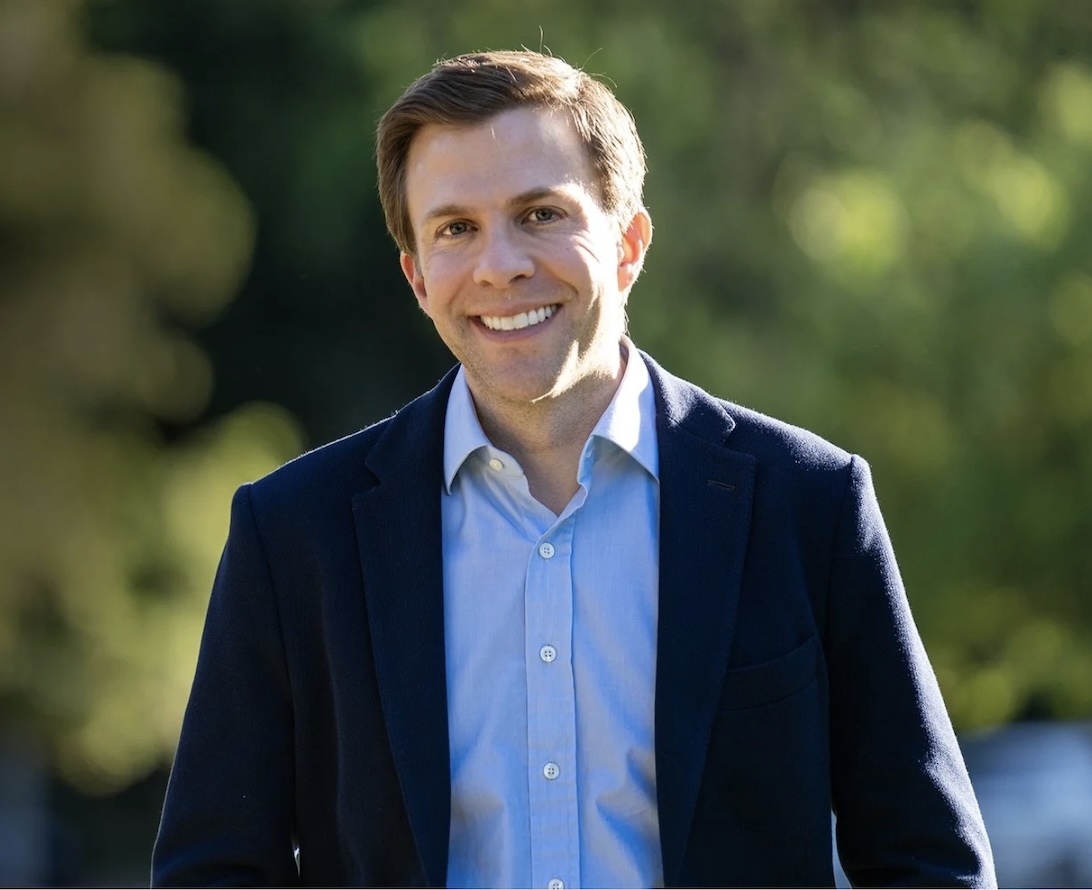





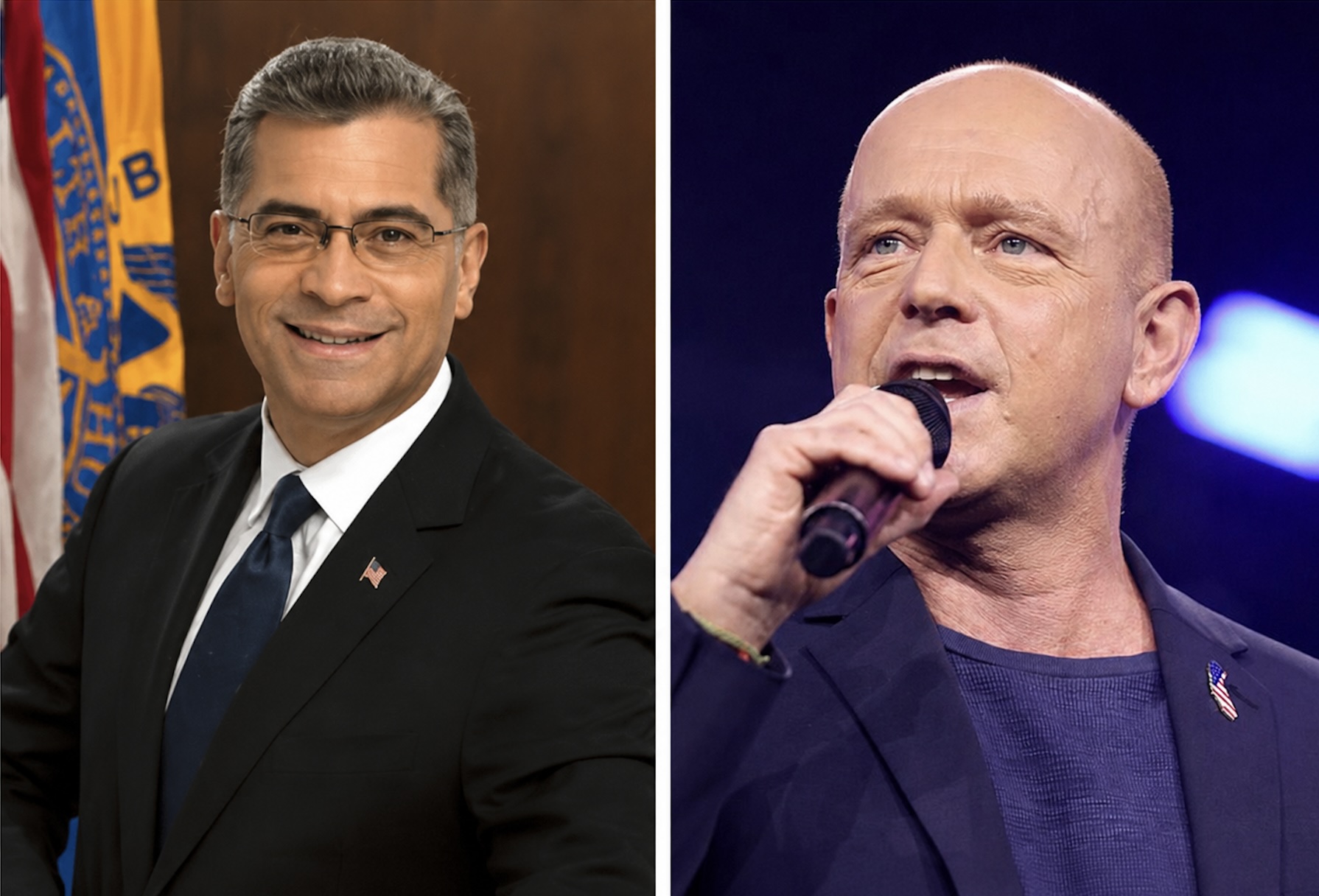
Xavier Becerra, left, and Steve Hilton advance to the Nov. 3 general election for California governor, shifting the race to a contest over the state’s next chapter after Gov. Gavin Newsom. – Photos courtesy of the U.S. Department of Health and Human Services / Gage Skidmore via Wikimedia Commons
The projected Becerra-Hilton matchup shifts California’s governor’s race from a crowded primary to a November campaign over leadership, continuity and the state’s priorities after Gov. Gavin Newsom.
SACRAMENTO — California’s race for governor is entering a new phase, moving beyond the crowded primary that defined the first stage of the campaign and toward a broader debate over the state’s next chapter after Gov. Gavin Newsom.
Democrat Xavier Becerra and Republican Steve Hilton are projected to advance to the Nov. 3 general election, setting up a contest that will test two different arguments about California’s future: one rooted in governing experience and continuity, the other in a call for a different direction in Sacramento.
The race to succeed Newsom, a Democrat who is barred by term limits from seeking another term, arrives at a consequential moment for the state. California remains a Democratic stronghold in statewide elections, but its next governor will inherit a complex agenda shaped by housing costs, homelessness, public safety, energy prices, insurance pressures, business regulation and the broader cost of living.
Unofficial returns from the California Secretary of State showed Becerra leading the June 2 primary, with Hilton in second place and Democrat Tom Steyer third. As of the state’s latest posted update Friday evening, Becerra had 2,566,414 votes, or 28.1 percent. Hilton had 2,259,445 votes, or 24.7 percent. Steyer had 2,086,209 votes, or 22.8 percent.
The results remain unofficial. County elections officials are continuing to process and count ballots during the official canvass, including vote-by-mail, provisional and other ballots. The Secretary of State’s unprocessed-ballots report showed an estimated 70,568 ballots remaining statewide as of June 13 at 2:30 p.m. Counties must complete final official results by July 2, and the Secretary of State is scheduled to certify statewide results on July 10.
Even with certification pending, the general-election landscape has largely come into view.
California’s top-two primary system places all candidates for voter-nominated offices on the same ballot, with the two highest vote-getters advancing regardless of party preference. The system can produce two candidates from the same party. This year, despite a large Democratic field, the governor’s race is headed toward a Democrat-versus-Republican matchup.
That result followed a primary in which several Democrats competed for statewide support. Becerra emerged from a field that included Steyer, former Rep. Katie Porter, former Los Angeles Mayor Antonio Villaraigosa, San Jose Mayor Matt Mahan and other candidates. Steyer, who spent heavily from his personal fortune and campaigned as a critic of corporate power, remained outside the top two as later counts continued to show Hilton ahead.
The outcome illustrated one feature of California’s primary system: when candidates from the same party compete for similar voters, support can be divided while a more consolidated candidate from another party advances.
Becerra enters the general election with a long record in public office. A former California attorney general, former member of Congress and former U.S. health and human services secretary, he is expected to present himself as an experienced administrator prepared to manage the state’s policy and fiscal challenges. If elected, he would become the first Latino elected governor of California.
His central task will be to consolidate Democratic support after a divided primary while making the case that continuity can also mean adaptation. For Becerra, the campaign will require balancing the advantages of Democratic strength in California with the need to address voters who want visible progress on the state’s most persistent problems.
Hilton enters the fall campaign as a Republican challenger with a message focused on change in Sacramento. A British-born former adviser to former British Prime Minister David Cameron and a former Fox News host, he has campaigned on affordability, taxes, regulation, energy costs, public safety and cost pressures facing families and employers.
Hilton has received the endorsement of President Donald Trump, a development that may help him consolidate Republican support as the race moves into the general election.
The November campaign is expected to test how each candidate speaks to Californians’ practical concerns while offering a broader argument about the state’s future. Becerra will seek to hold together the Democratic coalition that has dominated statewide races. Hilton will seek to expand Republican support in a state where the party has not held the governor’s office since Arnold Schwarzenegger left in 2011.
The race now turns from the mechanics of the primary to the choices ahead: how California should address its most durable challenges, how much continuity voters want after Newsom and what kind of leadership they believe the state needs next.