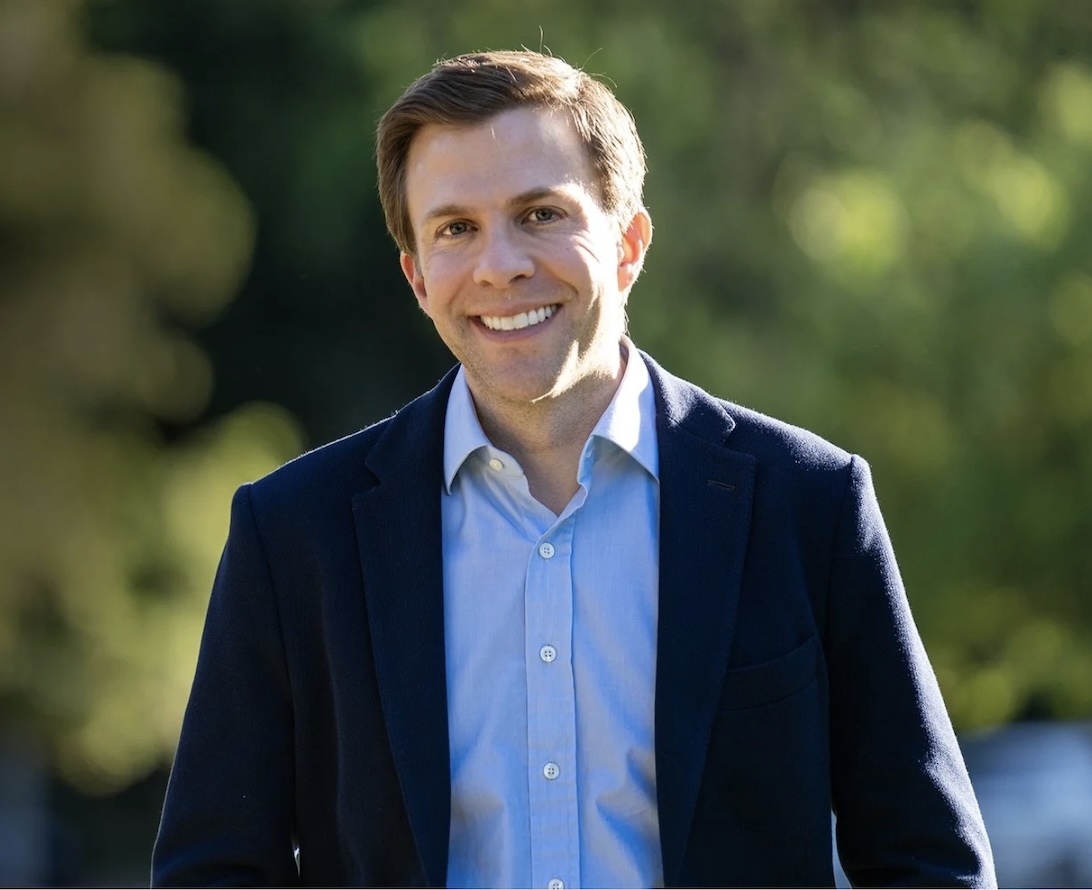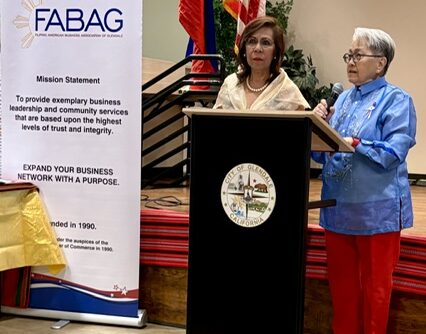




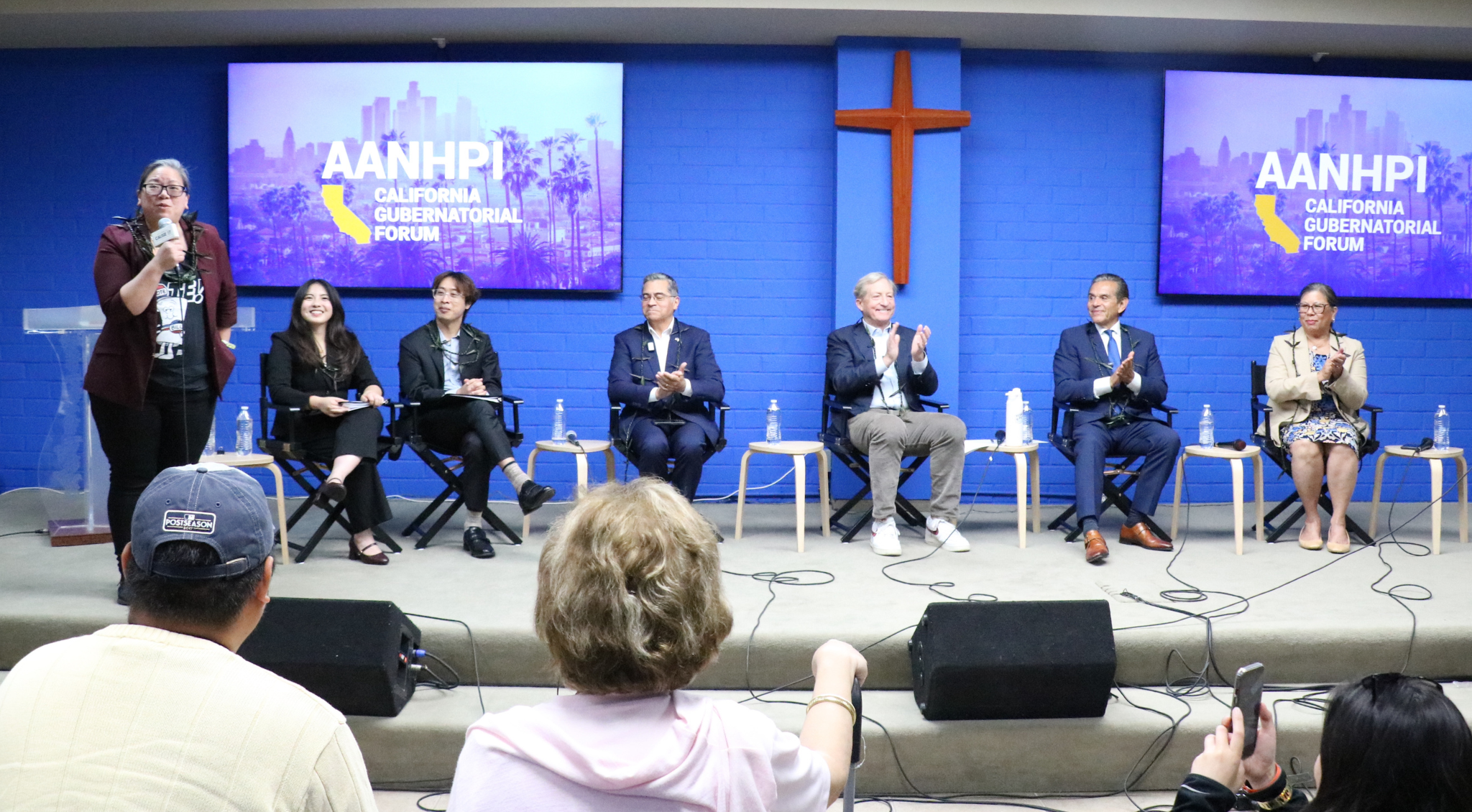
Democratic candidates and community leaders participate in the AANHPI California gubernatorial forum at World Mission University in Los Angeles on April 18, where contenders outlined policy positions before a coalition of Asian American, Native Hawaiian, and Pacific Islander organizations. – Photo Credit : Eric Moon
Democratic contenders outline positions on affordability, housing, and governance as polling shows a divided field and 23% of voters still undecided.
LOS ANGELES (April 22, 2026) — A gubernatorial forum held April 18 at World Mission University offered one of the clearest side-by-side comparisons of policy positions in California’s 2026 governor’s race. Five Democratic candidates addressed targeted inquiries from a coalition of Asian American, Native Hawaiian, and Pacific Islander (AANHPI) organizations. This demographic now represents 20% of the California electorate and generates over $200 billion in annual economic activity.
Organized by the Center for Asian Americans United for Self Empowerment (CAUSE) and the Korean American Democratic Committee (KADC), the event utilized a rigorous format. Questions were developed by 40 civic groups with strictly timed 90-second responses. This approach prioritized policy granularity over campaign rhetoric.
While Xavier Becerra, Tom Steyer, Antonio Villaraigosa, Tony Thurmond, and Betty Yee participated, the event was marked by the absence of fellow Democrats Katie Porter and Matt Mahan. Republican frontrunners Steve Hilton and Chad Bianco also did not attend.
The Polling Landscape: Volatility and Late-Stage Movement
The forum took place against a backdrop of significant electoral flux. Recent data from Emerson College Polling places Republican Steve Hilton at 17% and Riverside County Sheriff Chad Bianco at 14% statewide.
Among Democrats, support remains fragmented but is beginning to coalesce following the withdrawal of Representative Eric Swalwell. Tom Steyer currently holds 14%. Xavier Becerra has seen a strategic rise to approximately 13% in internal tracking by the California Democratic Party. With 23% of voters still undecided, the state’s top-two primary system – where the two highest vote-getters advance regardless of party – places added importance on late-stage voter engagement to avoid a Democratic lockout.
Contrasting Governing Models
The candidates’ responses revealed distinct philosophies on managing the world’s fifth-largest economy.
Xavier Becerra: The Defensive Shield
Becerra has transitioned his pitch from federal collaborator to state protector. During the forum, he spoke about his tenure leading the White House Initiative on Asian Americans, Native Hawaiians, and Pacific Islanders (WHIAANHPI) while serving as the U.S. Secretary of Health and Human Services. This initiative has since been deactivated by the current federal administration.
- The Federal Void: Becerra argued that California must build parallel systems to replace lost federal outreach. He proposed a state-level AANHPI initiative to ensure linguistic and cultural access to government services.
- Utility Emergency: He pledged to declare a state of emergency on utility costs within 120 days, using executive authority to freeze rate hikes.
- Governing Approach: Aggressive state action through enforcement and litigation to preserve civil rights and health equity.
Tom Steyer: The Structural Disruptor
Steyer positioned himself as an independent candidate capable of challenging corporate power structures. He framed his platform around systemic changes to address high costs of living.
- Tax Reform for Renters: Steyer proposed a policy to make residential rent tax-deductible, providing parity between renters and homeowners.
- The AI Compute Fee: He called for a tax on processing power used by large-scale AI companies, with revenue funding a “Worker Transition Fund” for those displaced by automation.
- Governing Approach: Structural economic reform aimed at reducing long-term costs by shifting the tax burden toward large tech and utility monopolies.
Antonio Villaraigosa: The Executive Builder
Villaraigosa is running as a pragmatic coalition builder focused on infrastructure and tangible results. He pushed back against the idea that the state can litigate its way to prosperity.
- Supply-Side Housing: He argued that affordability requires massive production. He pledged to use executive orders to bypass local zoning hurdles for high-density housing near transit hubs.
- Public Safety Focus: Highlighting his record in Los Angeles, he proposed a statewide surge in funding for community policing and anti-retail-theft task forces.
- The One-Term Pledge: He reiterated that he would not seek reelection, claiming this freedom allows him to make hard choices regarding homelessness and state spending.
- Governing Approach: Executive-led production and public safety reform through streamlined permitting and local government accountability.
Tony Thurmond: The Social Investor
Thurmond’s platform centers on the idea that economic strength depends on the social safety net and education system.
- The 2-Million Home Mandate: Thurmond proposed building two million homes on surplus government-owned land, using state-issued bonds to lower construction costs.
- Small Business Micro-Grants: He advocated for a $500 million state fund for micro-grants for legacy businesses in cultural enclaves to prevent displacement.
- Cradle-to-Career Access: He focused on expanding vocational training, specifically targeting under-represented groups in computer science, such as Pacific Islander students who currently have an enrollment ratio of 0.69.
- Governing Approach: Direct state investment in housing and human capital to drive long-term economic stability.
The Withdrawal of Betty Yee
Betty Yee, the former California State Controller and a longtime leader within the AANHPI community, was a central participant in the April 18 forum. However, on April 20, just two days after the event, Yee officially suspended her campaign for governor.
As State Controller from 2015 to 2023, Yee was the state’s chief fiscal officer, known for her rigorous audits and focus on taxpayer accountability. She entered the race as a prominent AANHPI voice, emphasizing fiscal responsibility and social equity.
Yee cited insurmountable fundraising challenges as the primary reason for her withdrawal. In her announcement, she noted that the high cost of media in a statewide race, combined with a fragmented Democratic field, made it impossible to sustain a viable path to the June primary. While she has ceased all campaign activities, her name will remain on the ballot.
Strategic Implications for the June 2 Primary
The forum clarified that while candidates share broad priorities, their execution strategies differ materially. With ballots set to be distributed in early May, the race remains unsettled. In a fragmented field, direct engagement with organized constituencies – particularly those with growing electoral influence like the AANHPI community -may play a decisive role in determining which candidates advance to the general election.