




Mayor Karen Bass pays tribute to late historian Florante Ibanez as city recognizes cultural, civic and historical contributions
LOS ANGELES — Los Angeles City Hall was illuminated in the colors of the Philippine flag on Friday, October 16, as elected officials, community leaders, artists and residents gathered to mark Filipino American History Month, honoring generations whose contributions have shaped the city’s cultural, economic and civic life.
Mayor Karen Bass and Councilmember Ysabel Jurado joined the celebration, which brought together established and emerging Filipino American artists, community organizations and advocates for historical preservation.
“History reminds us that Filipino-American history is American history,” Bass said during the ceremony, emphasizing the importance of recognizing the community’s place in the nation’s broader historical narrative.
Jurado, the first Filipina elected to the Los Angeles City Council, also connected the observance to the city’s history.
“Filipino history is Los Angeles history,” she said, acknowledging generations of Filipino Americans whose labor, cultural traditions and civic participation have contributed to the development of Los Angeles.
The celebration was organized by Jurado’s Council District 14 office and included civic recognitions, musical performances and community activities.
The City Council authorized the illumination through a motion introduced by Jurado and seconded by Councilmember Heather Hutt. The measure was approved September 8 by a 12-0 vote, with three councilmembers absent, and became final September 21.
Bass honors historian Florante Ibanez
A central moment of the ceremony was the posthumous presentation of the inaugural Bayanihan Spirit Award to Florante Peter Ibanez, a historian, librarian and longtime community advocate who died on November 30, 2025.
His wife, Rose, and their family accepted the recognition honoring his contributions to historical preservation, social justice and community empowerment.
Bass recalled her decades-long friendship with the Ibanez family, tracing their association to advocacy opposing martial law under former Philippine President Ferdinand Marcos Sr.
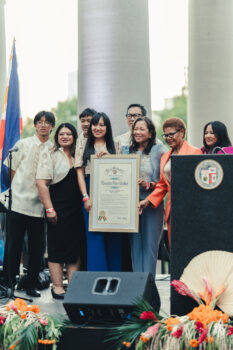
The mayor described Ibanez as an advocate whose commitment to justice extended beyond the Filipino American community. His work included preserving historical records, documenting immigrant experiences and promotingrecognition of Filipino American contributions to American society.
The award invokes the Filipino tradition of bayanihan, which emphasizes collective responsibility, mutual assistance and cooperation for the common good.
Ibanez devoted much of his professional and community work to preserving histories that might otherwise have remained outside mainstream historical accounts. His recognition highlighted the role of historians, archivists and community institutions in documenting the experiences of immigrant communities.
Artists, advocates and community leaders recognized
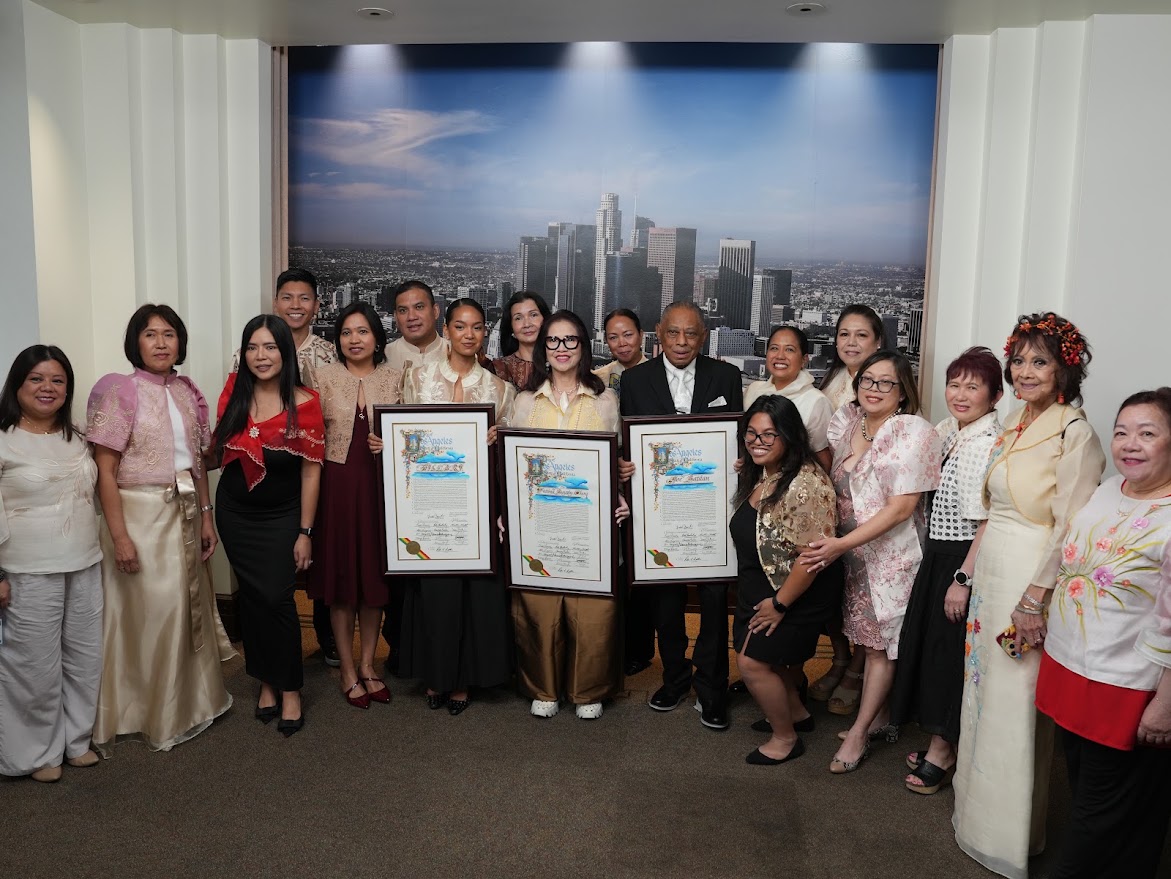
The ceremony also honored musicians Joe Bataan and HILLARI; Dr. Fatima Bustos-Choy; Gerlie Collado; GABRIELA Los Angeles; filmmaker Januel Mercado; artist and cultural organizer Alison de la Cruz; and entrepreneur Ginger Lim-Dimapasok.
The honorees represent contributions spanning music, education, cultural preservation, community organizing, entrepreneurship and public service.
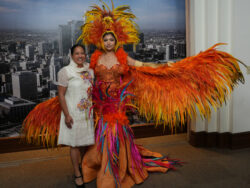
Bataan, a longtime figure in Latin soul music, represents an earlier generation of artists whose work emerged from the intersection of musical and cultural traditions in American cities. HILLARI represents a younger generation of Filipino artists reaching audiences through contemporary music.
The recognition of community advocates and organizations reflected the range of Filipino American civic participation, including efforts focused on cultural identity, social concerns and community representation.
Jurado also drew on her family’s immigrant experience in discussing the sacrifices of earlier generations and the opportunities they helped create for their descendants.
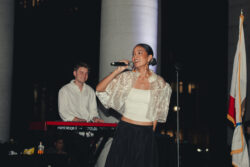
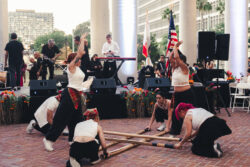
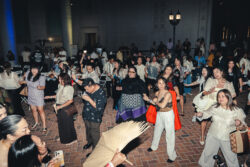
Performances by Bataan, HILLARI and other participating artists accompanied the celebration, which included music, dance and cultural presentations before the evening illumination.
A history extending more than four centuries
Filipino American History Month commemorates the earliest documented Filipino presence in what is now the continental United States.
On October 18, 1587, Filipinos aboard a Spanish maritime expedition arrived along the California coast near present-day Morro Bay, establishing a documented Filipino presence in the region more than four centuries ago.
The Filipino American National Historical Society established October as Filipino American History Month in 1992 to encourage recognition and study of the community’s history, experiences and contributions.

In Los Angeles, that history includes Filipino immigrants who worked in agriculture, health care, service industries, education and other sectors, alongside community organizations that advocated for labor rights, cultural recognition and political representation.
Historic Filipinotown remains an important center of that legacy, reflecting the institutions, businesses and social networks developed by Filipino immigrants and their descendants.
The 2026 national theme, “Beyond the Margins: Centering Intersectional Filipino American Histories,” focuses onexperiences historically underrepresented in conventional accounts of American history, including those shaped by immigration, labor, gender and social inequality.