




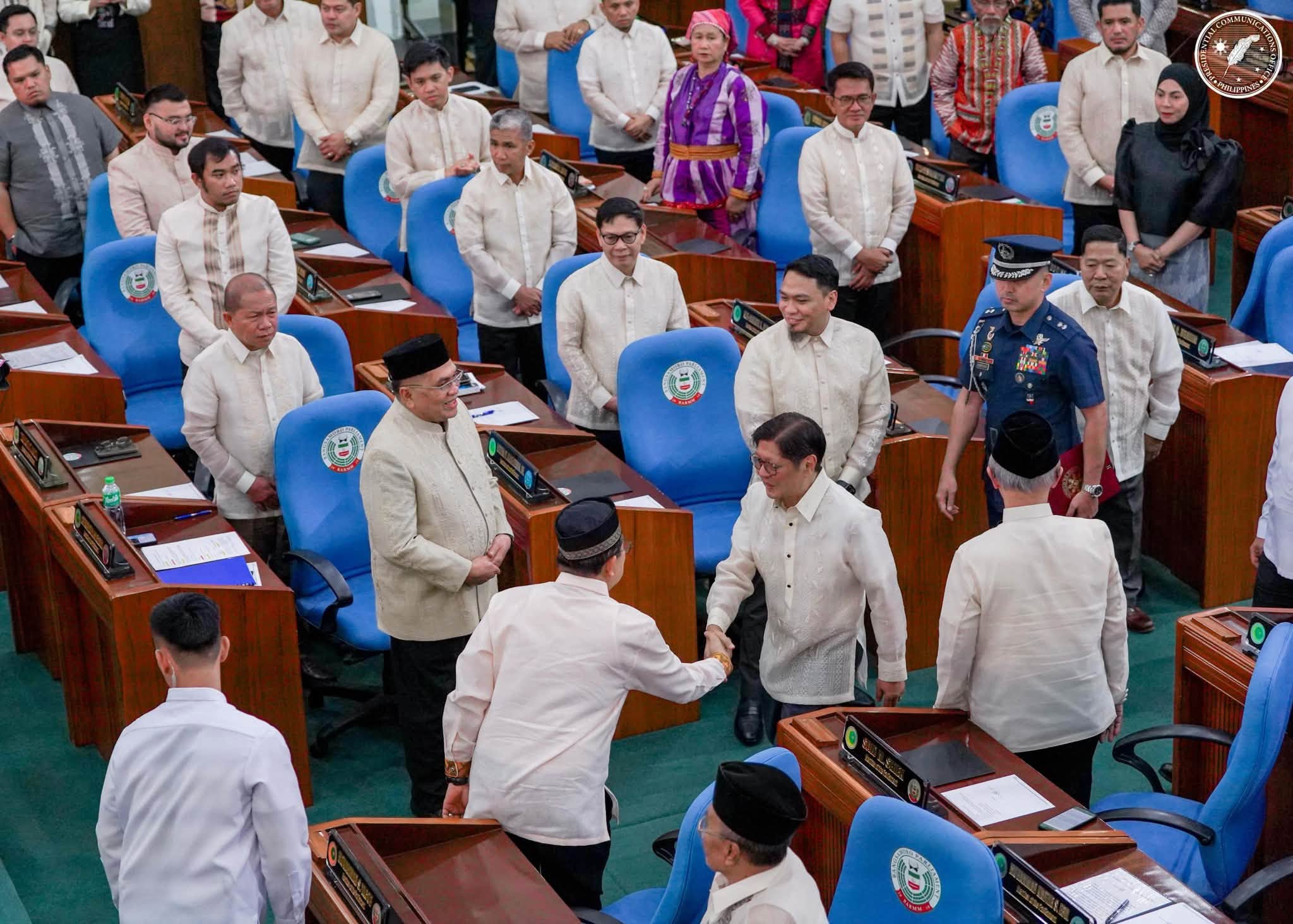
COTABATO CITY — Abdulraof Macacua, a former military leader of the Moro Islamic Liberation Front (MILF), was elected chief minister of the Bangsamoro autonomous region Friday, Oct. 30, as its first regularly elected Parliament replaced an interim administration established in 2019.
Macacua won 51 votes to 27 for former chief minister Ahod “Murad” Ebrahim in the 80-member chamber. Seventy-nine lawmakers attended, with one abstention and one absence. Under the Bangsamoro Organic Law, a chief minister must secure at least 41 votes, a majority of all parliamentary seats.
The result made Macacua the first chief minister chosen by an elected Bangsamoro Parliament. He had led the transitional government since March 2025, when President Ferdinand Marcos Jr. appointed him to replace Ebrahim, who had headed the region’s interim administration since its establishment.
Macacua previously served as chief of staff of the Bangsamoro Islamic Armed Forces, the MILF’s armed wing. He heads the Bangsamoro Federalist Party (BFP), while Ebrahim chairs the MILF and its United Bangsamoro Justice Party (UBJP). The MILF signed a peace agreement with the Philippine government in 2014 that helped establish the region’s expanded autonomy.
The BFP holds 31 seats in the new Parliament, compared with 30 for the UBJP. Neither secured the 41 votes needed to elect a chief minister without support from lawmakers outside its ranks.
The chamber also elected Amer Zaakaria Rakim of the BARMM Grand Coalition as speaker, with 51 votes against 27 for former interim speaker Mohammad Yacob. Lawmakers chose Hadjimar Matba and Mamintal Adiong III as deputy chief ministers for the Southwestern Mindanao and North Central Mindanao subregions, respectively.
Marcos addressed the assembly before the leadership elections, urging lawmakers to improve public services, create economic opportunities and manage public resources responsibly. Macacua pledged to serve residents regardless of political affiliation and to continue the moral governance program introduced under Ebrahim.
The Parliament has 40 party representatives, 32 district representatives and eight sectoral representatives. In the region’s first parliamentary elections Sept. 14, 2,018,478 people voted, representing 84.34 percent of registered voters, according to the Commission on Elections.
The September election followed repeated postponements and disputes over parliamentary districts. In 2024, the Supreme Court ruled that Sulu was outside BARMM because the province rejected ratification of the autonomy law in a 2019 plebiscite. The court subsequently invalidated a redistricting law enacted in 2025.
Republic Act No. 12317, approved in March, fixed the new lawmakers’ term from noon Oct. 30, 2026, until noon June 30, 2031. Unlike the former Autonomous Region in Muslim Mindanao, where voters directly elected a governor, the Bangsamoro uses a parliamentary system in which elected legislators select the chief minister.